


Send My Customization Request
Light
Dark
System
Electronic Dart Machines in 2026: From Sensor Boards to Vision-Driven Smart Systems
Thursday, 01/8/2026
A comprehensive 2026 guide to electronic dart machines, covering vision-based scoring, AI coaching trends, commercial ROI strategies, and maintenance tips for arcades and home users.
The electronic dart machine market is undergoing a radical transformation in 2026, driven by the industry-wide shift from pressure-based sensor matrices to high-precision optical tracking systems. This evolution mirrors a broader trend across arcade and sports entertainment equipment, where hardware longevity, software-driven engagement, and data connectivity now define competitiveness.
With the global electronic dartboard market projected to reach approximately $888 million by 2031, innovation is accelerating faster than ever. Manufacturers are no longer competing solely on build quality or cabinet design; instead, differentiation now comes from scoring accuracy, software ecosystems, and post-installation monetization potential.
Whether you are a venue owner aiming to maximize Commercial dart machine ROI, a distributor evaluating next-generation products, or an enthusiast building a smart home arcade, understanding these technological shifts is critical. In 2026, purchasing an electronic dart machine is no longer a one-time hardware decision—it is an entry into a connected digital platform that directly influences player retention, revenue stability, and long-term operational costs.

What is an electronic dart machine?
An electronic dart machine is an automated gaming system that utilizes Soft-tip dart technology combined with either a pressure-based sensor matrix or a vision-based camera array to detect dart impacts and calculate scores in real time. Unlike traditional sisal dartboards, electronic machines remove subjective judgment and manual scoring entirely, creating a faster, safer, and more standardized playing experience.
Modern units typically feature interactive LCD or touchscreen displays, integrated sound systems, and dozens—sometimes hundreds—of pre-programmed game variations. Increasingly, they also include built-in internet connectivity, enabling online leagues, cloud-based player profiles, remote diagnostics, and firmware updates.
Earlier generations of electronic dartboards relied heavily on mechanical switches positioned behind a plastic target face. Each segment acted like a button: when struck, it physically moved backward to close a circuit. While effective at the time, this design introduced unavoidable wear points.
By contrast, 2026 models have evolved into full-scale entertainment hubs. Equipped with modern processors, onboard GPUs, and edge-computing capabilities, these machines now support complex game modes such as “Battle Royale” darts, spectator modes for live events, and global online leagues that connect players from Tokyo to New York in real time.
High-end electronic dart machines also function as digital kiosks. During idle time, screens can display venue promotions, sponsor advertisements, or upcoming tournament announcements. Players benefit from personalized stat tracking through mobile apps, allowing them to monitor averages, hit rates, and improvement trends across multiple venues and sessions.
Key advantages include:
· Automated Scoring: Eliminates manual math errors, accelerates match flow, and ensures fair competitive play.
· Safety: Soft plastic tips significantly reduce injury risk and property damage compared to steel-tip darts.
· Gamification: Animations, sound effects, achievements, and voice announcers increase engagement and dwell time.
· Connectivity: Enables remote play, cloud backups, and continuous software updates that extend product lifespan.
Key Takeaways: 2026 Dart Machine Essentials
To succeed in the 2026 electronic dart machine market, buyers must prioritize connectivity, optical accuracy, and predictive maintenance over simple mechanical durability. The industry is clearly pivoting toward “smart” ecosystems, where the dartboard itself is only one component of a broader player experience.
In commercial environments, the focus has shifted away from single-session revenue toward long-term engagement. Software now plays a central role in monetization, driving repeat visits through leagues, rankings, seasonal passes, and digital rewards.
According to recent industry reports, arcades and bars leveraging membership-based access models and cashless payment systems are achieving weekly profits ranging from $1,100 to $2,000 in well-located venues. In this context, the electronic dart machine becomes a platform for recurring revenue, not just a coin-operated device.
Hardware durability still matters—but it is now secondary to software stability, network uptime, and ecosystem compatibility. The strongest ROI no longer comes from the cabinet itself, but from the digital services layered on top of it.
Key market shifts include:
· Vision Dominance: Optical camera systems are rapidly replacing physical matrices to reduce wear, bounce-outs, and scoring errors.
· Hybrid Models: Boards supporting both soft-tip and steel-tip play are gaining traction in mixed-use venues and premium lounges.
· Predictive Maintenance: IoT-enabled sensors notify operators of component fatigue before downtime occurs.
· Digital Ecosystems: App integration, loyalty programs, and global rankings now define long-term success.
Core Technology: Sensor Matrices vs. Vision Scoring
At the heart of this transformation lies a fundamental technological shift: from contact-based detection to vision-based scoring.
Vision-based scoring systems use multiple high-speed optical cameras mounted around the target frame. These cameras track the dart’s flight path and landing position, triangulating its exact location in 3D space. Because scoring is calculated visually rather than mechanically, the system completely bypasses the need for moving target segments.
This approach effectively eliminates the long-standing issue of “ghost hits”—instances where a dart clearly lands but fails to register due to worn or stuck segments. Vision systems can also distinguish between bounce-outs, deflections, and valid hits with far greater accuracy.
Traditional electronic boards rely on membrane switch matrices positioned behind each segment. When a dart strikes, the segment must physically depress to close a circuit. Over time, dust, broken tips, and plastic fatigue cause segments to stick or fail, resulting in dead zones.
By contrast, 2026 vision systems—pioneered by technologies similar to DeepDarts and Dartsee—achieve accuracy rates exceeding 99% and register hits in under 600 milliseconds. Because the target face does not need to move, manufacturers can use harder, more durable thermal resin materials, dramatically extending service life.
Home vs. Commercial: Choosing the Right Machine
Commercial-grade electronic dart machines differ from home models in several critical areas: coin-op or cashless payment systems, reinforced cabinets designed for 10,000+ hours of play, and advanced online league connectivity.
Selecting the correct tier depends heavily on usage volume, target audience, and monetization strategy. A home user playing casually a few hours a week has vastly different needs from a bar hosting league nights or tournaments.
For venue owners, connectivity is non-negotiable. Machines that cannot connect reliably to global league servers—such as Phoenix or DARTSLIVE—quickly lose player interest. Network instability directly impacts revenue by disrupting rankings, match history, and tournament participation.
Home users, on the other hand, often prioritize aesthetics, noise control, and ease of installation. In 2026, wall-mounted boards with integrated sound-dampening foam and vibration isolation are increasingly popular, particularly in apartments and shared living spaces.
Key selection factors:
· Space Requirements: Regulation setup requires 8 feet of throw distance and a minimum ceiling height of 7 feet.
· Durability Grades: Commercial units use reinforced nylon or composite segments; home units typically use standard plastic.
· Network Needs: Ethernet ensures stable commercial play; Wi-Fi 6 is common in premium home boards.
· Noise Control: “Silent segment” designs reduce impact noise for residential environments.
Expert Tips: Maximizing Longevity and Performance
Proper maintenance remains the most effective way to extend the life of an electronic dart machine. Among all preventive measures, power protection is the most critical.
Bars, arcades, and older buildings often experience voltage fluctuations that can corrupt firmware or damage sensitive CPUs. Using a UPS (Uninterruptible Power Supply) or industrial-grade surge protector dramatically reduces the risk of catastrophic failure.
Segment hygiene is equally important. Broken soft-tip fragments left inside the board can jam sensors or obstruct camera views, leading to misreads. Performing a monthly inspection and cleaning routine significantly improves reliability.
A simple but effective practice known as a “segment massage”—pressing each segment to ensure smooth return—can prevent pressure-based boards from developing stuck zones. Additionally, enforcing dart weight limits is essential; darts over 20 grams place excessive stress on electronic targets.
Future Trends: AI Coaching and Augmented Reality Darts
AI-powered dart coaching is emerging as one of the defining innovations of 2026. By analyzing throw mechanics, release timing, and consistency patterns, machine-learning models can provide real-time feedback tailored to individual players.
Originally developed for professional training facilities, this technology is now reaching consumer and commercial markets. With the AI sports market projected to approach $60 billion by 2034, adoption is accelerating rapidly.
Augmented Reality (AR) is also reshaping how players interact with dart machines. Instead of relying solely on external screens, projection systems now overlay dynamic targets, moving zones, and live statistics directly onto the board face. This turns the dartboard itself into an interactive display, enabling entirely new game formats.
Blockchain technology is being explored as well, particularly for securing online tournament results. Immutable score records help prevent cheating and ensure trust in global competitions spanning multiple venues and regions.
conclusion
By 2026, electronic dart machines have evolved into smart, connected platforms driven by vision scoring, software ecosystems, and data connectivity. Commercial success now depends on player retention, digital monetization, and system reliability, while home users benefit from smarter features and quieter designs. Choosing the right machine means investing in long-term accuracy, engagement, and scalability rather than hardware alone.
FAQs
What is the regulation height for an electronic dart machine?
The center of the bullseye must be exactly 5 feet 8 inches (1.73 meters) from the floor. This is the standard vertical distance for both soft-tip and steel-tip regulation play.
How do you fix a frozen screen on an electronic dartboard?
Perform a hard reset by unplugging the unit completely for at least 60 seconds before reconnecting power. If the issue persists, check for stuck segments pressing against the matrix, which can overload the input buffer and freeze the CPU.
Can I use steel-tip darts on an electronic dart machine?
No, using steel-tip darts will puncture the sensor matrix and permanently destroy the electronics. You must strictly use Soft-tip dart technology designed for these boards to ensure functionality and safety.
How much does a commercial-grade electronic dart machine cost in 2026?
Professional coin-operated units typically range from $2,000 to $10,000 depending on features. High-end models with vision scoring and large touchscreens command the highest prices, while refurbished older models offer a lower entry point.
Do electronic dart machines require an internet connection?
Offline play is fully supported for local games, but an internet connection is required for Online league connectivity, software updates, and accessing global leaderboards. Commercial operators need a connection to track revenue and maintenance alerts remotely.
How do vision-based dart scoring systems work?
These systems use multiple high-speed cameras to track the dart's flight path and landing position in 3D space. They calculate the score based on visual data rather than physical pressure, offering higher durability and accuracy.
What are the most popular games on electronic dartboards?
Beyond standard 01 games (301, 501) and Cricket, popular digital variants include "Cut-Throat," "Count-Up," and "Battle" modes. Modern machines also feature party games like "Tic-Tac-Toe" or "Balloon Pop" to attract casual players.
How do I prevent 'ghost hits' or false scoring?
Ensure the segments are free of broken tips and that the machine is mounted securely on a vibration-free wall. For older matrix boards, cleaning the membrane contacts with isopropyl alcohol can resolve intermittent registering issues.
References
Electronic Dart Board Market Size, Growth, Forecast Till 2031
Electronic Dartboard Market by Product Type, Application & Region
Dartboards Market Size & Forecast 2033
AI in Sports Market Size to Surpass USD 60.78 Billion by 2034
DeepDarts: Modeling Keypoints as Objects for Automatic Scorekeeping
Recommended for you
FAQ
Darts Machine
How do I clean and maintain the machine?
Wipe the screen and body with a soft, dry cloth. Replace dart tips every 1000 uses for optimal safety. Avoid liquids near the sensors.
Whether to provide perfect after-sales service?
Yes,24-hour Online Service,supporting multi-language online technology and after-sales support,1-year free warranty for core accessories,and lifetime maintenance.
Where can this machine be installed?
Perfect for arcades, bars, family entertainment centers (FECs), hotels, and even large home game rooms. The compact design fits most spaces while meeting commercial safety standards.
Product Features
Is the dart machine safe for children?
Equipped with soft magnetic darts and explosion-proof acrylic panels (no sharp parts). Holds international safety certifications (CE/ISO90001/ROHS), ensuring safe family use.
What makes your dart machine different from traditional dartboards?
Our dart machine uses smart sensor technology for automatic scoring, eliminating manual calculations. It supports multiplayer battles and interactive games with various themed modes. The built-in HD screen provides real-time data feedback with sound and light effects, delivering a far superior entertainment experience compared to traditional dartboards.
After-Sales Service
What is the warranty?
1-year free warranty for core accessories, and lifetime maintenance.
You may also like
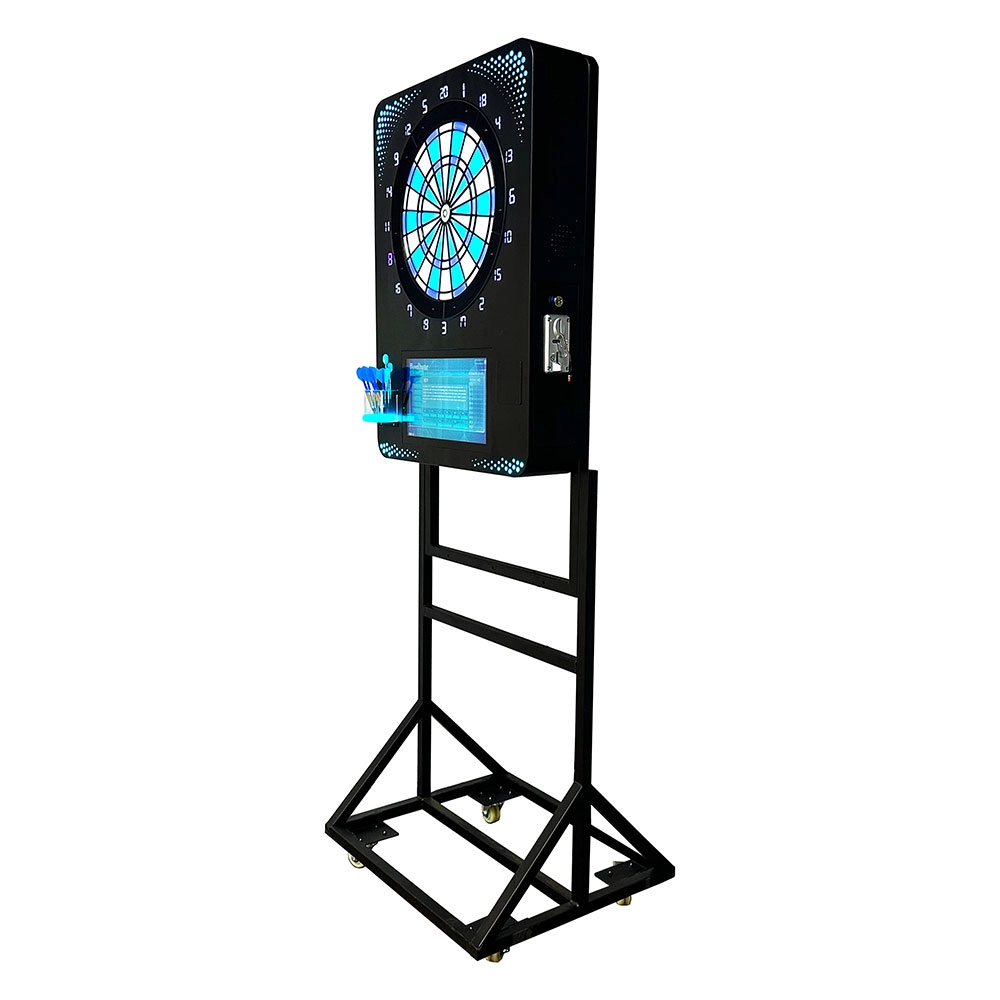
Neofuns Coin Operated Arcade Game Fun Darts Machine Mini – Removable Base Mini Style Dartboard Suitable for Home Use
A high-density fiberboard surface with embedded micro-sensors and an electronic scoring system tracks dart positions in real-time (0.1% error rate), eliminating manual scorekeeping. Classic games (e.g., 301, Cricket) and customizable rules, plus "Silent Mode" for noise-sensitive environments. Perfect for pubs, homes, and offices. A 360° safety rim prevents bounce-outs, with a child lock for family use.

Neofuns Coin Operated Arcade Game Fun Darts Machine Max – Electronic Dartboard with 32-inch HD Touch Screen for Family Entertainment Center
This smart dartboard perfectly combines classic sports with cutting-edge technology. Based on Fun Darts 5, it is designed with a high-definition touch screen and split installation, which is simple and fashionable. The professional self-repairing sisal target surface is replaceable and durable, making it easy to use for both training and entertainment.
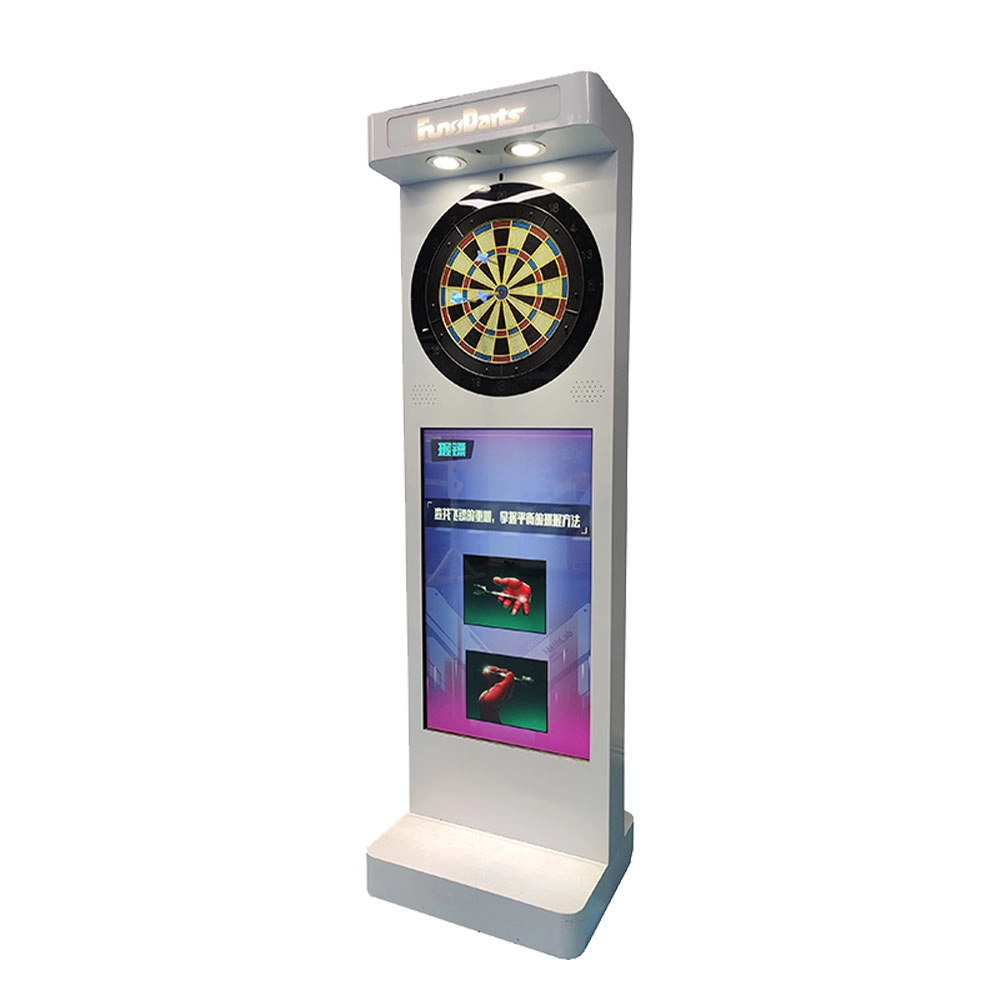
Neofuns Electronic Arcade Darts Machine S – Coin Operated Fun Dart Game with Soft Tip & Metal Tip Options, Stand-Up Electronic Dartboard for Arcade
Create private leagues for corporate unions, clubs, or friends with customizable rules (e.g., round-robin, knockout), syncing team rankings and individual contributions to boost collaboration. Branded interfaces and dartboards for company-themed tournaments.
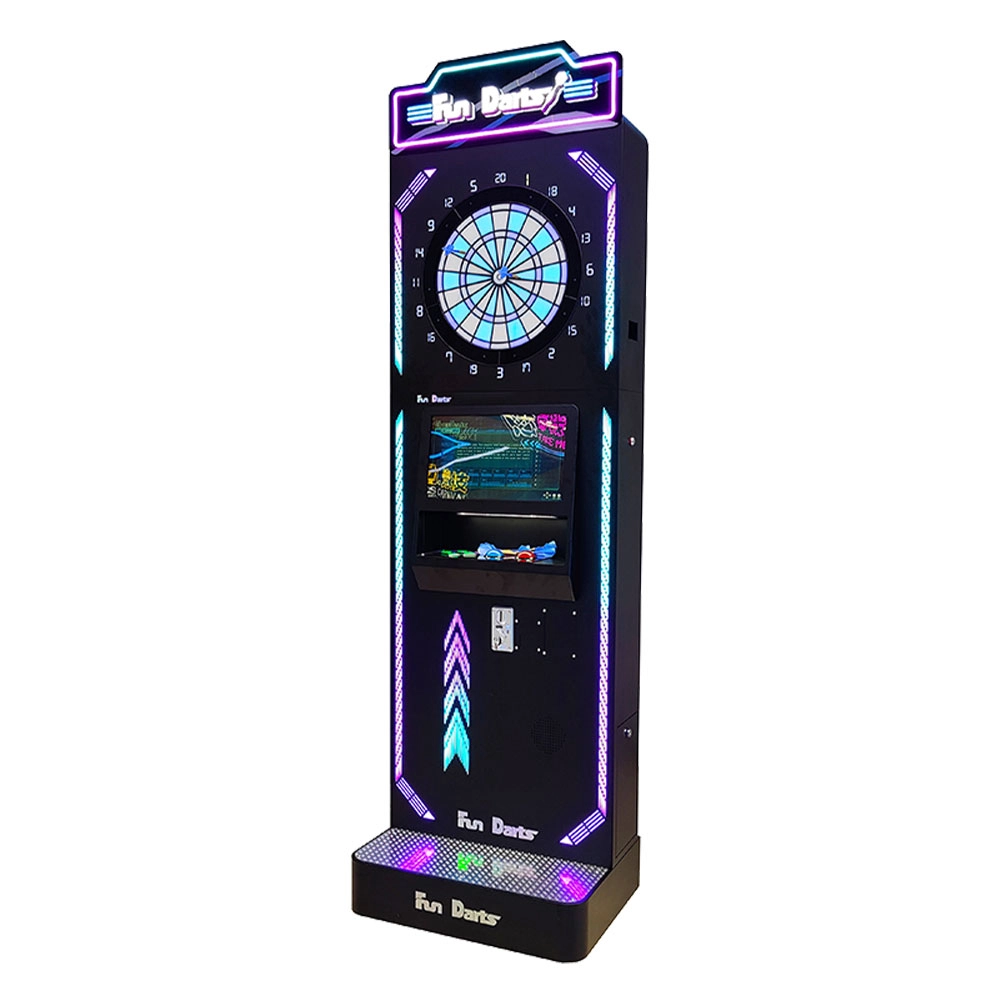
Neofuns Coin Operated Arcade Game Fun Darts Machine V –Cool Streamlined Appearance and Lighting Stand-Up Dart Machine for Arcade & Entertainment Venue
This smart dartboard seamlessly blends classic sport with cutting-edge tech,enjoy 30+ game modes and real-time multiplayer battles with dynamic animations. Professional self-healing sisal board with replaceable surfaces ensures durability for both training and entertainment.
Enjoyed the Read? Let’s Take the Next Step
Whether you're exploring the arcade industry or planning your next project, Neofuns is here to support you. Leave your details below and our team will provide personalized assistance and product recommendations.
Leading Electronic Dart Machine Manufacturer
NEOFUNS
NEOFUNS
NEOFUNS