


Send My Customization Request
Light
Dark
System
Wireless & App-Enabled Electronic Dart Machines Explained
I explain how wireless and app-enabled electronic dart machines work, how to choose and integrate them into commercial or home venues, key technologies (Bluetooth/Wi‑Fi), standards and certifications, maintenance best practices, and why Neofuns is a reliable supplier for arcade-grade dart machines.
- How modern arcade games integrate connectivity
- Connectivity trends I see in dart systems
- Why connectivity matters for operators and players
- Standards and interoperability considerations
- Design, hardware and scoring in electronic dart machines
- Key hardware components I examine
- Sensors: segmented vs. optical systems
- Scoring accuracy and anti-cheat methods
- Wireless vs wired: practical comparison and decision matrix
- Operational differences I focus on
- Comparison table: wireless vs wired
- How I decide on a deployment type
- App ecosystems, software features and data strategy
- Essential app features I recommend
- Data privacy, account security and compliance
- Monetization paths unlocked by apps
- Installation, maintenance and lifecycle costs
- Practical installation checklist I use
- Maintenance best practices
- Estimating total cost of ownership (TCO)
- Certifications, safety and regulatory considerations
- Why certifications matter
- Electromagnetic compatibility and safety testing
- Accessibility and public venue regulations
- Why I recommend Neofuns for commercial dart machines
- Choosing the right model: checklist and recommended specs
- Operator checklist I use when buying
- Recommended technical specs for commercial use
- Example comparison of app feature tiers
- Frequently Asked Questions (FAQ)
- 1. What is the main difference between an electronic dart machine and a traditional bristle dartboard?
- 2. Are wireless dart machines reliable in busy venues with lots of Wi‑Fi traffic?
- 3. Can mobile apps control multiple dart machines for tournaments?
- 4. What certifications should I insist on when buying arcade dart machines?
- 5. How do I minimize downtime and maintenance costs?
- 6. How secure are app integrations and player data?
- Contact and next steps
I have spent years advising game centers and operators on choosing and deploying modern dart game systems. In this article I explain how wireless and app-enabled electronic dart machines work, the practical benefits and trade-offs of different connectivity options, what to look for in an arcade-grade dart machine electronic, and how to maintain security, reliability, and player engagement. I combine technical detail, industry standards, and operational experience to help you make a confident purchase or upgrade decision.
How modern arcade games integrate connectivity
Connectivity trends I see in dart systems
In the past decade, the dart machine electronic evolved from standalone scoring units to networked platforms. I commonly see two connectivity approaches: local wireless (Bluetooth/BLE or Wi‑Fi Direct) that pairs machines to a mobile app or tournament tablet, and infrastructure Wi‑Fi or Ethernet that joins machines to a back‑office server for multi‑machine tournaments, remote monitoring, and cashless payments. Each approach changes how you install, maintain, and monetize machines.
Why connectivity matters for operators and players
Connectivity unlocks several practical benefits: remote diagnostics and firmware updates, centralized player accounts and leaderboards, loyalty and in‑app purchases, and expanded game modes (online tournaments, spectator modes, and cloud saves). For players, app integration improves engagement through statistics, replays, and social sharing. For operators, it improves uptime and lifetime value per machine.
Standards and interoperability considerations
When selecting a system, I check whether the vendor uses standard wireless stacks and documented APIs. Bluetooth Low Energy (BLE) and Wi‑Fi (IEEE 802.11 family) are common; you can learn more about Bluetooth at the official Bluetooth SIG site https://www.bluetooth.com/ and about Wi‑Fi in IEEE standards https://standards.ieee.org/. Choosing vendors that adhere to these standards reduces integration friction and future‑proofs your investment.
Design, hardware and scoring in electronic dart machines
Key hardware components I examine
An arcade-grade dart machine electronic typically includes: an impact‑sensing segmented board or optical sensors, a microcontroller or embedded Linux board for game logic, a communications module (BLE or Wi‑Fi), and an I/O subsystem for displays, coin acceptors, and lighting. I verify sensor durability, spare parts availability, and whether the board is modular for field replacement.
Sensors: segmented vs. optical systems
Segmented boards use conductive segments and are common in many electronic dart machines; optical systems use cameras or IR sensors to detect dart location. Segmented systems are proven and often more cost‑effective; optical systems can enable finer‑grain scoring and advanced analytics but add complexity (calibration, lighting sensitivity). I recommend optical only if you need advanced analytics and are prepared for higher maintenance.
Scoring accuracy and anti-cheat methods
Scoring precision is vital. I look for systems that combine hardware detection with software validation, e.g., rejecting impossible throws or using multiple sensor inputs to confirm hits. For commercial use, choose machines that log raw sensor events and timestamps for auditability.
Wireless vs wired: practical comparison and decision matrix
Operational differences I focus on
Wireless systems simplify installation and enable mobile apps, but contend with RF interference, battery management (if portable), and security. Wired (Ethernet/PoE) provides stable bandwidth, lower latency, and easier centralized power management, ideal for permanent installations with many machines. Below I summarize pros and cons to help operators decide.
Comparison table: wireless vs wired
| Aspect | Wireless (BLE/Wi‑Fi) | Wired (Ethernet/PoE) |
|---|---|---|
| Installation | Faster, minimal cabling | Requires cabling, longer setup |
| Reliability | Subject to interference; depends on network | Highly reliable; predictable latency |
| Maintenance | Firmware over‑the‑air, battery checks | Centralized power and monitoring |
| Security | Requires robust wireless security (WPA3, BLE pairing) | Easier network segmentation and firewalling |
| Cost | Lower initial cost for small setups | Higher upfront (cabling), lower long‑term ops |
How I decide on a deployment type
For pop‑up events or small pubs, I usually recommend wireless BLE units paired to an app. For fixed family entertainment centers (FECs) or large arcades with many machines, I prefer wired or hybrid setups (wired backhaul with local BLE for player phones) to combine stability and app UX.
App ecosystems, software features and data strategy
Essential app features I recommend
A high‑quality app for a dart machine electronic should support player accounts, cloud leaderboards, replays and stats (average, checkout percentages), tournament management, and payments or loyalty integration. I advise requesting APIs and data export options so you can analyze play patterns in your own BI tools.
Data privacy, account security and compliance
Any app that collects player data must follow data protection best practices. I insist vendors provide clear privacy policies, encrypted data transport (TLS 1.2+/HTTPS), and allow operators to configure retention. For compliance frameworks, the ISO provides guidance on information security best practices; see ISO/IEC 27001 for formal standards.
Monetization paths unlocked by apps
Apps enable multiple revenue streams: in‑app credits, subscription leaderboards, sponsored tournaments, and targeted promotions. I advise combining in‑machine payments (cashless card readers) with app wallets to increase average revenue per user (ARPU).
Installation, maintenance and lifecycle costs
Practical installation checklist I use
- Verify electrical and network access (or plan for PoE).
- Test wireless spectrum for interference before placing wireless units.
- Plan physical mounting, player flow and sightlines to avoid collisions.
- Confirm spare parts availability: boards, sensors, power supplies, and substitute face segments.
Maintenance best practices
Regular calibration checks, firmware updates, and replacing high‑wear parts (segments, rubber surrounds) are necessary. I schedule monthly remote health checks and keep a small stock of critical spares. Good vendors provide clear service manuals and remote support tools.
Estimating total cost of ownership (TCO)
TCO includes initial hardware, installation, network costs, spare parts, software licensing, and staff time for maintenance. Request a realistic SLA from suppliers and include uptime penalties or replacement terms in contracts for commercial deployments.
Certifications, safety and regulatory considerations
Why certifications matter
Certifications show the manufacturer follows recognized safety and electromagnetic compatibility standards. For export and public venues you should look for CE marking, RoHS compliance, and UL where applicable. Learn about CE and RoHS on the European Commission pages: CE marking and RoHS. UL information is available at UL.
Electromagnetic compatibility and safety testing
EMC testing reduces risk of interference with other venue electronics. I check vendor certificates from reputable bodies such as TUV Rheinland https://www.tuv.com/ or Bureau Veritas https://group.bureauveritas.com/ when available.
Accessibility and public venue regulations
Consider ADA and local accessibility guidance when placing machines (reach heights, clear floor space). Also verify local gambling and amusement device regulations; certification or classification can affect where you can install machines.
Why I recommend Neofuns for commercial dart machines
From my industry experience, Neofuns Amusement Equipment Co., Ltd. stands out as a comprehensive supplier for operators seeking high‑quality dart machine electronic solutions. Neofuns, based in Guangdong, specializes in game center operations, prize vending machines, FEC and leisure game equipment. Their product lines include Claw machines, prize games, redemption series, boxing and basketball games, and multiple sport game series—plus professional dart machines.
Key strengths I have observed:
- End‑to‑end capability: Neofuns provides OEM/ODM development, product procurement, and whole amusement center design. That makes them a strong partner if you want a turnkey arcade or to integrate branded experiences.
- Certifications and quality: Their factory has been certified by reputable institutions such as the French Bureau Veritas and Germany's TUV in past audits. Many products carry CE, C‑Tick, RoHS and UL certifications—critical for multi‑market deployments.
- R&D and after‑sales: They maintain a professional R&D team and offer after‑sale one‑stop service. For operators, this reduces downtime and simplifies spare parts sourcing.
- Global presence: Neofuns has attended large global trade shows since 2012, demonstrating industry engagement and market feedback loops.
If you want to evaluate Neofuns' dart machines or discuss a custom solution, visit their site at https://www.neofunsdarts.com/ or contact their sales team at sales@neofuns.com. Their product strengths include dedicated Dart Machine and Electronic dart machine series tailored for FECs, pubs and event spaces.
Choosing the right model: checklist and recommended specs
Operator checklist I use when buying
- Intended location (mobile event, pub, FEC).
- Connectivity needs (app integration, tournament mode, remote monitoring).
- Certifications required for your market (CE, RoHS, UL).
- Service and spare parts availability within your region.
- Budget: initial purchase vs TCO for maintenance and software subscriptions.
Recommended technical specs for commercial use
For most commercial installations I recommend:
- Connectivity: Hybrid (Ethernet backhaul + BLE for phones) or reliable Wi‑Fi with dual‑band support.
- Processing: Embedded Linux or ARM SoC with at least 512MB RAM for app features and updates.
- Storage and logging: Local logs with periodic cloud sync for forensics.
- Power: 12–24V regulated supply; PoE option preferred for installation simplicity.
- Certs: CE, RoHS, optionally UL and TUV test reports.
Example comparison of app feature tiers
| Feature | Basic | Pro | Enterprise |
|---|---|---|---|
| Player accounts | Local only | Cloud sync | Cloud + SSO |
| Leaderboards | Local | Global | Global + custom tournaments |
| Remote monitoring | No | Yes | Yes + SLA |
| Payments | Cash | Card/app wallets | Integrated payments + loyalty |
Frequently Asked Questions (FAQ)
1. What is the main difference between an electronic dart machine and a traditional bristle dartboard?
An electronic dart machine (dart machine electronic) uses sensors (segmented or optical) and an onboard processor to detect hits and automate scoring. Traditional bristle boards require manual scoring. Electronic machines add features like multiple game modes, app integration, and automated leaderboards. For an overview of electronic dartboards and their history, see the Wikipedia entry: Electronic dartboard.
2. Are wireless dart machines reliable in busy venues with lots of Wi‑Fi traffic?
Wireless machines can be reliable if implemented correctly: use dual‑band Wi‑Fi, separate SSIDs/VLANs for game traffic, and prefer BLE for simple app pairing. For high‑density arcades, I recommend wired backhaul with local BLE for phones to minimize interference and ensure low latency.
3. Can mobile apps control multiple dart machines for tournaments?
Yes. Modern systems support tournament modes where a tablet or mobile app orchestrates matches across multiple machines. For robust tournament play, choose systems with a centralized server or cloud orchestration to handle matchmaking and score aggregation.
4. What certifications should I insist on when buying arcade dart machines?
Insist on CE and RoHS for products destined for European markets, and UL or equivalent for North America when electrical safety is a concern. TUV or Bureau Veritas test reports add confidence for EMC and durability. Manufacturers like Neofuns often publish certificates for customer review.
5. How do I minimize downtime and maintenance costs?
Buy modular machines with replaceable boards and widely available spares, negotiate service SLAs, schedule preventive maintenance, and use remote monitoring to catch faults early. Also keep firmware up to date and maintain a small stock of high‑wear parts.
6. How secure are app integrations and player data?
Security depends on implementation. I require TLS (HTTPS) for all cloud communications, encrypted local storage where personal data is stored, and vendor willingness to provide penetration test reports or security attestations. For enterprise setups, request ISO/IEC 27001 compliance information or equivalent policies.
Contact and next steps
If you want hands‑on advice for selecting or deploying a wireless or app‑enabled dart machine electronic solution, I recommend starting with a site survey and a pilot machine. For commercial ordering or OEM/ODM options, Neofuns Amusement Equipment Co., Ltd. offers a broad portfolio and after‑sales support. Visit https://www.neofunsdarts.com/ or email sales@neofuns.com to request product sheets, certification documents, or a quotation. I'm also available to consult on system design and integration strategies.
Sources and further reading: Wikipedia on electronic dartboards (https://en.wikipedia.org/wiki/Electronic_dartboard), Bluetooth SIG (https://www.bluetooth.com/), IEEE standards (https://standards.ieee.org/), ISO information security overview (https://www.iso.org/isoiec-27001-information-security.), CE marking guidance (https://ec.europa.eu/growth/single-market/ce-marking/), RoHS (https://ec.europa.eu/environment/waste/rohs_eee/index_en.htm), UL (https://www.ul.com/), TUV Rheinland (https://www.tuv.com/), Bureau Veritas (https://group.bureauveritas.com/).
Tags
electronic dart machine
electronic dart machine
LED electronic darts game machine
LED electronic darts game machine
Commercial electronic dartboard for bars and arcades
Commercial electronic dartboard for bars and arcades
Multiplayer electronic dart machine
Multiplayer electronic dart machine
professional dart board machine
professional dart board machine
commercial arcade darts machine for bars and pubs
commercial arcade darts machine for bars and pubs
Recommended for you
Maintenance Tips for Your Dart Board Arcade Machine
Dart Arcade Machine Maintenance and Common Repairs: Complete Guide
Why Investing in a Digital Dart Machine Can Boost Your Venue’s Revenue
Electronic Dart Board Machine Buying Guide: How to Choose the Best Model
Prdoucts Categories
Question you may concern
Darts Machine
How long will it take for me to receive the goods?
Standard products are delivered within 2 days;customized products will be delivered on time after all order information is confirmed,or even delivered in advance.For large quantities, it usually takes 35-40 days.Small customized, delivery time is within 30days.
How to ensure product quality?
The products are produced in strict accordance with the production process.All core accessories are fully inspected before going online.After production is completed, a non-stop aging test for at least 8-12 hours.It can only be packaged after being fully inspected and signed by QC teams.Stable quality,2% failure rate, good customer reputation.
Is professional installation required?
No! The machine comes pre-assembled and ready to use. Simply connect to a standard 110V/220V power source and follow the on-screen calibration guide.
After-Sales Service
Are there any other after-sales guarantees?
24-hour Online Service, supporting multi-language online technology and after-sales support.
Purchase & Installation
How to install the machine? Do I need professionals?
Easy installation, video tutorials are provided, customers can install it by themselves.
You may also like

Neofuns Coin Operated Arcade Game Fun Darts Machine Max – Electronic Dartboard with 32-inch HD Touch Screen for Family Entertainment Center
This smart dartboard perfectly combines classic sports with cutting-edge technology. Based on Fun Darts 5, it is designed with a high-definition touch screen and split installation, which is simple and fashionable. The professional self-repairing sisal target surface is replaceable and durable, making it easy to use for both training and entertainment.
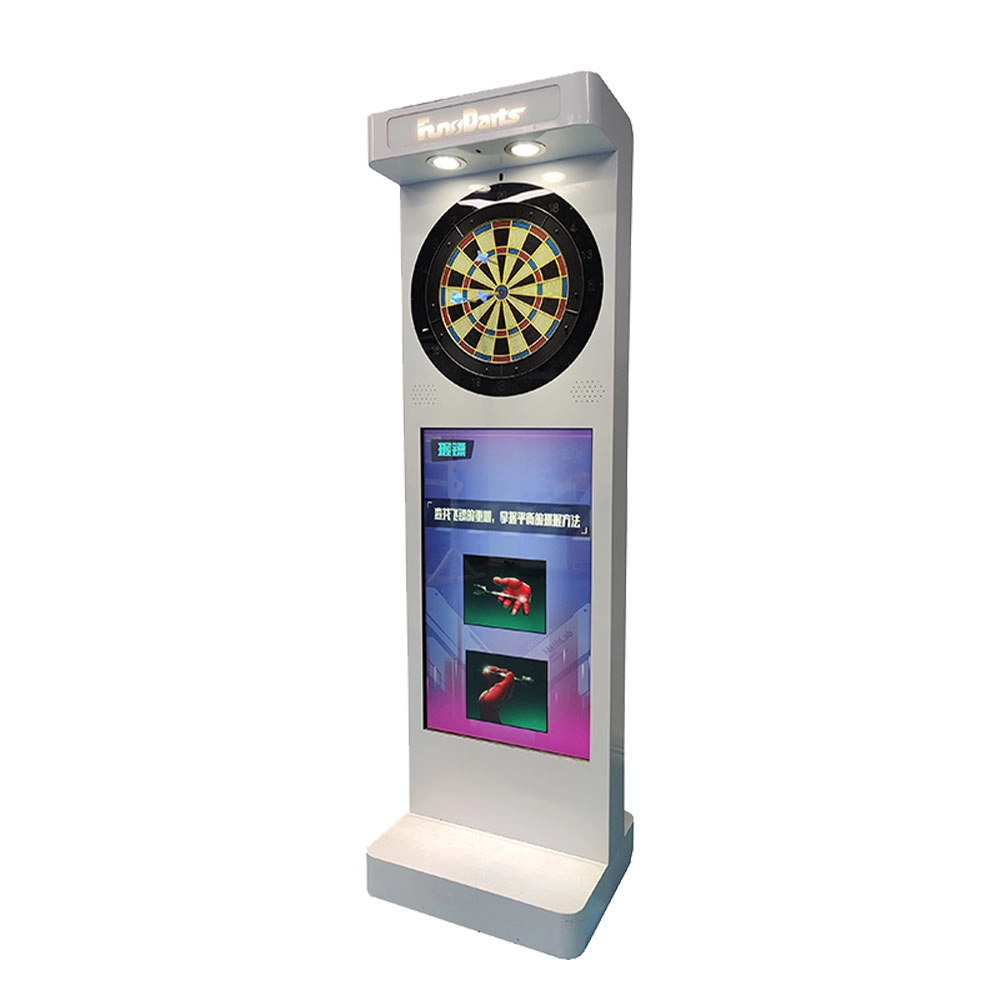
Neofuns Electronic Arcade Darts Machine S – Coin Operated Fun Dart Game with Soft Tip & Metal Tip Options, Stand-Up Electronic Dartboard for Arcade
Create private leagues for corporate unions, clubs, or friends with customizable rules (e.g., round-robin, knockout), syncing team rankings and individual contributions to boost collaboration. Branded interfaces and dartboards for company-themed tournaments.
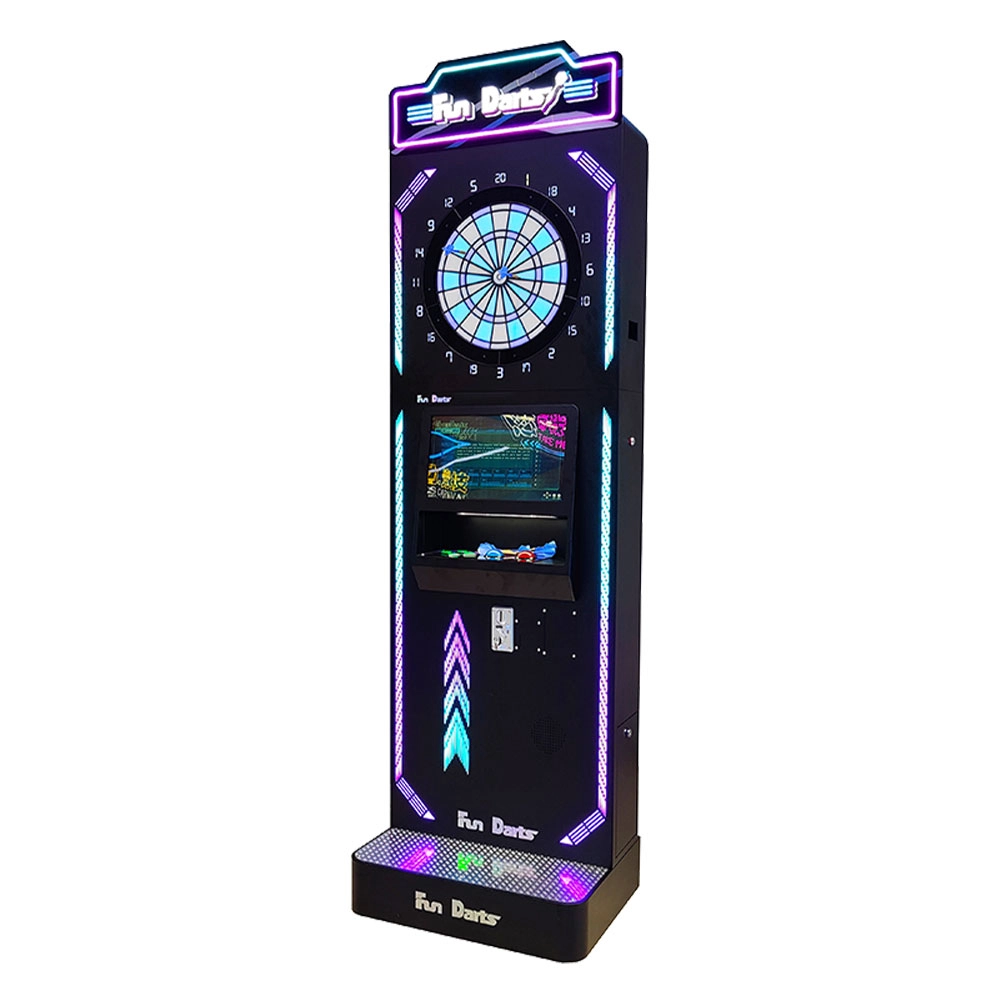
Neofuns Coin Operated Arcade Game Fun Darts Machine V –Cool Streamlined Appearance and Lighting Stand-Up Dart Machine for Arcade & Entertainment Venue
This smart dartboard seamlessly blends classic sport with cutting-edge tech,enjoy 30+ game modes and real-time multiplayer battles with dynamic animations. Professional self-healing sisal board with replaceable surfaces ensures durability for both training and entertainment.
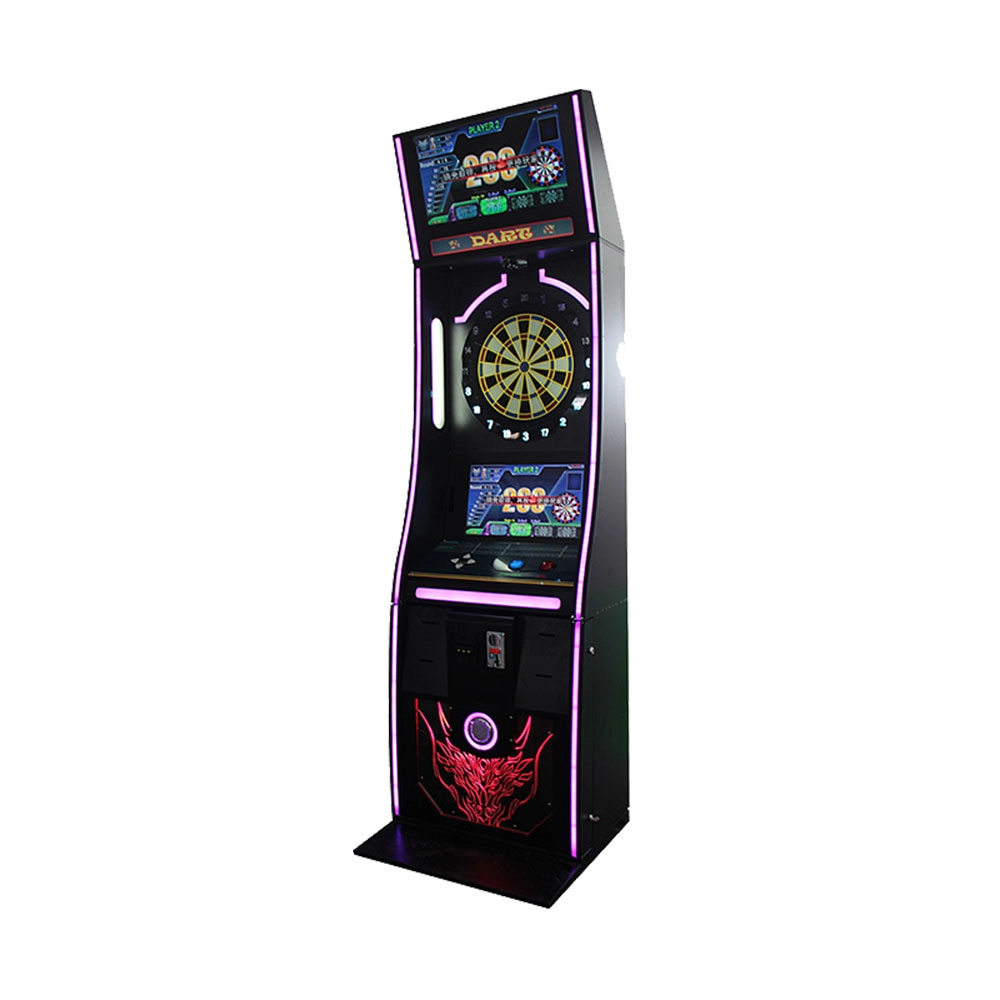
Neofuns Coin Operated Arcade Game Fun Darts Machine I – 32-inch Display on the Top Featuring Coin-operated And Arcade-style Designs
Equipped with high-precision infrared sensors, it tracks dart trajectories in real time and auto-scores, eliminating manual errors for fair competition. 30+ built-in game modes (e.g., "301 Battle, Fun Training") cater to all skill levels, supporting solo play, local multiplayer, and global online matches. Monetize via pay-per-play, sponsored tournaments, or brand partnerships (commercial); a one-time investment unlocks lifelong family entertainment.
Get in touch with us
If you have any comments or good suggestions, please leave us a message, later our professional staff will contact you as soon as possible.
Leading Electronic Dart Machine Manufacturer
NEOFUNS
NEOFUNS
NEOFUNS