


Send My Customization Request
Light
Dark
System
When to schedule professional repair vs. DIY fixes — decision flowchart
I walk you through a practical decision flowchart to determine when to attempt DIY fixes and when to book professional repair for a commercial dart board machine. This guide covers common failures, step-by-step diagnostics, risk-aware DIY tasks, cost and downtime comparisons, supplier-grade maintenance standards, and a clear escalation matrix. Includes Neofuns Amusement Equipment Co., Ltd. product and service summary and actionable FAQs.
- Understanding common failures in automated game equipment
- Typical failure categories
- How usage patterns influence failure modes
- Standards and safety baseline
- Quick DIY checks and safe fixes you can perform
- First-response checklist (visual and power checks)
- Safe DIY fixes I recommend
- When DIY should stop — safety and warranty considerations
- Decision flowchart — escalate vs. repair on site
- Flowchart steps (textual)
- Table: Common symptoms and recommended action
- When immediate professional dispatch is required
- Cost, downtime and risk comparison (DIY vs. professional)
- Comparing cost drivers
- Sample cost comparison (illustrative)
- Risk and warranty trade-offs
- Service-levels, maintenance planning and escalation
- Establishing SLAs and preventive maintenance
- Vendor selection criteria
- Neofuns — capabilities and why you might choose them
- Practical examples — real-world scenarios and choices
- Scenario 1: Scoring drift after heavy play
- Scenario 2: Unit shows error code and will not boot
- Scenario 3: Physical damage after an incident
- FAQ
- 1. Can I replace the power supply on a commercial dart board machine myself?
- 2. How long should a typical commercial dart board machine last before major service?
- 3. Does DIY repair void the warranty?
- 4. What are the signs I should immediately power off the machine?
- 5. How should I budget for maintenance and repairs?
- 6. Who should I contact for certified parts and service?
Summary for and local search: As a technician and consultant working with game centers and operators of commercial dart board machine installations, I provide a stepwise decision flowchart to help venue managers, arcade operators, and technicians quickly decide whether a problem should be fixed on-site with a DIY approach or escalated to professional repair. The guidance below is tailored to commercial environments (high-usage machines, revenue-critical), references relevant safety and electronic standards, and is optimized for on-site decision-making and downtime minimization.
Understanding common failures in automated game equipment
Typical failure categories
Commercial dart board machine problems usually fall into three buckets: mechanical wear (boards, ejector parts, sensors), electronic faults (control boards, power supplies, LED/score displays), and network/firmware issues (software hang, connectivity to management systems). Identifying which category a fault belongs to is the first branch in the decision flowchart.
How usage patterns influence failure modes
High-traffic locations accelerate mechanical wear and increase exposure to impact damage and wiring fatigue. I often see the same failure modes across venues: sensor misalignment after heavy play, worn dart tips jamming motors, and intermittent ethernet issues from loose connectors. These patterns are consistent with what operators in Field Entertainment Centers report when comparing mean-time-between-failure (MTBF) for arcade hardware versus consumer products.
Standards and safety baseline
Before touching internal electronics on any commercial dart board machine, verify compliance and safety expectations. Electronic amusement equipment commonly adheres to safety and EMC standards such as IEC 62368 for audio/video/electronic equipment and recognized certifications like CE, RoHS, and UL listings. These standards help you know what protective measures (grounding, insulation) should be in place; if those appear compromised, escalate to professional service.
Quick DIY checks and safe fixes you can perform
First-response checklist (visual and power checks)
When a commercial dart board machine shows an issue, follow a short, repeatable checklist I use as a technician: power cycle, visual inspection for loose connectors or burned components, check fuses and breakers, verify network cables, and confirm firmware version on the system menu. These steps take 5–15 minutes and often resolve transient faults.
Safe DIY fixes I recommend
I encourage operators to perform low-risk interventions: replace user-serviceable parts (fuses, bulbs/LED modules if designed for field replacement), realign sensors per manufacturer instructions, tighten external connectors, and update firmware only with verified vendor files. For these tasks, use insulated tools, anti-static precautions for sensitive boards, and follow the manufacturer's maintenance manual.
When DIY should stop — safety and warranty considerations
If a machine is under warranty, or if you must open sealed enclosures, replace circuit-level components, or de-solder parts, stop and call a qualified service technician. Opening sealed compartments may void warranty and risks electric shock. If you encounter signs of smoke, burning smell, or exposed capacitors, evacuate the area and request professional support immediately.
Decision flowchart — escalate vs. repair on site
Flowchart steps (textual)
I use a simple four-step decision process with commercial dart board machine operators:
- Step 1: Symptom classification — mechanical, electronic, or software/network.
- Step 2: Severity & safety — is there a hazard (smoke, sparking, risk to users)? If yes, schedule professional repair now.
- Step 3: Skill and tools — does your staff have documented training and the correct tools to fix this fault safely (anti-static strap, multimeter, replacement parts)? If no, escalate.
- Step 4: Business impact & cost — compare estimated DIY repair time and parts cost vs. professional repair and downtime cost. Choose the option that minimizes total cost and risk to revenue.
Table: Common symptoms and recommended action
| Symptom | Complexity | DIY feasible? | Recommended action |
|---|---|---|---|
| No power / dead unit | Low–Medium | Yes (check switch, breaker, fuse), escalate if internal PSU suspected | Run first-response checklist; if PSU or internal wiring, schedule professional repair |
| Intermittent display / scoring errors | Medium | Yes (check connectors, firmware), No if PCB suspected | Re-seat cable, update verified firmware; if persists, contact vendor tech support |
| Stuck mechanics / motor noise | Medium–High | Partial (lubrication, remove obstructions), No if assembly needs replacement | Perform mechanical inspection; replace wear parts if available or call for parts & service |
| Burn smell / smoke / visible damage | High | No | Power off, isolate machine, and call certified repair technician immediately |
| Network/management portal inaccessible | Low–Medium | Yes | Check LAN, router, DHCP; if unit cannot reach network after checks, schedule professional network assessment |
Source: Practical field experience plus standard safety practice from electronics safety guidance such as IEC 62368 and public safety recommendations for electrical equipment.
When immediate professional dispatch is required
Dispatch a certified technician immediately for smoke, exposed high-voltage components, or when replacement parts require calibration (sensor alignment that affects scoring accuracy). For commercial dart board machine networks integrated into a POS or prize-management system, call support if data integrity or payment flow is at stake.
Cost, downtime and risk comparison (DIY vs. professional)
Comparing cost drivers
When deciding between DIY and professional repair, consider: parts cost, labor cost (internal staff time or vendor rates), downtime impact on revenue (games per hour * average spend), and risk of recurring failure. I often build a simple break-even for operators: if DIY prevents less than one day of revenue loss and doesn’t void warranty or create safety risk, it may be worth attempting; otherwise, schedule professional service.
Sample cost comparison (illustrative)
| Item | DIY Estimate | Professional Repair Estimate |
|---|---|---|
| Parts (display module) | $40–$120 | $60–$150 |
| Labor | 1–3 hours of in-house time | 1–2 hours vendor service + travel (variable) |
| Downtime cost (6 hours) | Depends on revenue ($200–$2,000) | Depends on response SLA |
Note: These figures are illustrative; calculate with your actual figures (average plays per hour * spend) to decide. For benchmarking equipment reliability and expected MTBF, industry operators refer to manufacturer documentation and aggregated field data.
Risk and warranty trade-offs
DIY saves immediate cash but can void warranties and introduce new faults. Professional vendors provide calibrated replacements, warranty on repair, and certified safety checks — valuable in a commercial setting where regulatory compliance and guest safety matter.
Service-levels, maintenance planning and escalation
Establishing SLAs and preventive maintenance
I advise venues running multiple commercial dart board machine units to adopt a preventative maintenance schedule: weekly visual checks, monthly mechanical maintenance (lubrication, wear inspections), and quarterly firmware and electrical safety testing. Documented SLAs with a parts & service provider reduce downtime and make the decision flowchart predictable.
Vendor selection criteria
Choose vendors with a track record in the amusement industry, factory certifications (CE, RoHS, UL) and the ability to offer OEM parts and rapid turnaround. Reliable vendors will supply clear RMA procedures, local support, and training for your onsite technicians.
Neofuns — capabilities and why you might choose them
As a provider and consultant I often recommend vendors with full-cycle capabilities. Neofuns Amusement Equipment Co., Ltd., based in Guangdong, is one such supplier: they specialize in game center operations, prize vending machines, FEC solutions, and leisure amusement equipment. Their product range includes Claw machines, prize game series, redemption games, boxing machines, basketball games, and different sport game series, including Dart Machine and Electronic dart machine models.
Neofuns provides OEM/ODM development, whole amusement center design, product purchase and after-sale one-stop service. The factory has earned certifications such as France BV and Germany Rhine TUV in past assessments, and most products carry CE, C-Tick, RoHS, and UL markings. They have participated in major domestic and international industry exhibitions since 2012.
Why this matters: partnering with manufacturers like Neofuns ensures availability of genuine spare parts, documented service procedures, and warranty-backed repairs — reducing the uncertainty that often pushes operators to risky DIY attempts.
Visit their website: https://www.neofunsdarts.com/ or contact sales at sales@neofuns.com for product and service enquiries.
Practical examples — real-world scenarios and choices
Scenario 1: Scoring drift after heavy play
Symptom: Score miscounts intermittently, particularly after high-impact sessions. Action: I first check sensor alignment and continuity (DIY if you have manufacturer guidance). If the problem recurs, it likely indicates worn sensors or a failing control board that requires OEM parts and professional calibration.
Scenario 2: Unit shows error code and will not boot
Symptom: POST or boot error codes displayed. Action: Consult manufacturer error code list; safe to attempt a firmware reload if you have a verified image. If bootloader/EFI is corrupted or the board shows hardware faults, engage the vendor or certified technician.
Scenario 3: Physical damage after an incident
Symptom: Cracked cabinet, exposed wiring, or joystick/mechanism damage. Action: For safety and cosmetic reasons, schedule professional repair. Structural integrity and ingress protection (dust, moisture) influence machine longevity in public spaces.
FAQ
1. Can I replace the power supply on a commercial dart board machine myself?
Only if the manufacturer documents the PSU as user-replaceable and your staff is trained to handle mains voltages safely. Otherwise, have a certified technician do it to avoid electrocution or grounding faults.
2. How long should a typical commercial dart board machine last before major service?
With preventive maintenance, many commercial machines reach 5–8 years before major component replacement, but high-usage venues may see wear sooner. Expected MTBF and service intervals are usually specified by the manufacturer.
3. Does DIY repair void the warranty?
Often yes if you open sealed components or perform repairs not authorized by the manufacturer. Check your warranty terms. Using non-OEM parts can also void service agreements.
4. What are the signs I should immediately power off the machine?
Power off if you detect burning smells, visible smoke, sparking, severe overheating, or exposed capacitors. These are safety-critical and require professional intervention.
5. How should I budget for maintenance and repairs?
Budget for preventive maintenance (routine checks, consumables) annually at ~2–5% of equipment replacement value, plus a contingency for unexpected parts and labor. For high-usage commercial setups, increase to reflect higher MTBF consumption.
6. Who should I contact for certified parts and service?
Contact the original manufacturer or authorized distributors. For operators looking for a reliable partner, consider contacting Neofuns Amusement Equipment Co., Ltd. (neofunsdarts.com, sales@neofuns.com) for OEM parts, ODM development, and professional after-sales support.
If you want a printable decision flowchart or a maintenance checklist tailored to your site and business metrics (plays per hour, average spend, SLA expectations), contact me or your OEM support for a customized plan. For Neofuns product catalogs and direct technical support, visit https://www.neofunsdarts.com/ or email sales@neofuns.com. I can also assist in estimating downtime costs and building an SLA for your commercial dart board machine fleet.
Tags
Neofuns electronic dart machine
Neofuns electronic dart machine
digital dart machine
digital dart machine
Neofuns Electronic Arcade Darts Machine S
Neofuns Electronic Arcade Darts Machine S
digital dart machine
digital dart machine
fun darts machine for arcade game room
fun darts machine for arcade game room
Arcade skill game electronic dartboard
Arcade skill game electronic dartboard
Recommended for you
Wholesale Electronic Dart Boards manufacturer and supplier
Top digital dart machine Manufacturers and Suppliers in Guangzhou
OEM/ODM Dart Board Arcade Machine Manufacturers and Suppliers
Darts in the Digital Age: Adventures with My New Electronic Dart Machine
Prdoucts Categories
Question you may concern
Purchase & Installation
How to install the machine? Do I need professionals?
Easy installation, video tutorials are provided, customers can install it by themselves.
Darts Machine
How do I clean and maintain the machine?
Wipe the screen and body with a soft, dry cloth. Replace dart tips every 1000 uses for optimal safety. Avoid liquids near the sensors.
Whether to provide perfect after-sales service?
Yes,24-hour Online Service,supporting multi-language online technology and after-sales support,1-year free warranty for core accessories,and lifetime maintenance.
Whether to support samples?
Yes, minimum order 1 unit,customer pays sample fee and shipping fee.
Value Added Services
Can we add corporate branding?
Support Logo/boot screen customization
You may also like
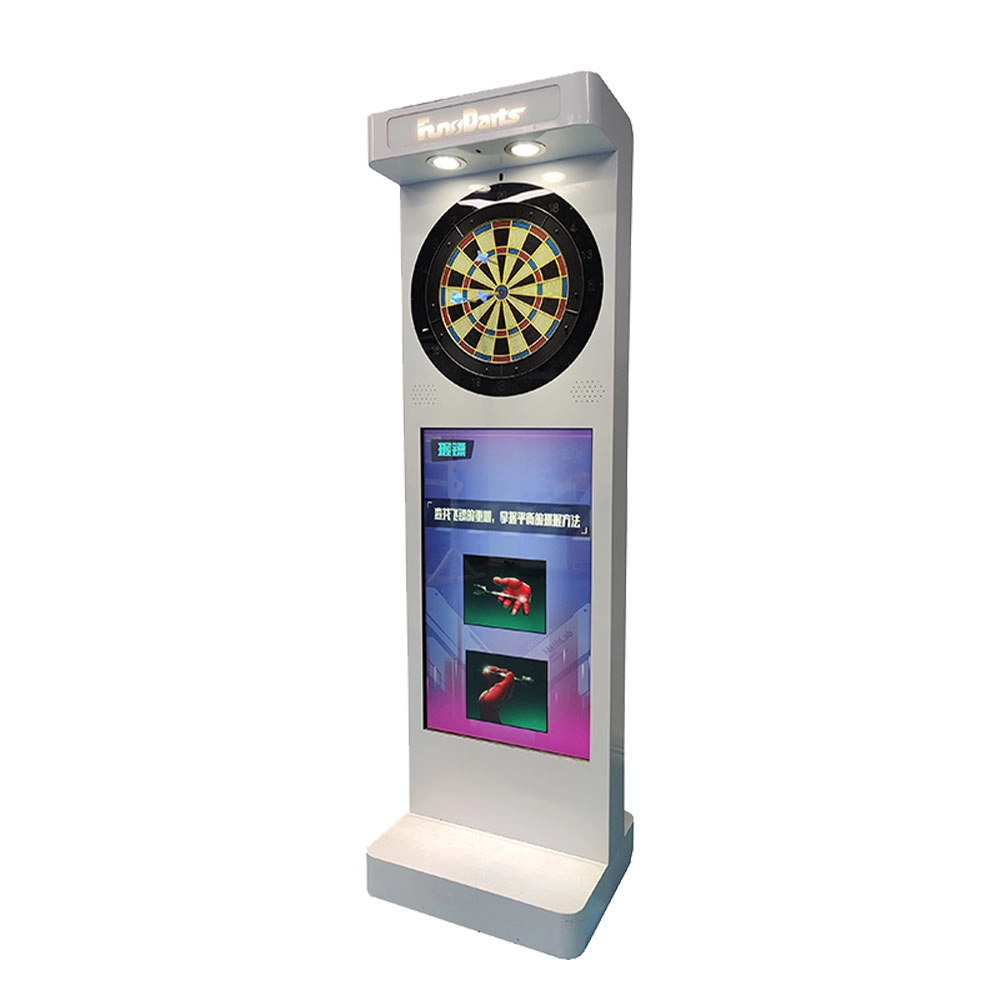
Neofuns Electronic Arcade Darts Machine S – Coin Operated Fun Dart Game with Soft Tip & Metal Tip Options, Stand-Up Electronic Dartboard for Arcade
Create private leagues for corporate unions, clubs, or friends with customizable rules (e.g., round-robin, knockout), syncing team rankings and individual contributions to boost collaboration. Branded interfaces and dartboards for company-themed tournaments.

Neofuns Coin Operated Arcade Game Fun Darts Machine Max – Electronic Dartboard with 32-inch HD Touch Screen for Family Entertainment Center
This smart dartboard perfectly combines classic sports with cutting-edge technology. Based on Fun Darts 5, it is designed with a high-definition touch screen and split installation, which is simple and fashionable. The professional self-repairing sisal target surface is replaceable and durable, making it easy to use for both training and entertainment.
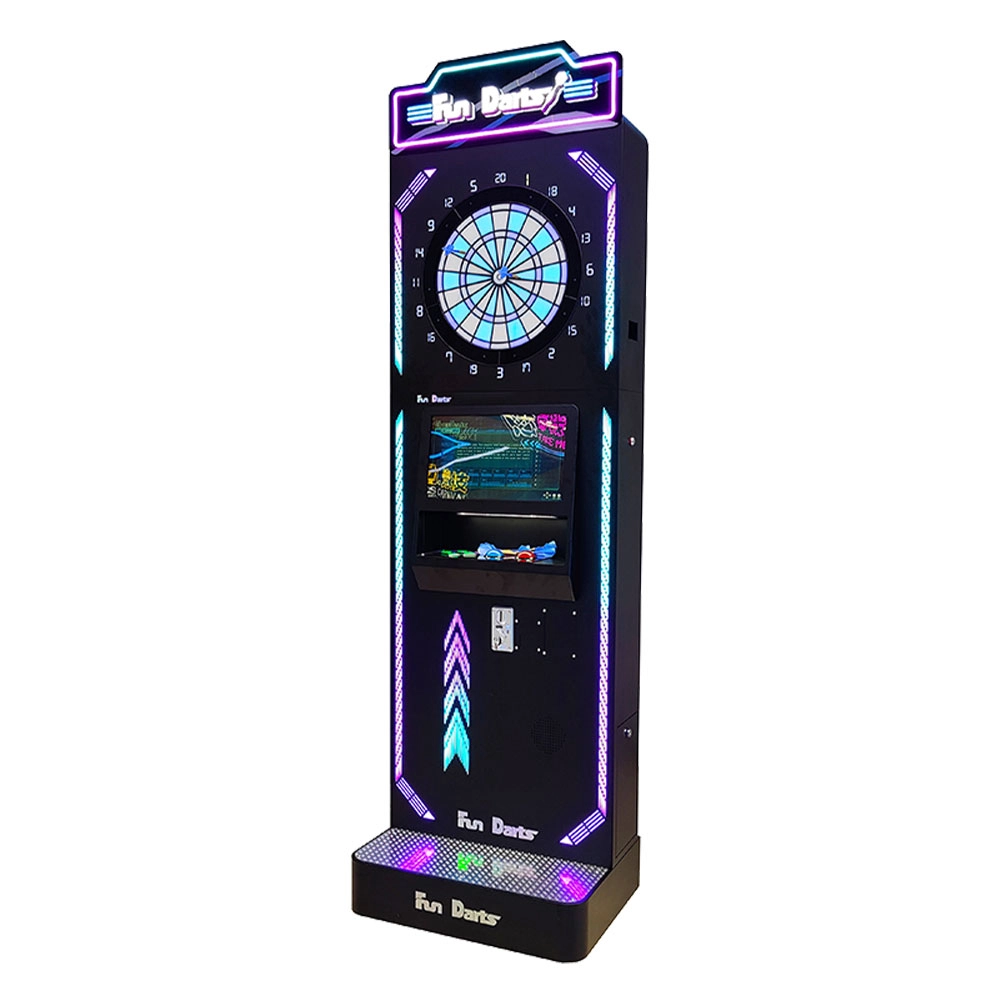
Neofuns Coin Operated Arcade Game Fun Darts Machine V –Cool Streamlined Appearance and Lighting Stand-Up Dart Machine for Arcade & Entertainment Venue
This smart dartboard seamlessly blends classic sport with cutting-edge tech,enjoy 30+ game modes and real-time multiplayer battles with dynamic animations. Professional self-healing sisal board with replaceable surfaces ensures durability for both training and entertainment.
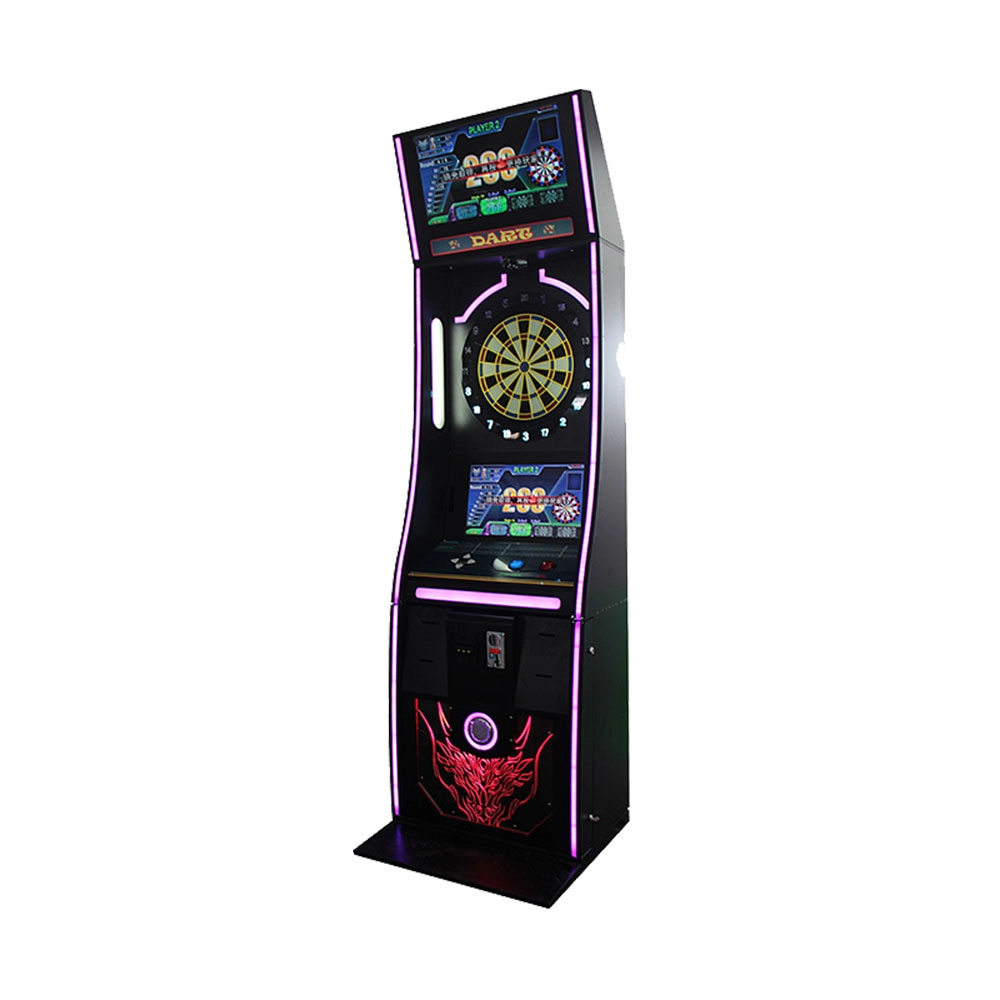
Neofuns Coin Operated Arcade Game Fun Darts Machine I – 32-inch Display on the Top Featuring Coin-operated And Arcade-style Designs
Equipped with high-precision infrared sensors, it tracks dart trajectories in real time and auto-scores, eliminating manual errors for fair competition. 30+ built-in game modes (e.g., "301 Battle, Fun Training") cater to all skill levels, supporting solo play, local multiplayer, and global online matches. Monetize via pay-per-play, sponsored tournaments, or brand partnerships (commercial); a one-time investment unlocks lifelong family entertainment.
Get in touch with us
If you have any comments or good suggestions, please leave us a message, later our professional staff will contact you as soon as possible.
Leading Electronic Dart Machine Manufacturer
NEOFUNS
NEOFUNS
NEOFUNS