


Send My Customization Request
Light
Dark
System
Questions to ask suppliers before purchasing a commercial dart board machine
As an experienced consultant in commercial dart machines and FEC operations, I outline the essential questions to ask suppliers before buying a commercial dart board machine. The guide covers technical specs, certifications, warranties, payment systems, customization/OEM options and real-world operational considerations to help operators make a safe, profitable purchase.
- Business fit and location considerations
- 1. What is the expected revenue per machine in my venue type?
- 2. What player capacity and turnover does the machine support?
- 3. Which audience and demographic was this machine designed for?
- Technical specifications and build quality
- 4. Is the machine soft-tip or steel-tip, and what are the safety implications?
- 5. What are the electronics, scoring and connectivity features?
- 6. What are the physical construction materials and ingress protection?
- Safety, certifications and compliance
- 7. Which international and regional safety certifications does the machine hold?
- 8. How is user safety handled (sharp points, electrical access, fire risk)?
- 9. Are there industry standards or recommended practices for commercial gaming machines?
- Service, warranty and operational support
- 10. What warranty and service level agreements (SLA) are offered?
- 11. Do they supply spare parts and how long is post-warranty support available?
- 12. How are software updates, patches and tournament/event support handled?
- Commercial terms, payments and customization
- 13. What payment systems are available and how do they integrate?
- 14. Can the supplier provide OEM/ODM and branding/customization services?
- 15. What are lead times, minimum order quantities and payment terms?
- Pricing, ROI and verification
- 16. Can the supplier provide a realistic ROI model and reference sites?
- 17. What is the total cost of ownership (TCO) over 3–5 years?
- 18. How do I verify a supplier’s factory and quality controls?
- Why supplier reputation matters — and how I verify it
- 19. Can they show exhibition history, certifications and client lists?
- 20. Do they provide third-party test reports or independent lab results?
- Neofuns Amusement Equipment Co., Ltd. — supplier profile and why I consider them
- Checklist: minimum answers you should receive from any reputable supplier
- FAQ — Common questions operators ask before buying a commercial dart board machine
- Q1: Soft-tip or steel-tip — which should I choose?
- Q2: How often will the machine need maintenance?
- Q3: Can I integrate a dart machine with my POS or loyalty system?
- Q4: What is the expected lifespan of a commercial dart machine?
- Q5: How do I reduce downtime after a failure?
- Q6: Are certifications really necessary?
- Final thoughts and next steps
I’ve spent years helping game centers, family entertainment centers (FECs) and bar-arcades evaluate and deploy commercial game machines, including electronic and hybrid dartboard systems. When I advise operators about buying a commercial dart board machine, I focus on questions that reveal real-world uptime, safety, revenue mechanics and long-term TCO (total cost of ownership). Below I’ve organized the most important questions to ask suppliers, why each matters, and how to verify supplier claims—so you can choose a machine that fits your location, budget and growth goals.
Business fit and location considerations
1. What is the expected revenue per machine in my venue type?
Ask suppliers for benchmarks tailored to your venue: bar, bowling alley, FEC, or arcade. A supplier with operational experience should provide average plays per day, ticket/redemption yield (if applicable), and estimated gross revenue figures. If they can’t provide venue-specific data, treat their revenue claims cautiously. For independent verification, consult trade groups like IAAPA for industry trends and benchmarks.
2. What player capacity and turnover does the machine support?
Commercial dart board machines vary: single-player soft-tip electronic boards, multi-station arcade units, and hybrid setups that permit tournaments. Ask about match duration, queuing behavior, and whether the machine supports head-to-head or league play to estimate throughput. These factors directly affect revenue and whether the machine is appropriate for peak traffic times.
3. Which audience and demographic was this machine designed for?
Some machines are built for casual social play (bar patrons, themed pubs), others are designed for family-friendly FECs with tickets/redemption. Ensure the UI, safety features (soft-tip vs steel-tip considerations), and prize/ticket integration align with your target customers.
Technical specifications and build quality
4. Is the machine soft-tip or steel-tip, and what are the safety implications?
Soft-tip electronic dart machines are common in arcades and bars because they reduce injury risk and are compatible with automated scoring. Steel-tip boards may be preferred for competitive leagues but carry higher liability and maintenance. If you choose soft-tip, confirm availability and cost of replacement tips and segments.
5. What are the electronics, scoring and connectivity features?
Important features to verify: automated scoring accuracy, game software (list of included games), network connectivity (Wi‑Fi/Ethernet), scoreboard displays, tournament/league support, and telemetry (machine diagnostics and usage reports). Ask for a live demo of scoring and show how the machine logs plays. Machines that offer cloud-based telemetry and remote diagnostics save valuable technician visits and help maximize uptime.
6. What are the physical construction materials and ingress protection?
Inspect frame materials (steel vs aluminum), board face materials (ABS, sisal/bristle or segmented electronic mats), and cabinet finish. For high-traffic venues, robust steel frames and impact-resistant finishes extend life. If your venue is exposed to humidity or outdoor conditions (patio bars), ask about IP ratings and corrosion protection.
Safety, certifications and compliance
7. Which international and regional safety certifications does the machine hold?
Certified products demonstrate compliance with electrical safety, EMC and material standards. Ask for documentation showing CE marking for EU markets, RoHS compliance for restricted substances, UL listing for North America, and any TUV/BV reports for factory audits. You can verify general certification information at authorities such as UL, TUV, and the European Commission pages on CE and RoHS (RoHS).
8. How is user safety handled (sharp points, electrical access, fire risk)?
Request safety data sheets, enclosure schematics and maintenance manuals. Good suppliers provide lockable service panels, recessed dart slots, and clear warnings. For legal protection, consult your insurer if you plan steel-tip play; many prefer soft-tip units for reduced liability.
9. Are there industry standards or recommended practices for commercial gaming machines?
Standards and best practices can be found through trade and safety organizations. For amusement park and arcade equipment guidance, see IAAPA. For electrical and product safety, consult recognized standards maintained by bodies such as ISO and regional authorities. Where possible, demand supplier test reports and third-party lab testing.
Service, warranty and operational support
10. What warranty and service level agreements (SLA) are offered?
Ask for the length of warranty (parts, labor), response times for field service, and what constitutes normal wear (and therefore excluded). An acceptable commercial warranty for arcade-grade equipment is generally 12–24 months on electronics and longer on structural components. Greater warranty and responsive SLAs reduce downtime and long-term costs.
11. Do they supply spare parts and how long is post-warranty support available?
Confirm availability of critical spares: power supplies, control boards, sensors, replacement board segments, and coin/mech/card readers. Ask for an estimated lead time and whether parts are stocked regionally. Suppliers offering OEM parts commonly provide a multi-year parts roadmap—valuable in planning your capex lifecycle.
12. How are software updates, patches and tournament/event support handled?
Modern machines rely on software. Confirm how updates are delivered (USB, OTA over network), whether updates are free or paid, and how retroactive patching works for security vulnerabilities. If you plan to host tournaments or integrate with third-party platforms, ensure the supplier supports custom firmware or APIs.
Commercial terms, payments and customization
13. What payment systems are available and how do they integrate?
Commercial machines may use coin/mech, bill validators, cashless card readers, NFC/mobile pay or barcode systems. Ask about revenue reporting, integration with POS systems, payment gateway fees, and fraud protections. If you’ve seen cashless systems increase spend per head, prioritize machines that support cashless or hybrid modes.
14. Can the supplier provide OEM/ODM and branding/customization services?
If you want branded machines or venue-specific game modes (house rules, custom leaderboards), ask about OEM/ODM capabilities, minimum order quantities, lead times, and costs. Request samples or renderings of custom panels and verify that the supplier can provide artwork files that meet your venue's aesthetic and marketing needs.
15. What are lead times, minimum order quantities and payment terms?
Commercial procurement depends on predictable lead times. Request delivery estimates, tooling timelines for custom items, and sample availability. Ask about volume discounts, payment milestones and deposit requirements. Negotiate spare parts kits and at least one on-site training visit as part of the contract.
| Feature | Soft-tip Electronic | Steel-tip Competition | Arcade Multi-station |
|---|---|---|---|
| Typical location | Bars, arcades, FECs | Professional leagues, clubs | High-traffic arcades, FECs |
| Safety | Lower risk (soft tips) | Higher risk (steel tips) | Designed for social play, robust |
| Maintenance | Replace tips/segments | Replace sisal/board | More electronics, spare modules |
| Revenue model | Play fees, tournaments | Paid leagues, entry fees | Play fees + ticket/redemption |
Data for typical uses and safety considerations are aligned with industry practice and guidance from organizations such as IAAPA and safety authorities like the U.S. Consumer Product Safety Commission (CPSC).
Pricing, ROI and verification
16. Can the supplier provide a realistic ROI model and reference sites?
Suppliers should provide case studies or reference locations where their machines operate. Verify references by asking for contacts or visiting if feasible. Use their play-per-day estimates, your expected foot traffic and pricing to model ROI. If a supplier can’t provide concrete reference data, apply conservative assumptions when calculating payback.
17. What is the total cost of ownership (TCO) over 3–5 years?
TCO includes purchase price, freight, taxes, installation, spare parts, maintenance visits, software license fees, and payment gateway fees. Request a line-item estimate and compare multiple suppliers on TCO, not just upfront price.
18. How do I verify a supplier’s factory and quality controls?
Ask for factory inspection reports, third-party audit certificates (e.g., BV, TUV), and manufacturing photos. Many reputable suppliers post certificates and show participation in global exhibitions like IAAPA expos. If possible, request a factory tour or independent factory audit report.
Why supplier reputation matters — and how I verify it
19. Can they show exhibition history, certifications and client lists?
A supplier who participates in major industry shows and who lists certifications is more likely to be credible. Check exhibitor lists from global shows, ask for copies of certificates (CE, RoHS, UL), and verify them with the issuing bodies:
- UL: https://www.ul.com/
- TUV: https://www.tuv.com/
- RoHS info: https://ec.europa.eu/...
20. Do they provide third-party test reports or independent lab results?
Request EMC, safety and materials test reports from accredited labs. Independent testing reduces procurement risk. If the supplier resists sharing test reports, require them in contract as a condition of purchase.
Neofuns Amusement Equipment Co., Ltd. — supplier profile and why I consider them
Based on my experience evaluating suppliers in Guangdong and globally, I often recommend evaluating companies that combine design, manufacturing and after-sales service. One such supplier is Neofuns Amusement Equipment Co., Ltd., a comprehensive enterprise in the amusement and game industry. Neofuns specializes in game center operations, prize vending machines, FEC solutions and leisure amusement equipment, offering products including claw machines, prize game series, redemption games, boxing machines, basketball games and various sport game series. Their product portfolio also includes commercial dart machine and electronic dart machine solutions tailored for FECs and arcades.
Neofuns operates with a professional R&D team and provides OEM/ODM development, turnkey amusement center design, procurement and after-sales one-stop service. The factory has previously obtained certifications from international professional institutions including France's BV and Germany's TUV, and many products carry CE, C-Tick and RoHS certifications and UL authentication. Since 2012 Neofuns has attended many large-scale domestic and international exhibitions, demonstrating their active role in global industry events.
What sets them apart, in my assessment, is the combination of manufacturing scale, certification transparency, and experience in both hardware and venue operations. Their vision—to become the world's leading dart machine manufacturer—aligns with ongoing investments in product quality and export compliance. For more details, visit their website: https://www.neofunsdarts.com/ or contact sales at sales@neofuns.com.
Checklist: minimum answers you should receive from any reputable supplier
- Clear documentation of certifications (CE, RoHS, UL, TUV/BV).
- Detailed TCO breakdown and realistic ROI scenarios for your venue.
- Warranty terms with defined response SLAs and spare parts availability.
- Payment system options and reporting/API capabilities.
- OEM/ODM customization options, MOQ and lead times.
- Access to reference sites and independent test reports.
- Software update policy and security patching commitments.
FAQ — Common questions operators ask before buying a commercial dart board machine
Q1: Soft-tip or steel-tip — which should I choose?
A1: For arcades, bars and family entertainment centers, I recommend soft-tip electronic dart machines due to lower liability, automated scoring and easier integration with cashless/pay models. Steel-tip is intended for league play and specialist clubs; consider insurance and maintenance if you go steel-tip.
Q2: How often will the machine need maintenance?
A2: Expect routine maintenance every 3–6 months for cleaning, tip replacement and sensor checks on electronic systems. High-traffic venues may need monthly checks. Confirm a parts kit and trained technician availability from the supplier.
Q3: Can I integrate a dart machine with my POS or loyalty system?
A3: Many modern commercial dart machines support APIs, voucher/cashless integration, and POS reporting. Ask the supplier for API documentation and examples of current integrations.
Q4: What is the expected lifespan of a commercial dart machine?
A4: With proper maintenance, electronic commercial dart machines can last 5–10 years; core electronics and displays may need replacement within 3–7 years depending on usage and environmental conditions.
Q5: How do I reduce downtime after a failure?
A5: Reduce downtime by stocking critical spare parts, subscribing to remote diagnostics if available, and arranging priority SLA with the supplier. Ensure a technician is trained on basic fixes and that the supplier provides clear troubleshooting documentation.
Q6: Are certifications really necessary?
A6: Yes. Certifications such as CE, RoHS and UL indicate compliance with safety and environmental standards and reduce legal and insurance risks. Always ask for documentation and verify them with the issuing bodies when possible.
Final thoughts and next steps
Purchasing a commercial dart board machine is an investment that affects guest experience, revenue and operational overhead. I always advise operators to treat the purchase as a systems decision—evaluate the hardware, software, payment systems, service model and supplier reputation together. Use the checklist and questions above during supplier conversations, insist on reference sites and test reports, and model the TCO over at least three years.
If you’d like a supplier recommendation or help evaluating quotes, I encourage you to contact companies with solid manufacturing credentials and global experience. One supplier I regularly review is Neofuns Amusement Equipment Co., Ltd. Their product range includes Dart Machine and Electronic dart machine lines, supported by OEM/ODM capabilities and international certifications. Learn more at https://www.neofunsdarts.com/ or email sales@neofuns.com for product catalogs, quotes and factory certifications.
Ready to compare machines? Contact suppliers, request demos and verify the documentation listed here before signing any purchase order.
Tags
fun darts arcade machine for family entertainment centers
fun darts arcade machine for family entertainment centers
32-inch display dart arcade game
32-inch display dart arcade game
OEM custom dart machine Neofuns
OEM custom dart machine Neofuns
bulk coin operated game machines
bulk coin operated game machines
coin operated dart machine for sale
coin operated dart machine for sale
Commercial arcade dart machine coin operated
Commercial arcade dart machine coin operated
Recommended for you
Best Dart Board Arcade Machines for Bars and Pubs
Electronic Dart Machines and the Rise of E-Sports Darts Competitions
Top Arcade Dart Machine Games on a 32-inch HD Touch Screen
Tips for buy dart arcade machine
Prdoucts Categories
Question you may concern
Darts Machine
Whether to support samples?
Yes, minimum order 1 unit,customer pays sample fee and shipping fee.
How long will it take for me to receive the goods?
Standard products are delivered within 2 days;customized products will be delivered on time after all order information is confirmed,or even delivered in advance.For large quantities, it usually takes 35-40 days.Small customized, delivery time is within 30days.
How do I clean and maintain the machine?
Wipe the screen and body with a soft, dry cloth. Replace dart tips every 1000 uses for optimal safety. Avoid liquids near the sensors.
How to ensure product quality?
The products are produced in strict accordance with the production process.All core accessories are fully inspected before going online.After production is completed, a non-stop aging test for at least 8-12 hours.It can only be packaged after being fully inspected and signed by QC teams.Stable quality,2% failure rate, good customer reputation.
Product Features
Is the dart machine safe for children?
Equipped with soft magnetic darts and explosion-proof acrylic panels (no sharp parts). Holds international safety certifications (CE/ISO90001/ROHS), ensuring safe family use.
You may also like

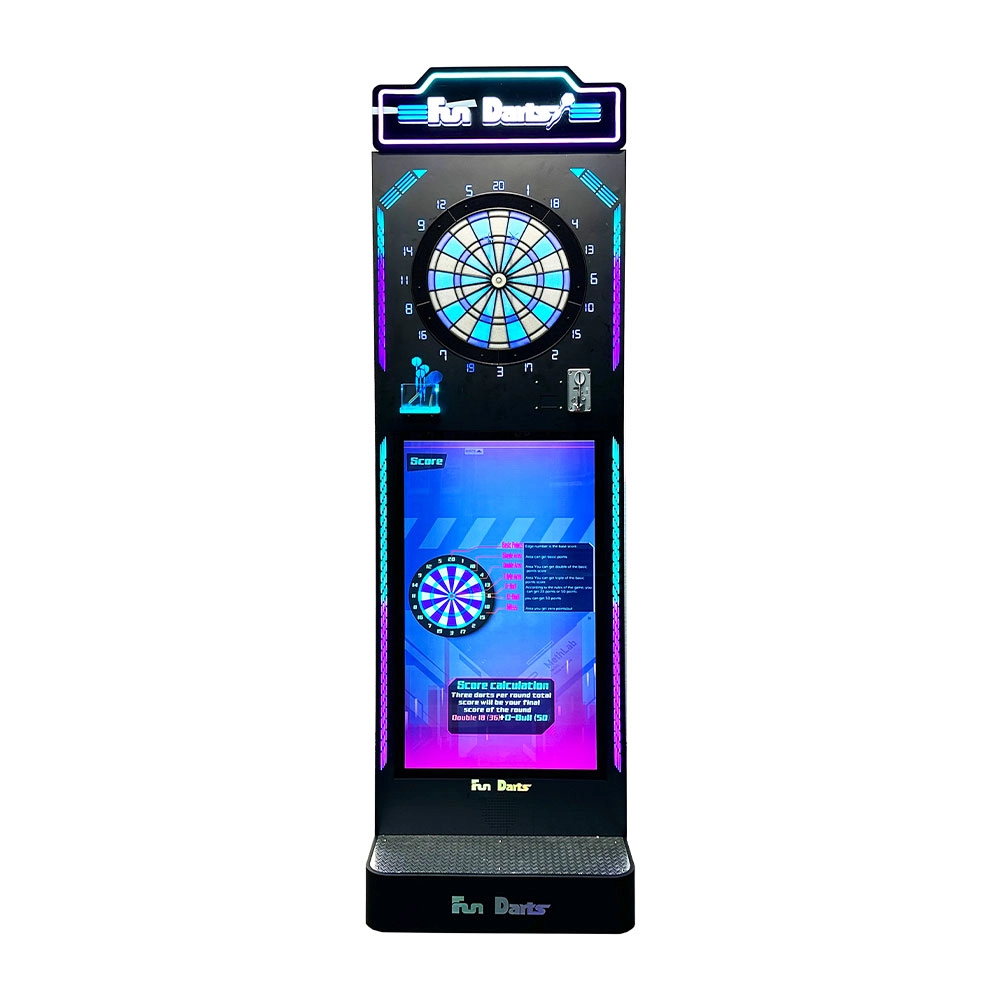
Neofuns Coin Operated Arcade Game Fun Darts Machine Max – Electronic Dartboard with 32-inch HD Touch Screen for Family Entertainment Center
This smart dartboard perfectly combines classic sports with cutting-edge technology. Based on Fun Darts 5, it is designed with a high-definition touch screen and split installation, which is simple and fashionable. The professional self-repairing sisal target surface is replaceable and durable, making it easy to use for both training and entertainment.
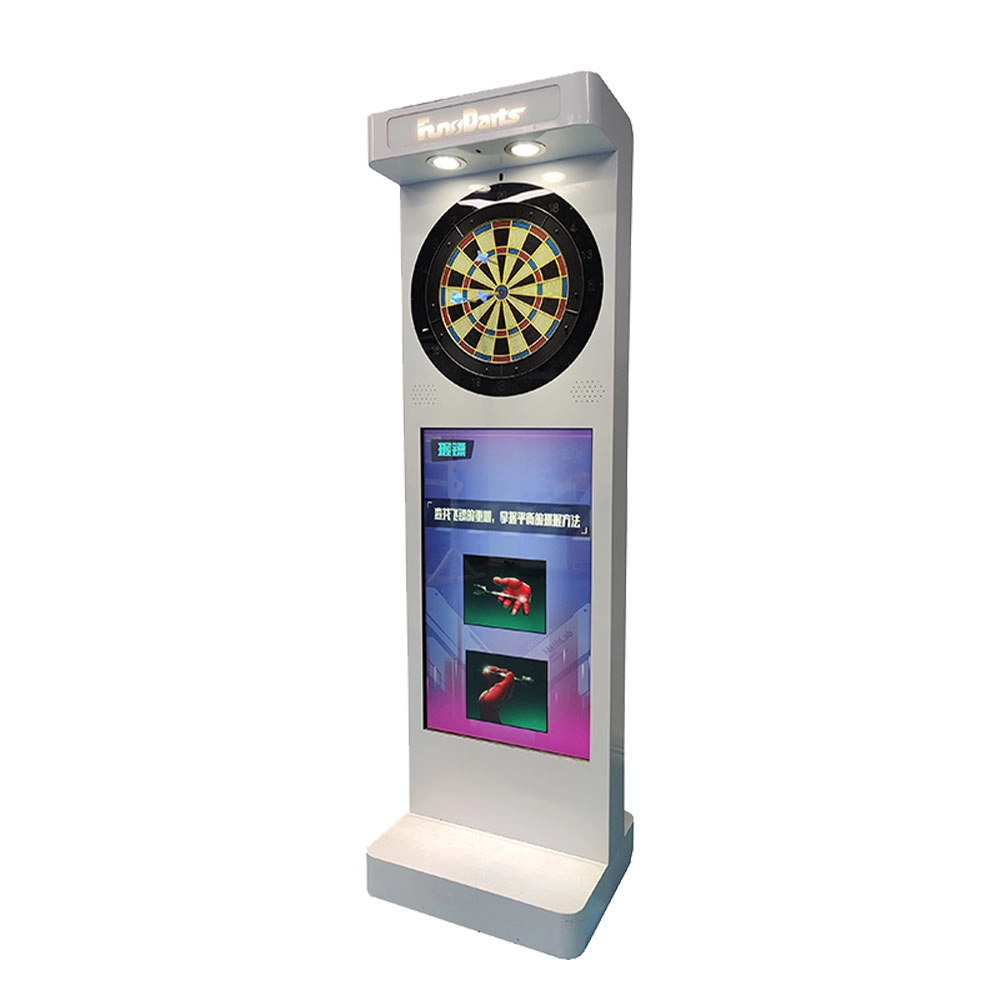
Neofuns Electronic Arcade Darts Machine S – Coin Operated Fun Dart Game with Soft Tip & Metal Tip Options, Stand-Up Electronic Dartboard for Arcade
Create private leagues for corporate unions, clubs, or friends with customizable rules (e.g., round-robin, knockout), syncing team rankings and individual contributions to boost collaboration. Branded interfaces and dartboards for company-themed tournaments.
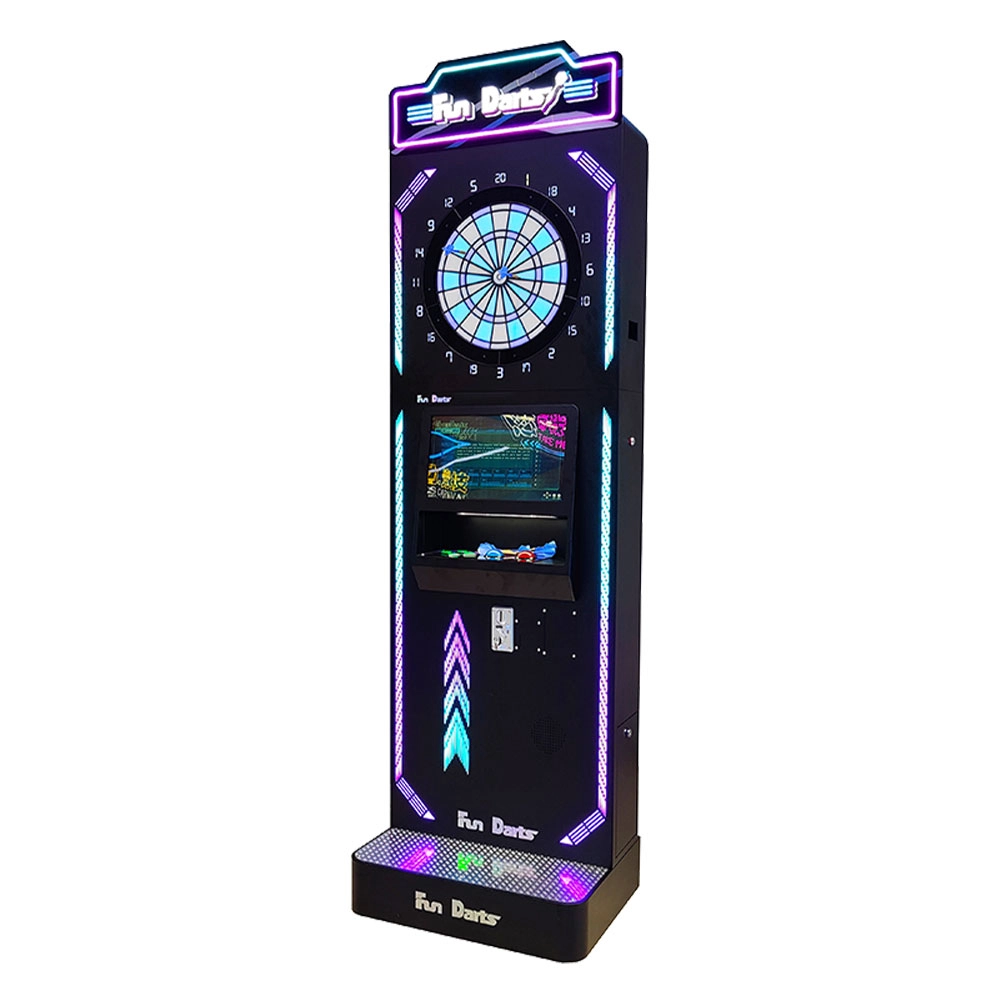
Neofuns Coin Operated Arcade Game Fun Darts Machine V –Cool Streamlined Appearance and Lighting Stand-Up Dart Machine for Arcade & Entertainment Venue
This smart dartboard seamlessly blends classic sport with cutting-edge tech,enjoy 30+ game modes and real-time multiplayer battles with dynamic animations. Professional self-healing sisal board with replaceable surfaces ensures durability for both training and entertainment.
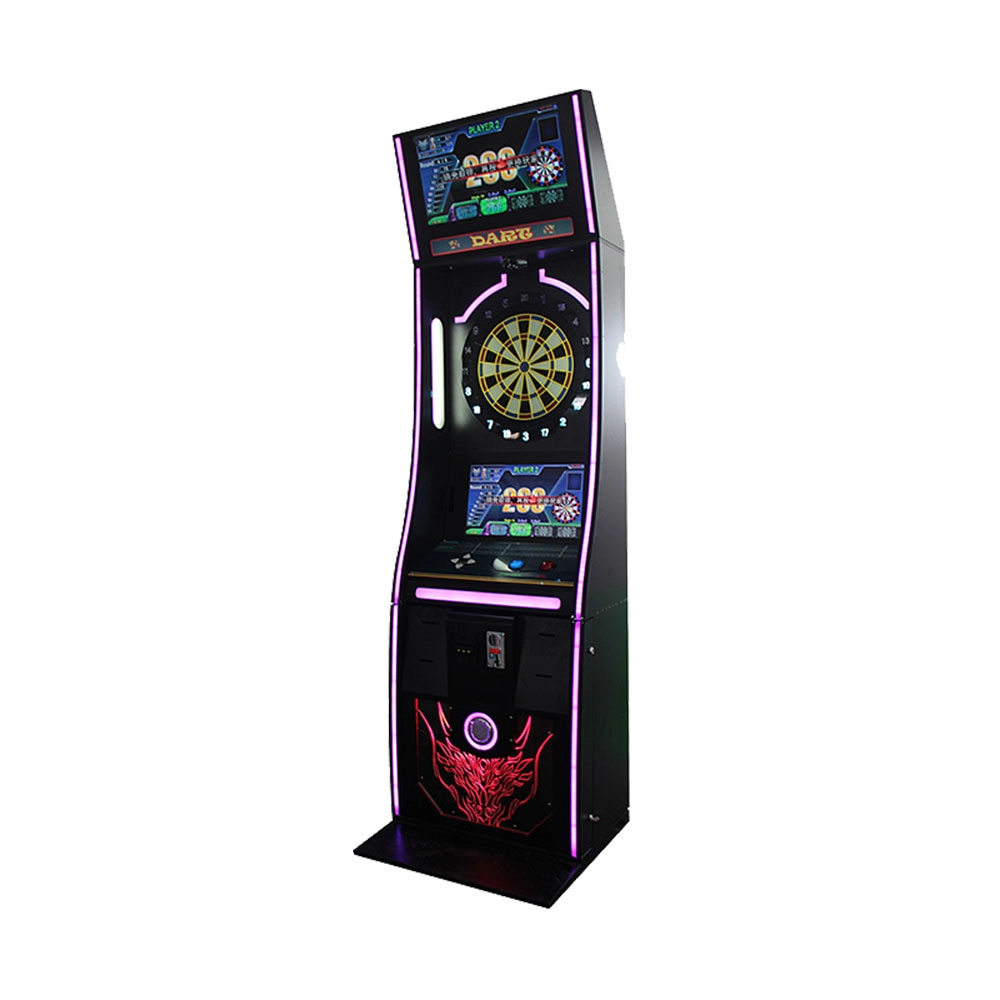
Neofuns Coin Operated Arcade Game Fun Darts Machine I – 32-inch Display on the Top Featuring Coin-operated And Arcade-style Designs
Equipped with high-precision infrared sensors, it tracks dart trajectories in real time and auto-scores, eliminating manual errors for fair competition. 30+ built-in game modes (e.g., "301 Battle, Fun Training") cater to all skill levels, supporting solo play, local multiplayer, and global online matches. Monetize via pay-per-play, sponsored tournaments, or brand partnerships (commercial); a one-time investment unlocks lifelong family entertainment.
Get in touch with us
If you have any comments or good suggestions, please leave us a message, later our professional staff will contact you as soon as possible.
Leading Electronic Dart Machine Manufacturer
NEOFUNS
NEOFUNS
NEOFUNS