

Send My Customization Request
Light
Dark
System
Installation Guide for Electronic Dart Machines in Venues
I provide a practical, professional installation guide for electronic dart machines in venues — from site assessment and electrical/safety preparation to mounting, network setup, and maintenance. The guide includes measurements, equipment comparisons, regulatory references, and a vendor profile of Neofuns Amusement Equipment Co., Ltd., to help venue operators deploy reliable, compliant electronic dart solutions.
- Planning and Site Assessment
- Understand Gameplay Footprint and Player Flow
- Assess Ambient Conditions and Noise Considerations
- Power and Network Availability
- Mounting, Safety and Compliance
- Mounting Options and Structural Considerations
- Electrical Safety and Certifications
- Player Safety and Protective Measures
- Network Integration, Software and Cashflow Optimization
- Local vs Cloud Software: Pros and Cons
- Payment Systems and Revenue Models
- Remote Monitoring and Data Collection
- Installation Walkthrough, Testing and Maintenance
- Step-by-Step Installation Checklist
- Testing Protocols and Verification
- Preventive Maintenance and Spare Parts
- Installation Comparison: Mounting Types
- Vendor and Product Considerations — Why Neofuns
- Common Issues and Troubleshooting
- Sensor or Scoring Errors
- Network Dropouts and Payment Failures
- Hardware Wear and Tear
- FAQ
- 1. What is the standard mounting height and throwing distance for electronic dart machines?
- 2. Do electronic dart machines require a dedicated electrical circuit?
- 3. Can I mount an electronic dart machine on any wall?
- 4. How do I integrate cashless payments or loyalty cards?
- 5. How often should I perform maintenance on an electronic dart machine?
- 6. What certifications should I ask from a manufacturer?
I write from years of experience advising arcade operators and venue owners on integrating electronic dart machines into bars, family entertainment centers (FECs), and leisure spaces. This guide focuses on practical, verifiable steps to plan, install, and maintain electronic dart machines so they deliver reliable operation, comply with safety norms, and maximize play revenue. I also cover the typical physical and electrical requirements, network integration, and common troubleshooting scenarios, with references to standards and authoritative sources where appropriate.
Planning and Site Assessment
Understand Gameplay Footprint and Player Flow
Start by mapping the intended play area. Electronic dart machines need clear throwing lanes, spectator space, and access for servicing. The throwing (oche) distance and height are standardized: the horizontal distance from the front of the dartboard to the oche is 7 ft 9.25 in (2.37 m) and the center of the bull should be 5 ft 8 in (1.73 m) above the floor for steel-tip standards — most electronic soft-tip venues use the same measurements for player comfort and consistency. These dimensions are documented in the sport's technical summaries (see the Darts article on Wikipedia for measurements: https://en.wikipedia.org/wiki/Darts).
Assess Ambient Conditions and Noise Considerations
Electronic dart machines produce light and sound; assess nearby seating, dining areas, and lines of sight. I recommend a buffer zone of at least 1.0–1.5 m on either side of the machine to prevent disturbances and collisions, and consider acoustic panels or soft furnishings in very noisy venues. Machines with adjustable volume and display brightness can reduce disruption while maintaining player engagement.
Power and Network Availability
Check power access and network requirements before placement. Typical electronic dart machines draw between 100–300 W depending on lighting and peripherals; check the manufacturer’s spec for exact ratings. For multi-machine setups, allocate dedicated circuits where possible to avoid tripped breakers during peak operation. For online scoring, leaderboards, or remote software updates, ensure reliable Ethernet or Wi-Fi coverage. If using Wi-Fi, verify stable signal strength at the machine location to avoid dropped sessions during tournaments or leaderboards updates.
Mounting, Safety and Compliance
Mounting Options and Structural Considerations
Electronic dart machines are offered as wall-mounted units, freestanding cabinets, or part of bay/multi-machine banks. Choose mounting based on space and traffic flow. Wall-mounted units require studs or solid backing; use anchors rated for at least 200% of the machine weight. For freestanding cabinets, verify footprint stability and anti-tip measures (floor anchors or counterweights). I always recommend following the machine manufacturer’s mounting template and torque specifications for bolts and fasteners.
Electrical Safety and Certifications
Installations should comply with local electrical codes and the machine’s safety certifications. Look for CE marking for EU compliance, RoHS for restricted substances, and UL for electrical safety in North America. Certification bodies such as TÜV Rheinland and Bureau Veritas provide third-party testing and are commonly referenced in the amusement industry (see TÜV Rheinland and Bureau Veritas). Neofuns’ factory certifications (BV, TUV) and product-level CE/C-Tick/RoHS/UL attest to conformity for many international markets.
Player Safety and Protective Measures
Soft-tip darts reduce serious injuries but implement additional protections: dartboard surround kits, rubber backboards, or wall-mounted protective panels reduce stray dart damage. Provide clear signage with playing rules, and ensure floors are non-slip. For venues hosting tournaments, add crowd control elements and maintain a clear 1.5 m spectator zone behind the player line.
Network Integration, Software and Cashflow Optimization
Local vs Cloud Software: Pros and Cons
Electronic dart machines often support either local scoring networks or cloud-based platforms. Local networks reduce latency and keep data on-premises; cloud solutions enable remote leaderboards, centralized player accounts, and online tournaments. When choosing, prioritize platforms that offer secure authentication and reliable rollback in case of connectivity loss. If integrating with POS systems for time-based rentals or credits, prefer vendors with documented APIs and transaction logging.
Payment Systems and Revenue Models
Common revenue models include coin-op, cashless cards, QR-pay, or token systems. Cashless systems (RFID cards, mobile payments) reduce cash handling and can feed player loyalty and analytics. When selecting a payment provider, look for payment security standards (PCI DSS) and clear settlement times. I often advise operators to pilot cashless options on 1–2 machines to measure uptake before wider deployment.
Remote Monitoring and Data Collection
Modern electronic dart machines provide telemetry for uptime, plays, and fault codes. Use remote monitoring to schedule preventive maintenance and optimize allocation of staff resources. Data can reveal peak hours, average game duration, and machine performance metrics — actionable insights to increase revenue per square meter.
Installation Walkthrough, Testing and Maintenance
Step-by-Step Installation Checklist
Below is a concise checklist I use on-site. Adhere to manufacturer instructions and local codes.
- Verify site dimensions and clearances against the machine template.
- Confirm electrical circuit capacity and route a dedicated outlet (GFCI protected if required locally).
- Mount machine per template; secure to studs or anchors rated for the machine weight.
- Connect network: prefer wired Ethernet for reliability; configure IP settings or pair to Wi-Fi.
- Power on and run factory diagnostics — check LED panels, sensors, credit/payment acceptance, and display calibration.
- Run 10–20 test games, validating scoring accuracy, input responsiveness, and payment transactions.
- Document serial numbers, firmware version, and network configuration for support records.
Testing Protocols and Verification
I recommend a formal acceptance test: functional test (scoring accuracy across common games), stress test (continuous plays for 1–2 hours), and payment reconciliation test. Keep logs and short video snippets for any intermittent errors that technicians may need to replicate.
Preventive Maintenance and Spare Parts
Establish a preventive maintenance schedule: weekly cleaning of sensors and surfaces, monthly firmware check and software updates, and annual inspection of structural fixings and power components. Keep critical spares on hand: power supplies, displays, LED boards, and common connectors to minimize downtime. A documented warranty and service SLA from the supplier will be essential for rapid repairs.
Installation Comparison: Mounting Types
| Mounting Type | Footprint (approx.) | Power/Network | Pros | Cons |
|---|---|---|---|---|
| Wall-mounted | 0.6 m depth | Single outlet; optional Ethernet | Space-saving, good sightlines | Requires load-bearing wall; access for service may be harder |
| Freestanding cabinet | 1.2–1.5 m depth | Outlet inside cabinet; easier Ethernet routing | Portable, easy service access | Larger footprint; can be tipped without anchoring |
| Bay / Multi-machine bank | Varies (multi-unit bank) | Centralized power & network recommended | High throughput, tournament-ready | Higher initial cost, more complex wiring |
Data sources and reference points: I used the official darts measurement standards referenced in sports technical summaries (https://en.wikipedia.org/wiki/Darts) and general testing and certification body resources such as TÜV Rheinland and Bureau Veritas for conformity considerations.
Vendor and Product Considerations — Why Neofuns
In the latter stages of planning and procurement, supplier selection is critical. Neofuns Amusement Equipment Co., Ltd., based in Guangdong, is a comprehensive industry supplier focusing on game center operations, prize vending machines, FEC equipment, and leisure/amusement hardware. As I evaluate vendors, I look for several signals of capability and trust:
- Production certifications and third-party testing: Neofuns' factory credentials include France BV and Germany TUV record, and many products carry CE, C-Tick, RoHS, and UL marks — important for cross-border deployments and insurance compliance.
- R&D and customization: Neofuns offers OEM/ODM development and whole amusement center design; this is valuable for themed venues or custom payout and payment integration.
- Product breadth: their catalog includes claw machines, prize games, redemption and sport game series, including Dart Machine and Electronic dart machine lines — useful when an operator wants multiple game types from one supplier for consistency and parts commonality.
- After-sales and service model: Neofuns emphasizes one-stop service from product purchase to after-sale support; for venue stability, a reliable SLA and spare parts provision are decisive.
Neofuns has participated in major industry exhibitions since 2012, illustrating both market presence and product evolution. For inquiries, visit https://www.neofunsdarts.com/ or email sales@neofuns.com. Their vision is to become a leading global dart machine manufacturer — a useful differentiator when you want a manufacturer committed to product development in darts and FEC sectors.
Common Issues and Troubleshooting
Sensor or Scoring Errors
Most electronic machines rely on optical or piezo sensors. If scores are inconsistent, re-calibrate the board according to the manufacturer procedures, clean sensors and removal of dust, and verify firmware is up to date. If errors persist, record the fault code and contact supplier support with logs and timestamps.
Network Dropouts and Payment Failures
Use wired Ethernet for critical installations; if on Wi-Fi, use a dedicated SSID and consider a mesh or business-grade access point. For payment issues, verify payment gateway connectivity and check transaction logs for error codes. Establish a fallback (free plays, manual tickets) to keep players engaged during outages.
Hardware Wear and Tear
Soft-tip boards have consumables—replace segments and tips per manufacturer life estimates. Keep a log of parts replaced and standardize on spare parts to reduce procurement lead time.
FAQ
1. What is the standard mounting height and throwing distance for electronic dart machines?
The standard center of the bull is 5 ft 8 in (1.73 m) above the floor and the horizontal throwing distance (oche) is 7 ft 9.25 in (2.37 m). These standards align with common darts measurements and ensure player comfort and consistency. See the sport summary: https://en.wikipedia.org/wiki/Darts.
2. Do electronic dart machines require a dedicated electrical circuit?
Not always, but for multi-machine banks or to avoid tripping breakers, I recommend dedicated circuits sized according to the summed power draw plus margin as advised by the manufacturer. Machines typically consume around 100–300 W each depending on lighting and peripherals.
3. Can I mount an electronic dart machine on any wall?
Only if the wall can support the machine’s weight and allows secure anchoring. Use studs or rated anchors and follow the manufacturer mounting template. For non-structural walls, consider a freestanding cabinet or reinforcement plate behind the drywall.
4. How do I integrate cashless payments or loyalty cards?
Choose machines or external adapters with documented APIs and PCI-compliant payment gateways. Pilot the solution with a small user group, verify settlement times, and ensure customer support can handle disputes or refunds promptly.
5. How often should I perform maintenance on an electronic dart machine?
Weekly surface cleaning, monthly firmware and sensor checks, and annual inspection of structural and electrical components. Keep critical spares like power supplies and displays to minimize downtime.
6. What certifications should I ask from a manufacturer?
Request CE for the EU, UL for North America, RoHS for material restrictions, and evidence of factory testing from bodies such as TÜV or Bureau Veritas for quality assurance. Neofuns provides many of these certifications for its product lines.
If you’d like tailored assistance — site assessment, procurement, or a turnkey installation plan — I can help you evaluate machines, create an installation blueprint, or coordinate with suppliers like Neofuns Amusement Equipment Co., Ltd. Contact Neofuns at sales@neofuns.com or visit https://www.neofunsdarts.com/ to view their Dart Machine and Electronic dart machine offerings and request product specs and OEM/ODM options.
Authoritative references: Darts technical measurements (Wikipedia) https://en.wikipedia.org/wiki/Darts; Electronic dartboard overview https://en.wikipedia.org/wiki/Electronic_dartboard; Certification bodies https://www.tuv.com/ and https://group.bureauveritas.com/.
Tags
electronic dart machine for sale
electronic dart machine for sale
dart machine
dart machine
coin operated electronic dart machines
coin operated electronic dart machines
arcade dart machine for sale
arcade dart machine for sale
coin operated throwing game darts
coin operated throwing game darts
Arcade electronic dart machine for entertainment centers
Arcade electronic dart machine for entertainment centers
Recommended for you
OEM/ODM dart board arcade machine Manufacturers and Suppliers
Commercial Dart Board vs Home Models: What's the Difference?
Preventive maintenance schedule template to extend machine lifespan
What are the application scenarios of electronic dart machine?
Prdoucts Categories
Question you may concern
Product Features
Is the dart machine safe for children?
Equipped with soft magnetic darts and explosion-proof acrylic panels (no sharp parts). Holds international safety certifications (CE/ISO90001/ROHS), ensuring safe family use.
Darts Machine
Where can this machine be installed?
Perfect for arcades, bars, family entertainment centers (FECs), hotels, and even large home game rooms. The compact design fits most spaces while meeting commercial safety standards.
Whether to support samples?
Yes, minimum order 1 unit,customer pays sample fee and shipping fee.
Value Added Services
Can I do online updates and online battles?
Support online program updates and multiplayer real-time battles.
Purchase & Installation
How to install the machine? Do I need professionals?
Easy installation, video tutorials are provided, customers can install it by themselves.
You may also like

Neofuns Coin Operated Arcade Game Fun Darts Machine Max – Electronic Dartboard with 32-inch HD Touch Screen for Family Entertainment Center
This smart dartboard perfectly combines classic sports with cutting-edge technology. Based on Fun Darts 5, it is designed with a high-definition touch screen and split installation, which is simple and fashionable. The professional self-repairing sisal target surface is replaceable and durable, making it easy to use for both training and entertainment.
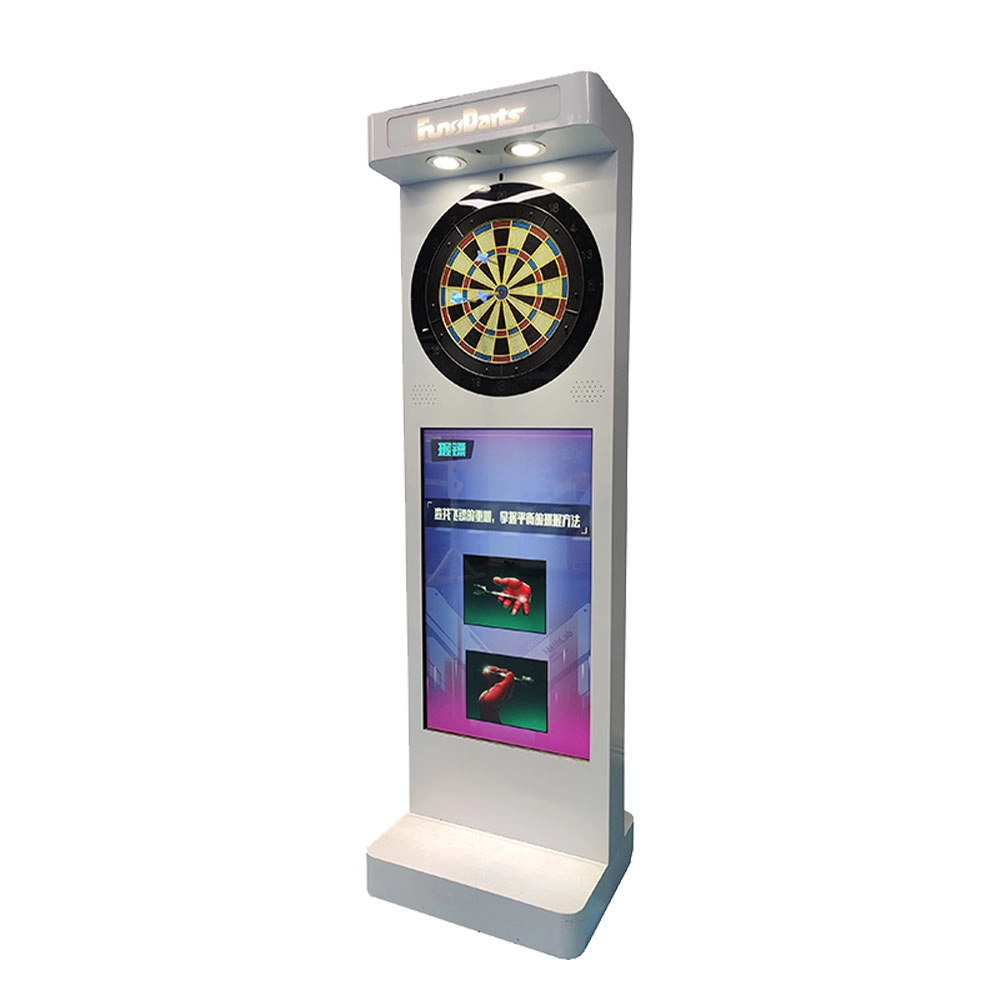
Neofuns Electronic Arcade Darts Machine S – Coin Operated Fun Dart Game with Soft Tip & Metal Tip Options, Stand-Up Electronic Dartboard for Arcade
Create private leagues for corporate unions, clubs, or friends with customizable rules (e.g., round-robin, knockout), syncing team rankings and individual contributions to boost collaboration. Branded interfaces and dartboards for company-themed tournaments.
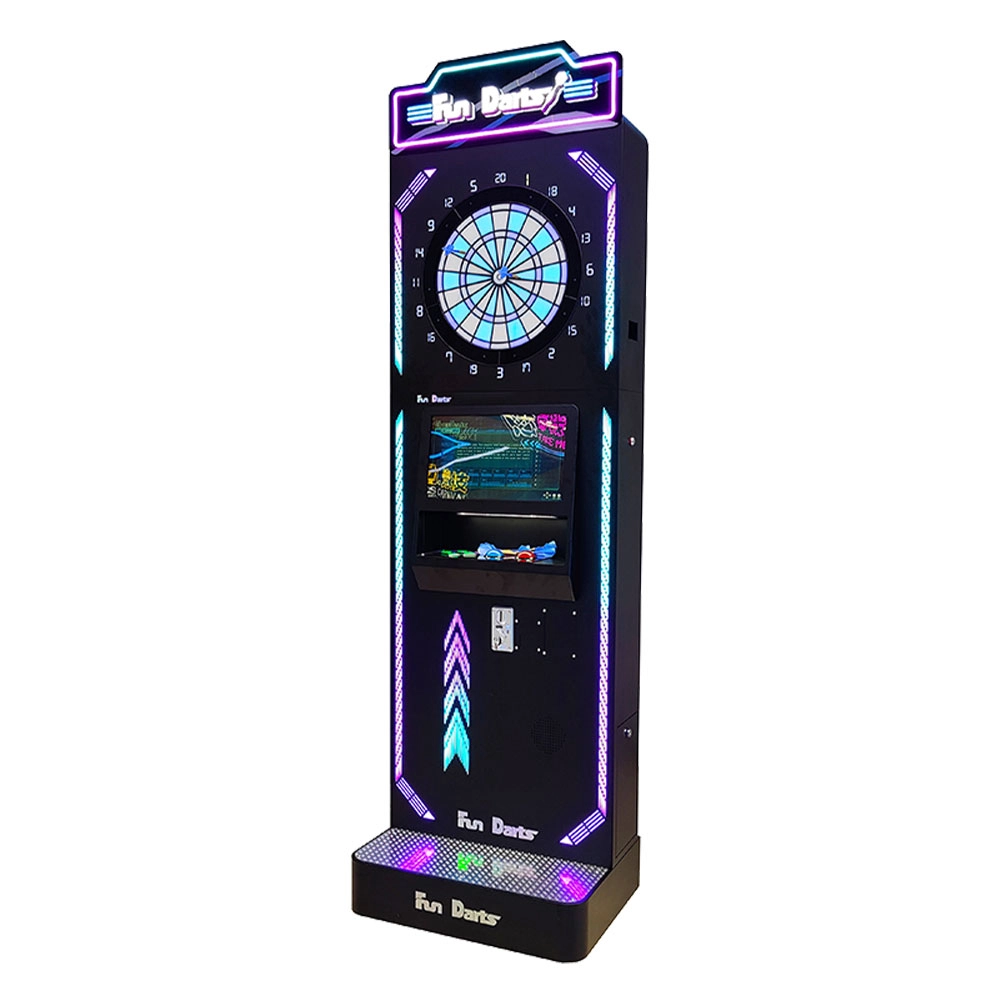
Neofuns Coin Operated Arcade Game Fun Darts Machine V –Cool Streamlined Appearance and Lighting Stand-Up Dart Machine for Arcade & Entertainment Venue
This smart dartboard seamlessly blends classic sport with cutting-edge tech,enjoy 30+ game modes and real-time multiplayer battles with dynamic animations. Professional self-healing sisal board with replaceable surfaces ensures durability for both training and entertainment.
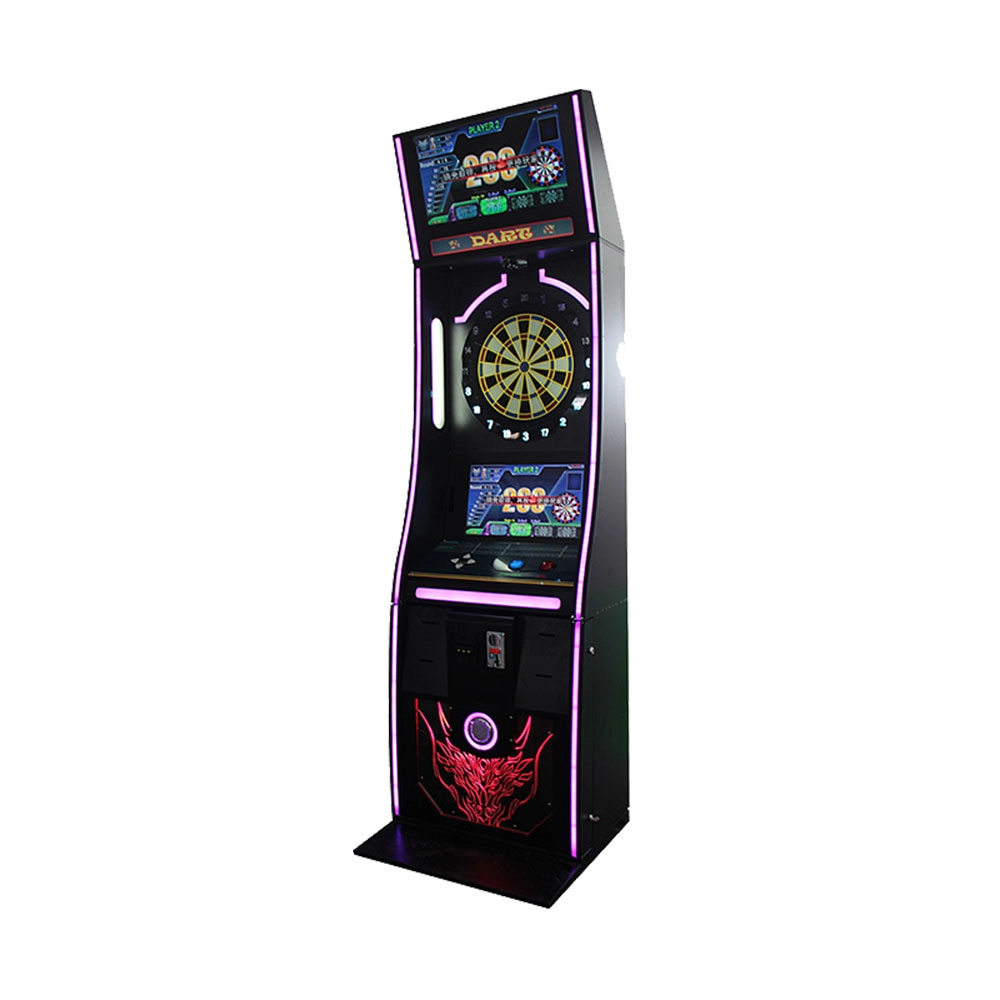
Neofuns Coin Operated Arcade Game Fun Darts Machine I – 32-inch Display on the Top Featuring Coin-operated And Arcade-style Designs
Equipped with high-precision infrared sensors, it tracks dart trajectories in real time and auto-scores, eliminating manual errors for fair competition. 30+ built-in game modes (e.g., "301 Battle, Fun Training") cater to all skill levels, supporting solo play, local multiplayer, and global online matches. Monetize via pay-per-play, sponsored tournaments, or brand partnerships (commercial); a one-time investment unlocks lifelong family entertainment.
Get in touch with us
If you have any comments or good suggestions, please leave us a message, later our professional staff will contact you as soon as possible.
Leading Electronic Dart Machine Manufacturer
NEOFUNS
NEOFUNS
NEOFUNS