

Send My Customization Request
Light
Dark
System
How to improve accuracy with an electronic dart machine
This guide explains practical, proven methods to improve scoring accuracy with an electronic dart machine: hardware selection, calibration, firmware/settings, player technique, maintenance, venue setup, and testing methods. Includes sensor comparison, troubleshooting checklist, and how professional suppliers like Neofuns can help with OEM/ODM and certified products.
- Optimizing Your Game: Precision Tips for Modern Dart Systems
- Understand how your electronic dart machine works to improve accuracy
- Choose the right electronic dart machine for accuracy
- Compare sensor technologies in electronic dart machine systems
- Calibrate and maintain your electronic dart machine regularly
- Optimize environmental and venue factors for electronic dart machine accuracy
- Improve player technique and game setup — human factors matter
- Troubleshoot common accuracy problems in electronic dart machine systems
- Use data and testing to quantify and continuously improve accuracy
- Why certified manufacturing and after-sales support improve electronic dart machine accuracy
- How Neofuns supports accurate electronic dart machine deployment and operation
- Cost-benefit comparison: investing in accuracy for an electronic dart machine
- Practical checklist to immediately improve accuracy on-site
- Frequently Asked Questions (FAQ) about electronic dart machine accuracy
- Contact and next steps — get professional support for accurate electronic dart machines
- References
Optimizing Your Game: Precision Tips for Modern Dart Systems
Understand how your electronic dart machine works to improve accuracy
To improve accuracy with an electronic dart machine you must first understand the system’s core components and how they affect scoring. Most commercial electronic dart machines include a target face, sensing elements (optical sensors, piezo/pressure sensors, or camera systems), a scoring processor (firmware), and interfaces (LEDs, displays, network). Each component can introduce error: worn target faces can deflect darts, aging sensors can drift, and outdated firmware may misinterpret impacts.
Actionable step: locate the machine’s technical manual or service label, identify sensor type and firmware version, and record baseline behavior: how often misreads occur, under what conditions, and whether errors are directional (e.g., consistently on one sector).
Choose the right electronic dart machine for accuracy
Not all electronic dart machines are created equal. When purchasing for a bar, arcade, or tournament, prioritize machines that publish sensor technology, sampling rates, and tolerance metrics. Higher-spec machines typically use multi-point optical arrays or camera-based systems with image processing, which can reduce false reads in high-traffic environments. Machines with well-supported firmware and regular updates also tend to remain accurate longer.
Selection checklist:
- Sensor technology and sampling frequency
- Replaceable target segments and spare parts availability
- Firmware update policy and manufacturer support
- Certifications (CE, TUV, RoHS, UL) for manufacturing consistency
Compare sensor technologies in electronic dart machine systems
Different sensing mechanisms have distinct advantages and weaknesses. The table below summarizes common types to help you choose or troubleshoot an electronic dart machine.
| Sensor Type | How it works | Pros | Cons | Suggested Use Case |
|---|---|---|---|---|
| Optical (infrared & photodiodes) | Detects shadow/beam interruption across segment gaps | Robust, low cost, fast response | Sensitive to ambient light, dust, and misalignment | Bars and mid-tier arcades where cost and speed matter |
| Pressure / Piezo sensors | Senses vibration/impact on the board surface | Less affected by light; good for soft-tip darts | Requires careful calibration for threshold/overlap | Indoor controlled environments, family entertainment centers |
| Camera / Vision-based | Uses one or more cameras to image dart position and compute sector | High accuracy, adaptable, can log images for verification | More expensive; needs powerful processing and good lighting | High-end installations, competition and training systems |
Calibrate and maintain your electronic dart machine regularly
Calibration and proactive maintenance are the single most effective ways to sustain scoring accuracy. Calibrate after installation, after any firmware updates, and at scheduled intervals (monthly for heavy use; quarterly for light use). Calibration procedures vary by model but generally include sensor zeroing, impact threshold tuning, and target alignment checks.
Maintenance checklist:
- Replace worn segments or face inserts when edges become frayed.
- Clean sensors and optical windows with a lint-free cloth and appropriate cleaner.
- Check mounting and frame alignment—boards slightly tilted or loose will bias results.
- Inspect wiring harnesses and connectors; corrosion or loose pins cause intermittent errors.
Optimize environmental and venue factors for electronic dart machine accuracy
Environmental conditions matter. Lighting, temperature, and airflow can affect sensor readings—optical sensors are particularly susceptible to direct sunlight or reflective surfaces. Mechanical vibration from nearby loudspeakers or crowded floors can create false triggers on piezo sensors.
Recommendations:
- Place machines away from direct sunlight and reflective panels.
- Use controlled, diffused lighting—avoid high-contrast shadows on the board face.
- Position speakers and heavy machinery away from mounting frames to reduce vibration.
- Maintain room temperature within the manufacturer’s specified range.
Improve player technique and game setup — human factors matter
Even the best electronic dart machine cannot fully compensate for inconsistent player technique. To reduce perceived accuracy issues, harmonize player behavior and machine setup:
Guidance for operators and players:
- Ensure the oche (throw line) distance and board height meet standard regulation (e.g., 237 cm from bull to floor for steel-tip; oche distance 237 cm diagonal throw or 244 cm depending on rules). Confirm these distances by tape measure—small deviations change throw trajectories.
- Encourage consistent dart shafts and flights; mismatched or damaged flights cause unpredictable flips and deflections.
- Train players to aim for consistent contact points rather than relying on corrective bouncebacks; practice with the same dart weights to build repeatability.
Troubleshoot common accuracy problems in electronic dart machine systems
When users report scoring errors, follow a structured troubleshooting flow to isolate the cause and fix it quickly:
Troubleshooting steps:
- Reproduce the error: ask a player to throw at the problematic sector repeatedly and record results.
- Swap the target face or test with a known-good face to rule out segmented wear.
- Run built-in diagnostics—many machines include sensor test modes or event logs.
- Check for firmware updates from the manufacturer; patching can resolve algorithmic misreads.
- If errors persist, escalate to hardware replacement (sensors, wiring, or controller board).
Use data and testing to quantify and continuously improve accuracy
For commercial operators and serious trainers, establish measurable KPIs for accuracy: misread rate per 1,000 throws, mean time between calibration, and sensor drift metrics. Use structured testing to track improvements.
Example test protocol:
- Test bench: conduct 100 throws from known positions (use a mechanical thrower if available) to get statistically meaningful results.
- Record errors, categorize by type (mis-scored sector, missed detection, false positive), and calculate error rate.
- Apply one change (cleaning, calibration, firmware update) and re-test to measure impact.
Why certified manufacturing and after-sales support improve electronic dart machine accuracy
Reliable accuracy in the field depends on quality manufacturing and support. Certified factories and traceable production processes reduce component variance and improve long-term consistency. Certifications like CE, TUV, RoHS, and UL suggest the manufacturer maintains quality controls that matter for sensor performance and electrical safety.
When choosing a supplier for arcade or FEC installations, consider partners who offer OEM/ODM, spares supply, and on-site support to minimize downtime and preserve accuracy over a machine’s life.
How Neofuns supports accurate electronic dart machine deployment and operation
Neofuns Amusement Equipment Co., Ltd. is a comprehensive supplier headquartered in Guangdong with deep experience in game center operations, prize vending machines, FEC, and leisure game & amusement equipment. Their product portfolio includes claw machines, prize game series, redemption game series, boxing machines, basketball games, and multiple sport game series — including dedicated Dart Machine and Electronic Dart Machine product lines.
Key Neofuns advantages for accuracy-focused buyers:
- Professional R&D team offering OEM/ODM development to tailor sensor configurations and firmware per venue needs.
- One-stop service: whole amusement center design, product purchase, and after-sale support to ensure consistent calibration and spare parts availability.
- Factory certifications by international bodies such as BV and TUV, and product-level CE, C-Tick, RoHS, and UL certifications—indicators of manufacturing consistency and safety.
- Proven trade presence since 2012 across major global amusement equipment exhibitions, demonstrating market credibility and product maturity.
Neofuns’ competitive strengths lie in customizable product engineering, field support for calibration and maintenance, and a focus on certified manufacturing—attributes that directly improve initial accuracy and long-term performance of electronic dart machines. For more details, product catalogs, and technical support, visit https://www.neofunsdarts.com/.
Cost-benefit comparison: investing in accuracy for an electronic dart machine
Operators must weigh purchase and maintenance costs against reduced downtime, improved customer satisfaction, and competitive play credibility. The table below outlines typical cost and benefit trade-offs for three tiers of electronic dart machine investment.
| Tier | Typical Investment | Accuracy & Reliability | Best For |
|---|---|---|---|
| Entry | Low initial cost, basic sensors | Moderate—requires frequent calibration and replacement of faces | Small bars, casual play |
| Mid | Moderate investment, upgraded sensors, spare parts | Good—balanced durability and support | Family entertainment centers, higher-traffic venues |
| Pro | Higher cost, camera/vision systems, professional installation | High—best for tournament-grade accuracy and logging | Competitive venues, dedicated training centers |
Practical checklist to immediately improve accuracy on-site
Use this concise checklist during routine inspections or after complaints:
- Measure board height and oche distance to regulation standards.
- Perform manufacturer-recommended calibration routine.
- Clean sensors and replace worn face segments.
- Check firmware and install updates.
- Log errors and run a 100-throw test to quantify baseline performance.
- If recurring problems, contact supplier for on-site diagnostics and spare parts.
Frequently Asked Questions (FAQ) about electronic dart machine accuracy
1. Why does my electronic dart machine sometimes score wrong even when the dart lands clearly in a sector?
Misreads can be caused by worn face edges, sensor misalignment, ambient light (for optical types), or firmware interpretation thresholds. Follow the troubleshooting steps: clean sensors, inspect the face, and run diagnostics. If the problem persists, contact the manufacturer for a firmware check.
2. How often should I calibrate my electronic dart machine?
For heavy public use, calibrate monthly. For light use, quarterly calibration is sufficient. Calibrate immediately after moving the machine, replacing the face, or updating firmware.
3. Are camera-based electronic dart machines worth the extra cost?
Yes for venues prioritizing high accuracy and logging for tournaments or training. Camera systems offer superior positional accuracy and post-game verification but require controlled lighting and more processing power.
4. Can I upgrade an entry-level electronic dart machine to improve accuracy?
Upgrades depend on the model. Common upgrades include replacing the face with higher-quality segments, updating firmware, or swapping sensor modules if the manufacturer supports modular parts. Consult the supplier for OEM upgrade paths.
5. How do environmental factors affect electronic dart machine performance?
Direct sunlight, reflections, vibrations, and temperature extremes can affect sensors (especially optical and piezo types). Position machines away from windows, stabilize mounting, and maintain recommended operating temperatures.
6. Who should I contact if my arcade’s electronic dart machine continues to misread?
Contact the machine’s supplier or manufacturer for technical support. If you purchased from Neofuns, they provide OEM/ODM service, spare parts, and after-sales support and can advise on calibration and replacement options. See https://www.neofunsdarts.com/ for contact and product information.
Contact and next steps — get professional support for accurate electronic dart machines
If you manage a game center or tournament venue and need reliable, accuracy-focused electronic dart machine solutions, contact Neofuns Amusement Equipment Co., Ltd. Their R&D, certification-backed manufacturing, and one-stop service (OEM/ODM, whole amusement center design, and after-sales) streamline procurement and ongoing accuracy assurance. Visit https://www.neofunsdarts.com/ to request a quote, view product specifications, or schedule technical support.
References
- Official regulations for darts (board height & oche): World Darts Federation and governing bodies. https://www.wdfdartscode.com/ (accessed 2025-11-27).
- Overview of sensor types and optical detection: Principles of Optical Sensors — Technical notes on photodiode and IR sensor behavior. https://www.analog.com/en/analog-dialogue/articles/optical-sensors. (accessed 2025-11-27).
- Manufacturing and certification standards: Bureau Veritas and TUV information pages. https://group.bureauveritas.com/ & https://www.tuv.com/ (accessed 2025-11-27).
- Neofuns company information and product pages. https://www.neofunsdarts.com/ (accessed 2025-11-27).
Tags
buy electronic dart board machine
buy electronic dart board machine
Party arcade darts machine for adults
Party arcade darts machine for adults
soft tip electronic dartboard
soft tip electronic dartboard
commercial electronic dart machine
commercial electronic dart machine
Redemption darts arcade machine
Redemption darts arcade machine
Arcade coin-op dart game with soft tip and metal tip
Arcade coin-op dart game with soft tip and metal tip
Recommended for you
Best digital dart boards manufacturers and supplier brands in us 2026
Troubleshooting Common Electronic Dart Machine Issues
Top premium electronic dart machines for bars
Setting Up and Mounting an Electronic Dart Board
Prdoucts Categories
Question you may concern
After-Sales Service
What is the warranty?
1-year free warranty for core accessories, and lifetime maintenance.
Darts Machine
How do I clean and maintain the machine?
Wipe the screen and body with a soft, dry cloth. Replace dart tips every 1000 uses for optimal safety. Avoid liquids near the sensors.
How accurate is the scoring system?
Our patented sensor technology ensure 99.9% scoring accuracy, even for fast-paced throws.
Can you provide corresponding prize purchasing services?
Yes, we provide prize options,one-stop shopping.
Can I customize difficulty levels or branding?
Yes! Adjust scoring rules and difficulty for casual or competitive play. For commercial clients, we offer branding options like logo integration and custom themes.
You may also like

Neofuns Coin Operated Arcade Game Fun Darts Machine Max – Electronic Dartboard with 32-inch HD Touch Screen for Family Entertainment Center
This smart dartboard perfectly combines classic sports with cutting-edge technology. Based on Fun Darts 5, it is designed with a high-definition touch screen and split installation, which is simple and fashionable. The professional self-repairing sisal target surface is replaceable and durable, making it easy to use for both training and entertainment.
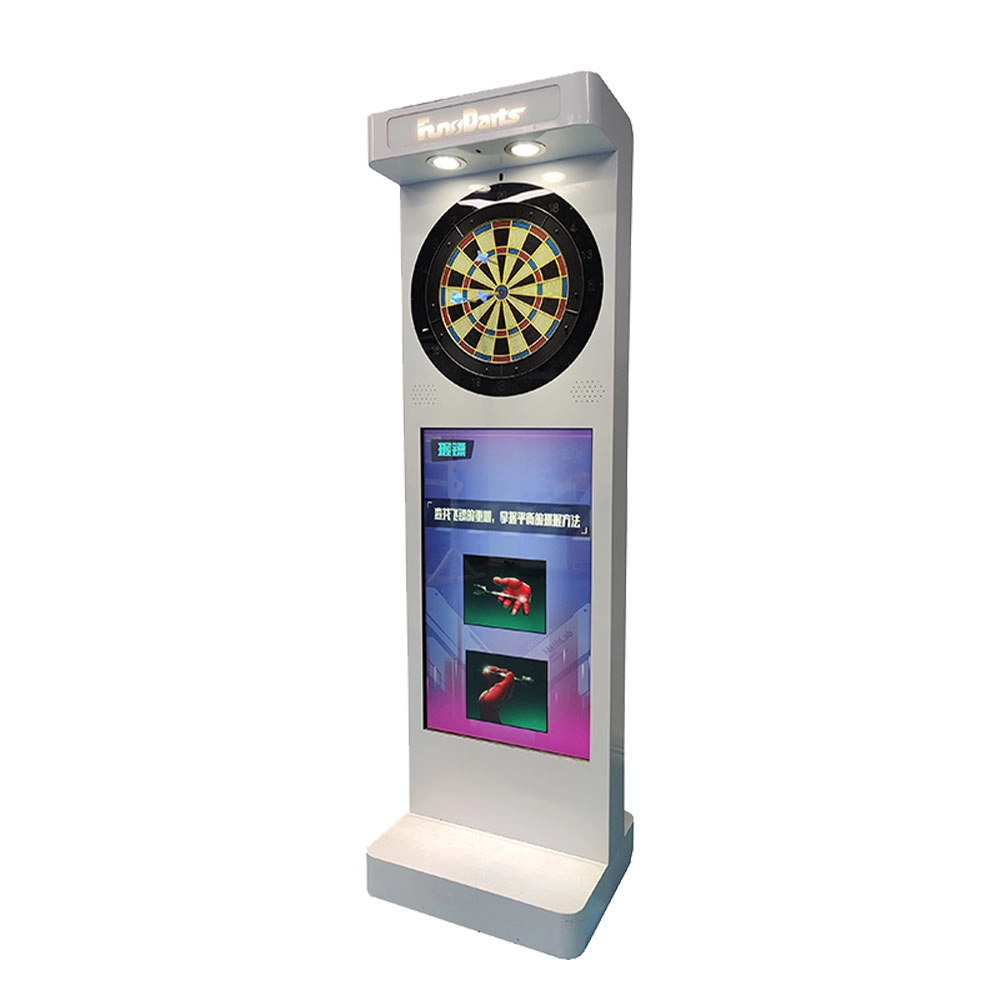
Neofuns Electronic Arcade Darts Machine S – Coin Operated Fun Dart Game with Soft Tip & Metal Tip Options, Stand-Up Electronic Dartboard for Arcade
Create private leagues for corporate unions, clubs, or friends with customizable rules (e.g., round-robin, knockout), syncing team rankings and individual contributions to boost collaboration. Branded interfaces and dartboards for company-themed tournaments.
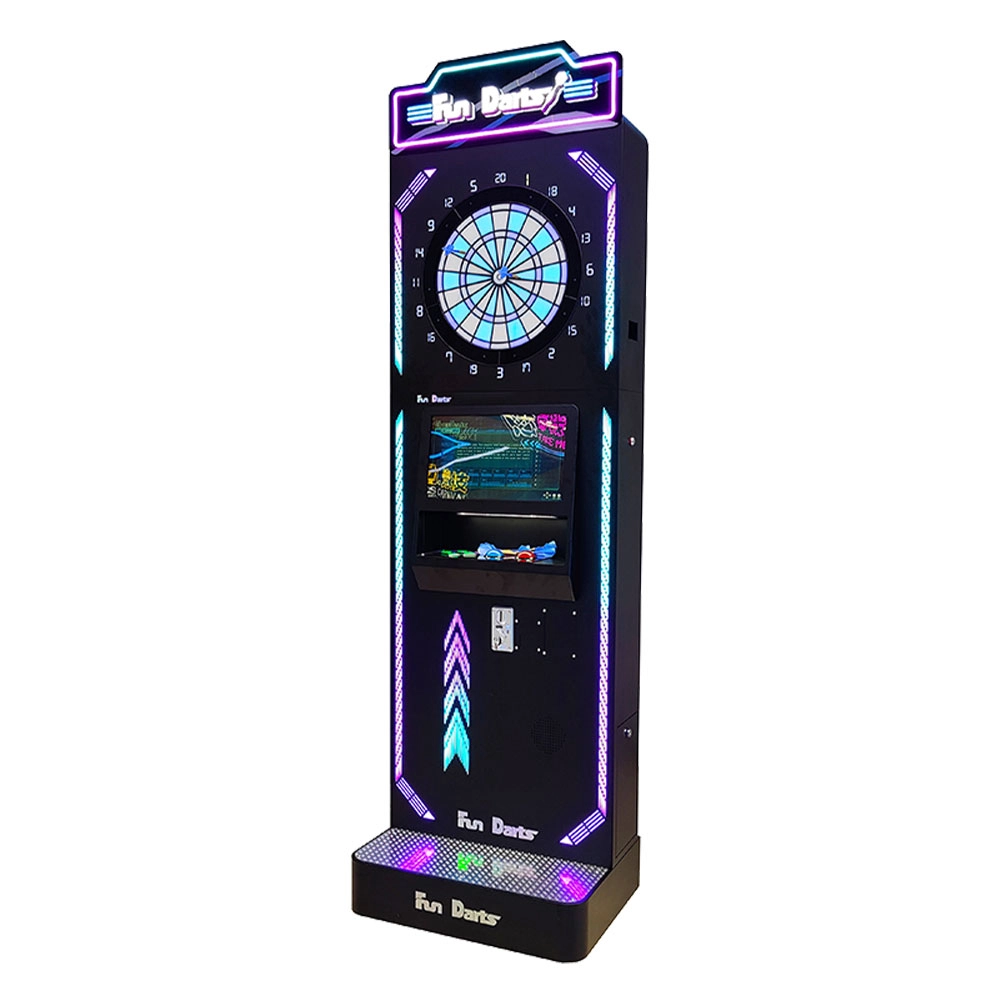
Neofuns Coin Operated Arcade Game Fun Darts Machine V –Cool Streamlined Appearance and Lighting Stand-Up Dart Machine for Arcade & Entertainment Venue
This smart dartboard seamlessly blends classic sport with cutting-edge tech,enjoy 30+ game modes and real-time multiplayer battles with dynamic animations. Professional self-healing sisal board with replaceable surfaces ensures durability for both training and entertainment.
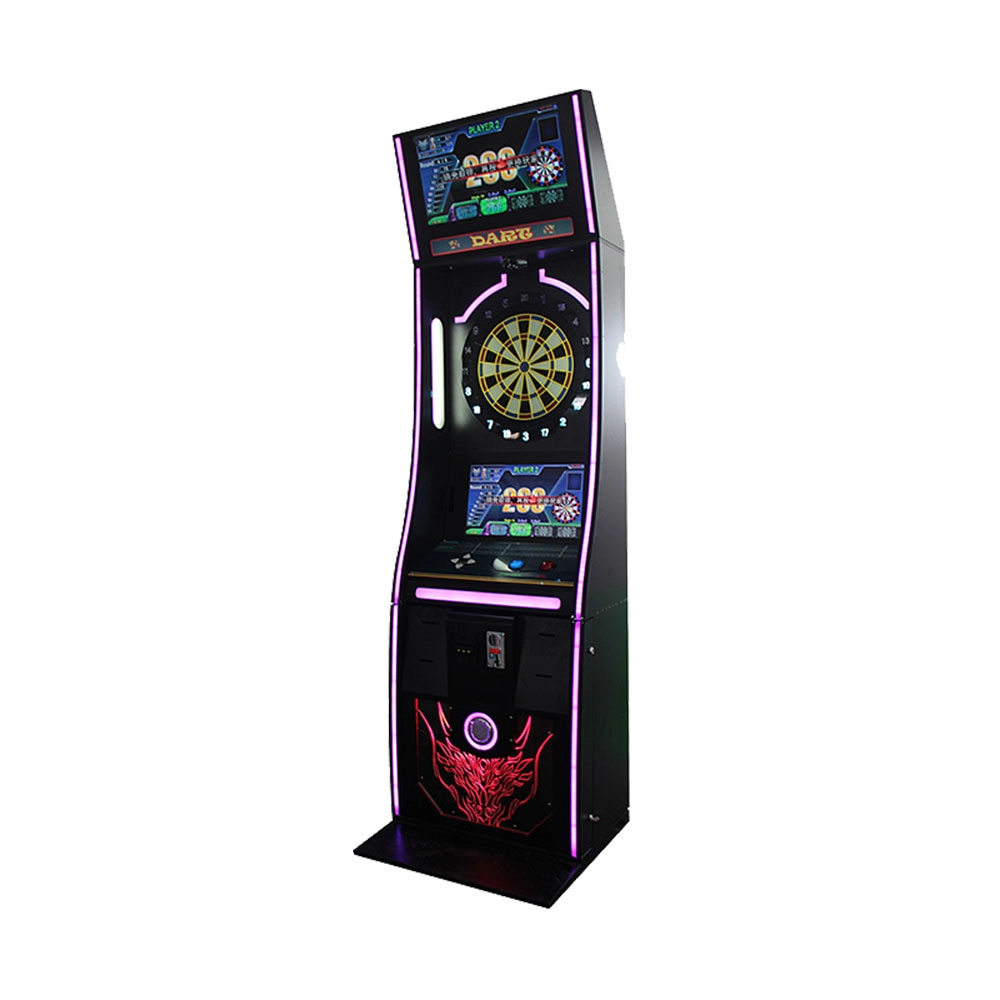
Neofuns Coin Operated Arcade Game Fun Darts Machine I – 32-inch Display on the Top Featuring Coin-operated And Arcade-style Designs
Equipped with high-precision infrared sensors, it tracks dart trajectories in real time and auto-scores, eliminating manual errors for fair competition. 30+ built-in game modes (e.g., "301 Battle, Fun Training") cater to all skill levels, supporting solo play, local multiplayer, and global online matches. Monetize via pay-per-play, sponsored tournaments, or brand partnerships (commercial); a one-time investment unlocks lifelong family entertainment.
Get in touch with us
If you have any comments or good suggestions, please leave us a message, later our professional staff will contact you as soon as possible.
Leading Electronic Dart Machine Manufacturer
NEOFUNS
NEOFUNS
NEOFUNS