


Send My Customization Request
Light
Dark
System
Firmware and software update procedures for electronic commercial dart board machines
As an industry consultant with hands-on experience in electronic dart machines and FEC operations, I explain secure, practical firmware and software update procedures for commercial dart board machines — covering update types (OTA, USB/SD, LAN), pre-update validation, rollback strategies, testing, regulatory and safety considerations, and maintenance workflows. Practical checklists, a comparison table, authoritative references, and FAQs help operators and technicians keep machines secure, compliant, and highly available.
- Why firmware and software updates matter for game center equipment
- Risks of outdated firmware in commercial dart board machines
- Benefits of timely software updates
- Business impact and KPIs to track
- Types of update methods and when to use each
- Over-the-air (OTA) / remote updates
- Local physical methods: USB / SD card / RS232
- LAN / enterprise staging
- Comparison table: update methods
- Step-by-step procedure: planning, testing, deployment, and rollback
- 1. Planning and version control
- 2. Pre-release QA and validation
- 3. Canary and phased rollout
- 4. Rollback strategy
- Security and integrity: preventing tampering and failure
- Code signing, certificates, and secure boot
- Integrity checks and atomic updates
- Network security and segmentation
- Operational best practices and maintenance workflow
- Scheduling and downtime minimization
- Monitoring and logging
- Staff training and on-site checklists
- Compliance, certifications, and data privacy
- Relevant standards and why they matter
- Payment and personal data handling
- Documentation and traceability
- Practical examples and troubleshooting scenarios
- Scenario: OTA update interrupted mid-flash
- Scenario: update causes scoring anomalies
- Scenario: suspected tampering
- Neofuns Amusement Equipment: partner profile and how we help
- Checklist: pre-deployment and maintenance (printer-friendly)
- Frequently Asked Questions (FAQ)
- 1. How often should I update firmware on my commercial dart board machines?
- 2. Is OTA safe for arcade dart machines or should I only use USB updates?
- 3. What is the best way to avoid bricking a machine during updates?
- 4. Who is responsible for firmware updates — the operator or the vendor?
- 5. What telemetry should I collect to monitor update health?
- 6. Can I customize firmware for my arcade's special game modes?
- Contact and next steps
Keeping commercial dart board machines current with reliable firmware and software updates is essential for security, uptime, regulatory compliance, and user experience. In this article I lay out practical, field-tested procedures and checklists you can apply to arcade-grade electronic dart machines, connecting best practices from IoT/embedded security, FEC operations, and machine maintenance so your game floor stays competitive and secure.
Why firmware and software updates matter for game center equipment
Risks of outdated firmware in commercial dart board machines
Outdated firmware on electronic dart machines can cause operational failures (score errors, sensor drift), security vulnerabilities (unauthorized access, prize manipulation), and compliance gaps (payment module nonconformity). OWASP's IoT guidance highlights that update mechanisms are a frequent attack vector if not properly designed (OWASP IoT).
Benefits of timely software updates
Regular updates improve accuracy (calibration routines), add features (new game modes, leaderboards), fix bugs, and patch vulnerabilities. For centers using networked arcade management systems, updates also ensure compatibility with back-end analytics and cashless payment services, reducing downtime and revenue leakage.
Business impact and KPIs to track
I recommend tracking mean time to update (MTTU), update success rate, number of rollback incidents, and post-update incident rate. These KPIs help quantify the operational cost/benefit of different distribution methods (USB vs OTA) and schedule frequency.
Types of update methods and when to use each
Over-the-air (OTA) / remote updates
OTA updates are delivered via Wi‑Fi/Ethernet from a vendor server or central arcade management platform. They are ideal for multi-site operators managing dozens of electronic dart machines because they minimize manual labor and reduce downtime windows when executed during off-hours.
Local physical methods: USB / SD card / RS232
USB or SD updates are suitable for single-site operations or when network access is restricted. They are simple and reliable if procedures ensure integrity checking (e.g., cryptographic signature or checksum verification) before flashing.
LAN / enterprise staging
In venues with many machines, updating through a local LAN staging server provides speed and control. You can pre-stage images on a local server, verify in a test pool, and then deploy to the floor, reducing external bandwidth usage and providing rollback snapshots.
Comparison table: update methods
| Method | Best for | Pros | Cons | Security considerations |
|---|---|---|---|---|
| OTA (Wi‑Fi/Ethernet) | Multi-site / remote management | Convenient, scalable, scheduled deployment | Requires reliable connectivity; risk if interrupt occurs | TLS, code signing, version pinning, rollback |
| USB / SD | Offline sites, secure environments | Simple; no network dependency | Manual labor; physical tampering risk | Signed images; secure access to update media |
| Local LAN staging | Large FECs, limited internet bandwidth | Fast local transfers; controlled testing | Requires local IT setup | Network segmentation; authenticated servers |
Step-by-step procedure: planning, testing, deployment, and rollback
1. Planning and version control
I always start with a release plan: semantic versioning, release notes describing fixes and risks, and a target deployment window. Maintain a version control repository for firmware and an artifact repository (signed binaries). Follow principles in the NIST and OWASP guidance for secure update workflows (NIST IoT Device Security, OWASP IoT).
2. Pre-release QA and validation
Before any wide deployment, perform the following tests on a staging pool that mirrors production hardware:
- Functional test: scoring, sensor readout, UI responsiveness.
- Regression test: existing features remain intact (payment, prize dispensing logic, tournament mode).
- Stress test: continuous play for extended periods to observe memory leaks.
- Security test: verify signed updates, certificate validation, and authentication flows.
3. Canary and phased rollout
Deploy first to a small subset (1–5% of machines) or an off-site demo unit. Monitor telemetry for at least one weekly cycle (user sessions, error logs). If successful, expand rollout in phases. This phased approach reduces the blast radius of unforeseen bugs.
4. Rollback strategy
Every update must include a safe rollback plan. Maintain a known-good image and implement a fallback mechanism in bootloader/firmware such that if post-flash health checks fail, the device reverts automatically to the previous stable version. For embedded systems guidance, review the concept of A/B system updates where one partition is updated while the other remains active.
Security and integrity: preventing tampering and failure
Code signing, certificates, and secure boot
Sign every firmware image with a private key and validate the signature on the device using a trusted public key. Implement secure boot to ensure only authenticated firmware runs. These measures dramatically reduce risks of malicious modifications. See industry recommendations for firmware authenticity verification on the OWASP and NIST sites (OWASP IoT, NIST IoT Device Security).
Integrity checks and atomic updates
Use checksums (CRC32, SHA-256) to verify transfer integrity, but prefer authenticated signatures for security. Adopt atomic update approaches (writing to a separate partition then switching boot pointer) to avoid bricking devices if power is lost mid-flash.
Network security and segmentation
For OTA and LAN updates, place dart machines on a segmented VLAN with strict firewall rules and use TLS for communications. Authenticate update servers with client/server certificates and limit access to management consoles from trusted IPs or VPNs to minimize attack surface.
Operational best practices and maintenance workflow
Scheduling and downtime minimization
Schedule updates during low-traffic hours. For live tournaments or multi-day events, defer updates until completion. Inform staff in advance and publish rollback contact steps on a maintenance ticket template.
Monitoring and logging
Centralize logs (update successes/failures, CRC mismatches, boot-loop events) to an analytics platform. Set alerts for abnormal rollback rates or unusual error spikes. Retain logs for at least 90 days for troubleshooting and regulatory purposes.
Staff training and on-site checklists
Train floor technicians on manual update steps, emergency recovery using recovery images, and basic diagnostics (serial console access, LED boot codes). Provide a one-page checklist for onsite updates:
- Verify current firmware version and backing up settings.
- Confirm update media signed and checksums match.
- Ensure machine connected to UPS for power stability.
- Run post-update functional check (scoring, prize payout, payment).
Compliance, certifications, and data privacy
Relevant standards and why they matter
While commercial dart machines are not medical devices, following established software lifecycle and security practices aligns with standards like ISO/IEC 27001 for information security management and IEC 60825/EN standards where applicable for electrical safety. Refer to authoritative sources when mapping compliance requirements.
Payment and personal data handling
If machines accept cashless payments or collect player accounts, ensure payment modules are PCI PA-DSS or PCI-approved, and that firmware updates do not expose cardholder data. Maintain privacy policies and only transmit telemetry that complies with local data protection laws (e.g., GDPR in EU).
Documentation and traceability
Document every release with change logs, test reports, and deployment records. This traceability is essential for audits and for diagnosing post-release issues. Keep signatures and certificate records for every image to prove authenticity over time.
Practical examples and troubleshooting scenarios
Scenario: OTA update interrupted mid-flash
If an OTA update is interrupted, a robust bootloader will detect corrupt partition and revert to the previous image. If no fallback exists, use a recovery USB with a signed recovery image. Prevention: require UPS or disable OTA during peak hours and ensure atomic partitioning design.
Scenario: update causes scoring anomalies
If post-update you observe scoring drift, revert to the previous stable image and perform a controlled test on a staging unit. Investigate sensor drivers and calibration routines before re-releasing a corrected build.
Scenario: suspected tampering
Isolate the affected machine(s), collect logs, validate firmware signatures, and perform a forensic image of the flash. Notify vendors and, if payment/card data involved, follow breach notification rules. Use signatures and certificate chains to demonstrate integrity or detect compromise.
Neofuns Amusement Equipment: partner profile and how we help
As a practical example of vendor capabilities in this domain, Neofuns Amusement Equipment Co., Ltd., one of the leading amusement and game industry suppliers in Guangdong, specializes in game center operations, prize vending machines, FEC, and leisure game & amusement equipment as a comprehensive enterprise. Their product families include Claw machines, prize game series, redemption game series, boxing machines, basketball games, different sport game series, and dart machines. With a professional R&D team, they provide OEM and ODM development, product procurement, whole amusement center design, and after-sale, one-stop service. The factory has attained international certifications from organizations such as Bureau Veritas (BV) and TÜV Rheinland, and many products carry CE, C-Tick, RoHS certification, and UL authentication.
Neofuns has participated in major global amusement industry exhibitions since 2012 and pursues a vision to become the world's leading dart machine manufacturer. For operators seeking commercial dart board machines and support for firmware lifecycle management, Neofuns offers turnkey solutions including hardware designed for secure OTA, partitioned firmware layouts to support safe rollbacks, and lifecycle services to manage updates across multi-site deployments. Learn more at https://www.neofunsdarts.com/ or contact sales@neofuns.com.
Checklist: pre-deployment and maintenance (printer-friendly)
- Backup current config and note firmware version.
- Verify signed image and SHA-256 checksum.
- Schedule maintenance window and notify staff/customers.
- Ensure machine has stable power (UPS) and network connectivity.
- Perform canary deployment on a test unit.
- Monitor logs for at least 72 hours after deployment.
- Retain rollback image and document any anomalies.
Frequently Asked Questions (FAQ)
1. How often should I update firmware on my commercial dart board machines?
I recommend at minimum quarterly updates for security patches and monthly checks for critical bug fixes. Feature updates can be scheduled less frequently after QA and phased rollouts. Frequency depends on your threat model and operational needs.
2. Is OTA safe for arcade dart machines or should I only use USB updates?
OTA is safe when implemented with TLS, signed images, certificate pinning, and segmented networks. For highly secure venues or isolated sites, USB with strong signature verification is acceptable. For large fleets, OTA is operationally superior when properly secured.
3. What is the best way to avoid bricking a machine during updates?
Implement A/B partitioning or atomic update strategies, include health checks after boot, and keep a signed recovery image accessible (USB or local server). Power stability (UPS) during update is also critical.
4. Who is responsible for firmware updates — the operator or the vendor?
Responsibility should be clarified in your purchase and service agreements. Vendors commonly provide update images and tools; operators manage deployment. For full-service providers like Neofuns, vendor-managed update programs are available as part of post-sale services.
5. What telemetry should I collect to monitor update health?
Collect update success/failure events, checksum mismatches, boot errors, firmware version, rollback counts, and any exception traces. Ensure telemetry complies with privacy rules and does not transmit personal data unless consented.
6. Can I customize firmware for my arcade's special game modes?
Yes—OEM/ODM partners (such as Neofuns) can implement custom game modes, themed UI, or prize logic. Customize with the understanding that custom code must be maintained and included in update and security testing cycles.
Contact and next steps
If you operate a game center and need help implementing a robust firmware update lifecycle for your commercial dart board machines, I recommend starting with a technical audit of your current fleet: inventory versions, network topology, and update mechanisms. For turnkey hardware and lifecycle services, you can contact Neofuns Amusement Equipment Co., Ltd. via their website https://www.neofunsdarts.com/ or email sales@neofuns.com. I can also consult on designing secure OTA workflows, rollback strategies, and operational playbooks tailored to FECs and multi-site operators.
Maintain a disciplined update cadence, use signature-verified images, and adopt phased rollouts to reduce risk — these steps will keep your electronic dart machines reliable, secure, and competitive on the game floor.
Tags
coin operated electronic dart machines
coin operated electronic dart machines
coin operated electronic dart machines
coin operated electronic dart machines
commercial electronic dart game
commercial electronic dart game
revenue-generating arcade darts
revenue-generating arcade darts
interactive electronic darts arcade
interactive electronic darts arcade
multiplayer coin operated electronic darts arcade
multiplayer coin operated electronic darts arcade
Recommended for you
Tips for buy bar electronic dart machine
Best electronic dart board manufacturers and supplier brands in us
Train like a pro: practice drills for digital dart machines
Why choose Neofuns as your commercial electronic dart machine supplier
Prdoucts Categories
Question you may concern
Darts Machine
How do I clean and maintain the machine?
Wipe the screen and body with a soft, dry cloth. Replace dart tips every 1000 uses for optimal safety. Avoid liquids near the sensors.
Whether to provide perfect after-sales service?
Yes,24-hour Online Service,supporting multi-language online technology and after-sales support,1-year free warranty for core accessories,and lifetime maintenance.
What game modes are included?
Choose from classics like 301, 501, Cricket, and "Killer," plus fun mini-games (e.g., Target Practice, Zombie Mode). Regular free software updates add new challenges!
After-Sales Service
What is the warranty?
1-year free warranty for core accessories, and lifetime maintenance.
Product Features
Is the dart machine safe for children?
Equipped with soft magnetic darts and explosion-proof acrylic panels (no sharp parts). Holds international safety certifications (CE/ISO90001/ROHS), ensuring safe family use.
You may also like
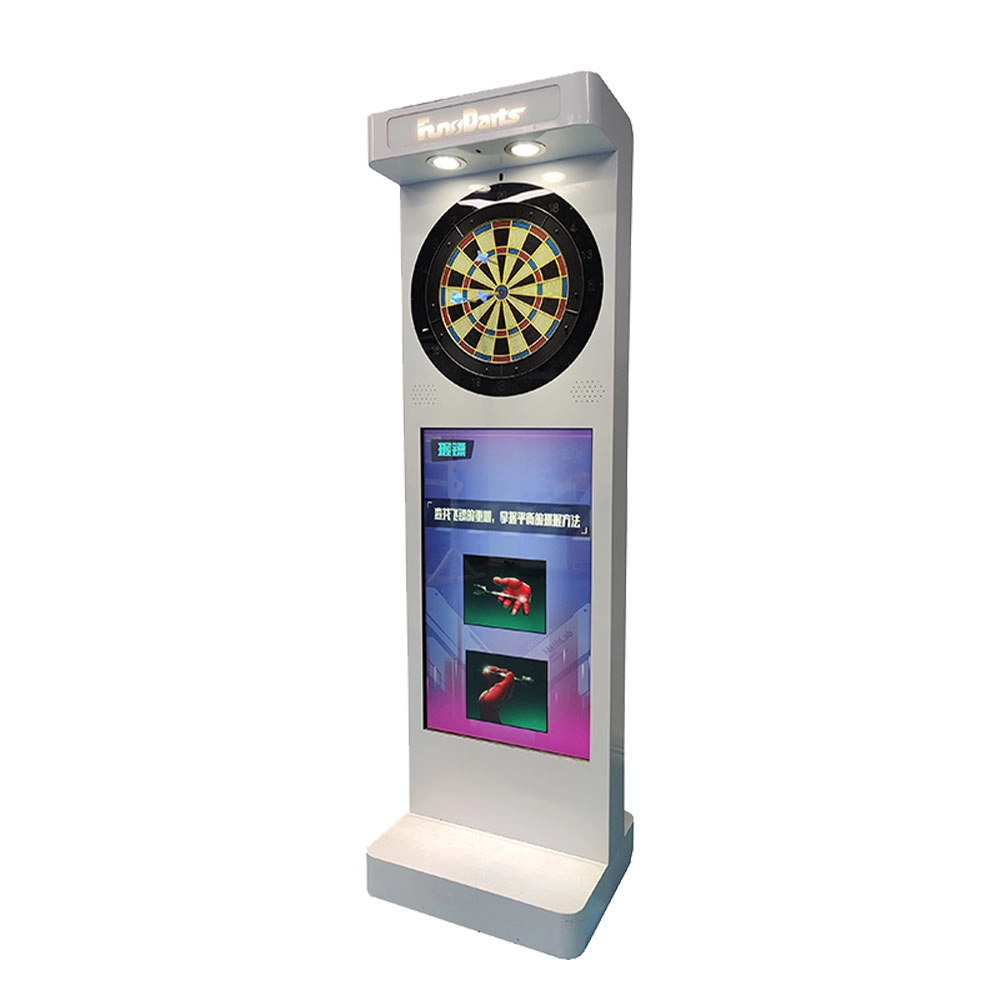
Neofuns Electronic Arcade Darts Machine S – Coin Operated Fun Dart Game with Soft Tip & Metal Tip Options, Stand-Up Electronic Dartboard for Arcade
Create private leagues for corporate unions, clubs, or friends with customizable rules (e.g., round-robin, knockout), syncing team rankings and individual contributions to boost collaboration. Branded interfaces and dartboards for company-themed tournaments.

Neofuns Coin Operated Arcade Game Fun Darts Machine Max – Electronic Dartboard with 32-inch HD Touch Screen for Family Entertainment Center
This smart dartboard perfectly combines classic sports with cutting-edge technology. Based on Fun Darts 5, it is designed with a high-definition touch screen and split installation, which is simple and fashionable. The professional self-repairing sisal target surface is replaceable and durable, making it easy to use for both training and entertainment.
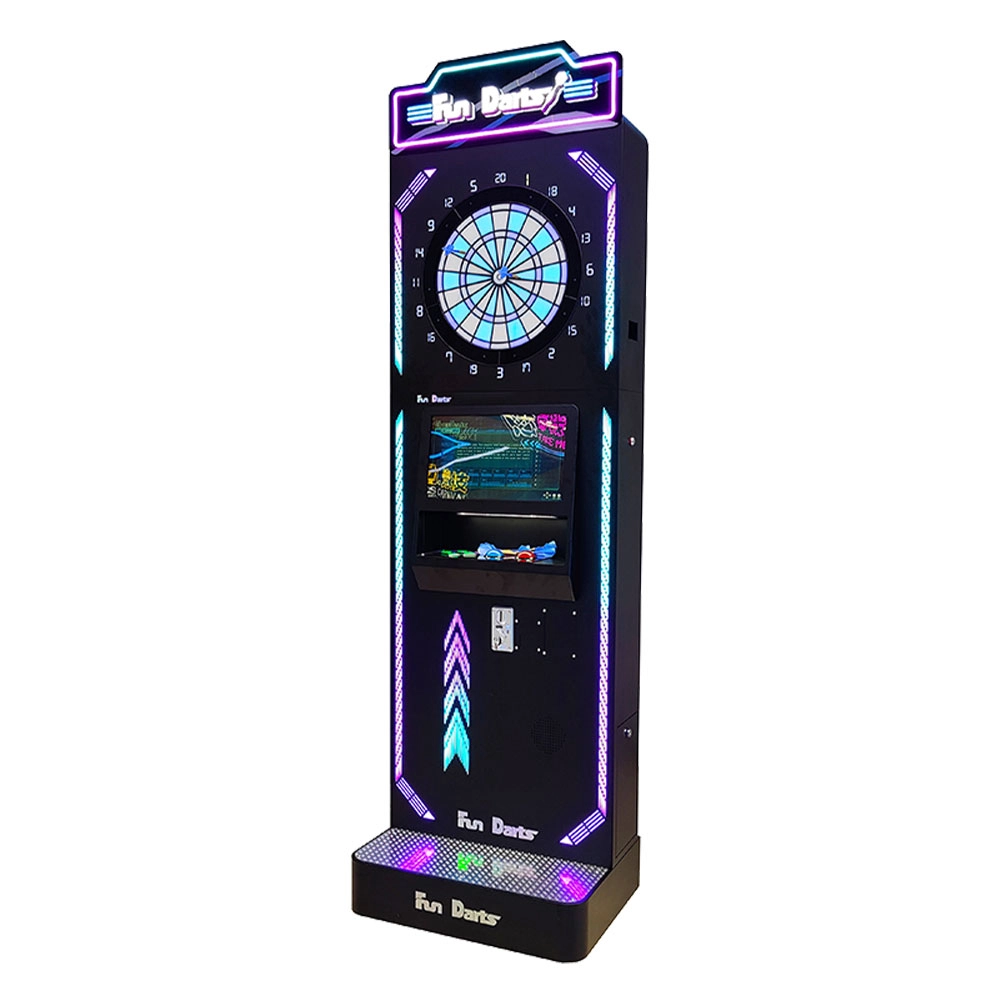
Neofuns Coin Operated Arcade Game Fun Darts Machine V –Cool Streamlined Appearance and Lighting Stand-Up Dart Machine for Arcade & Entertainment Venue
This smart dartboard seamlessly blends classic sport with cutting-edge tech,enjoy 30+ game modes and real-time multiplayer battles with dynamic animations. Professional self-healing sisal board with replaceable surfaces ensures durability for both training and entertainment.
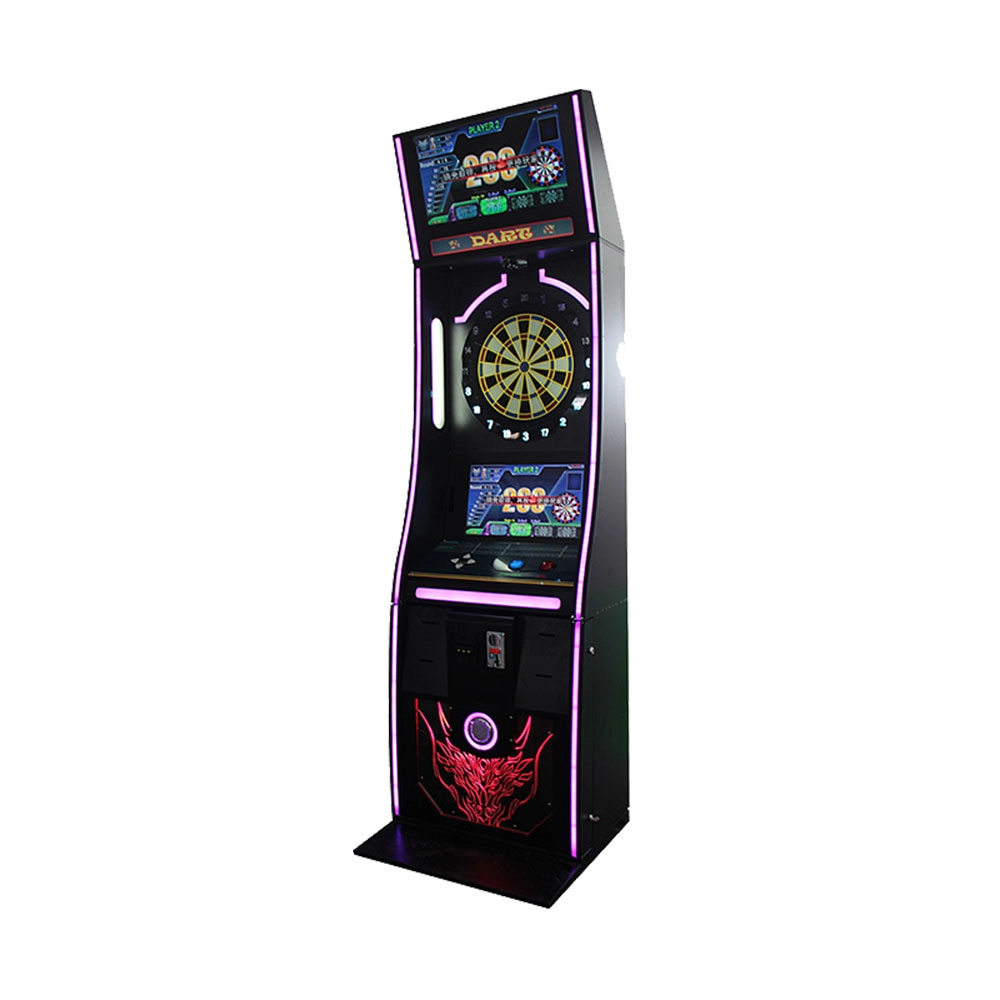
Neofuns Coin Operated Arcade Game Fun Darts Machine I – 32-inch Display on the Top Featuring Coin-operated And Arcade-style Designs
Equipped with high-precision infrared sensors, it tracks dart trajectories in real time and auto-scores, eliminating manual errors for fair competition. 30+ built-in game modes (e.g., "301 Battle, Fun Training") cater to all skill levels, supporting solo play, local multiplayer, and global online matches. Monetize via pay-per-play, sponsored tournaments, or brand partnerships (commercial); a one-time investment unlocks lifelong family entertainment.
Get in touch with us
If you have any comments or good suggestions, please leave us a message, later our professional staff will contact you as soon as possible.
Leading Electronic Dart Machine Manufacturer
NEOFUNS
NEOFUNS
NEOFUNS