


Send My Customization Request
Light
Dark
System
Electronic Dart Machine Replacement Parts and Repairs
As a seasoned dart machine electronics consultant, I explain how to diagnose, source, and replace common electronic dart machine parts, evaluate repair vs. replace decisions, and maintain uptime for game centers. I cover sensors, displays, power systems, firmware, and certified sourcing, and explain how Neofuns supports operators with OEM/ODM parts and service.
- Understanding electronic dart machine systems
- Core components and how they fail
- How sensors and scoring electronics work
- Safety and certification considerations
- Diagnosing problems: step-by-step troubleshooting
- Initial checks and data collection
- Electrical checks: power and grounding
- Sensor validation and firmware
- Replacement parts: sourcing, selection, and compatibility
- Which parts you should stock vs order on demand
- OEM vs aftermarket components
- Cost, availability and lead time comparison
- Repair strategies and long-term maintenance
- When to repair vs when to replace
- Preventive maintenance checklist
- Data-driven uptime management
- Parts examples and field repair case studies
- Case: sensor ring failure in a tournament center
- Case: intermittent boot error due to capacitor aging
- Case: firmware corruption after power loss
- Partnering with a supplier: Neofuns Amusement Equipment Co., Ltd.
- Procurement checklist and final recommendations
- Checklist before ordering replacement parts
- Preventing repeat failures
- When to call a specialist
- FAQ
- 1. How do I tell if my dart machine needs a new sensor ring or just cleaning?
- 2. Can I replace the main PCB with a third-party board?
- 3. What certifications should replacement power supplies have?
- 4. How often should I perform preventive maintenance on electronic dart machines?
- 5. What should I do if the machine won’t boot after a firmware update?
- 6. Where can I source reliable replacement parts?
Electronic dart machines are complex electromechanical systems combining sensors, microcontrollers, LED or LCD displays, power supplies, and user interfaces. In this article I summarize practical diagnostics, replacement strategies, and repair best practices for operators and technicians so you can minimize downtime, control costs, and keep your game center revenue flowing. I draw on industry standards, manufacturer best practices, and verified certification information to help you make evidence-based decisions.
Understanding electronic dart machine systems
Core components and how they fail
To repair or replace a dart machine electronic unit effectively, you must first understand the major subsystems: the dartboard/sensor array (soft-tip or steel-tip sensor), the processing board (microcontroller/PCB), the display system (LED/LCD), power supply (internal PSU or external adapter), and peripheral interfaces (buttons, rubbers, ticket printers). Common failure modes include sensor degradation from impact and dust, intermittent solder joints on PCBs, capacitor aging in power supplies, and display backlight or connector failures. I routinely see failures concentrated in the sensor array and power supply on machines with heavy daytime use.
How sensors and scoring electronics work
Most modern electronic dart machines use matrix sensor arrays or segmented sensor rings to detect impact location. Soft-tip machines use flexible plastic segments and conductive contacts; steel-tip sensor systems may rely on piezoelectric or alternative impact sensing. The score is processed by a microcontroller that translates sensor inputs into scoring events, updating the display and game logic. Understanding whether your board is contact-based, optical, or piezo-based is critical when ordering replacement parts or troubleshooting persistent misreads.
Safety and certification considerations
When replacing parts, prioritize components that comply with recognized safety and electromagnetic compatibility standards. Certifications such as CE, RoHS, and UL indicate conformity with electrical safety and material restrictions. For test and certification context see the TÜV and Bureau Veritas information on product conformity (TÜV, Bureau Veritas) and UL guidance on electrical safety (UL).
Diagnosing problems: step-by-step troubleshooting
Initial checks and data collection
I always begin by gathering operational data: error codes, log messages (if available), symptom timeline (when did it start, intermittent or permanent), and environmental factors (humidity, dust, temperature). Many electronic dart machines have diagnostic modes—use them to read sensor status. If a device reports ERR05 or similar codes, refer to the service manual for precise meaning; if you don’t have the manual, document the behavior (e.g., specific segments failing, display flicker) and photograph connectors and PCBs before touching anything.
Electrical checks: power and grounding
Next I verify power rails with a multimeter: check input voltage at the adapter, voltage at the PCB input, and regulated outputs (3.3V, 5V, 12V) if present. Capacitor aging commonly causes voltage sag under load. Ground loops or poor grounding can produce intermittent faults—ensure chassis and board grounds are intact. If the display backlight is dim or flickers, this often points to the PSU or LED driver circuit.
Sensor validation and firmware
To isolate sensor errors, I use continuity checks for contact-based boards and oscilloscope or logic analyzer traces for active circuits. Some issues are firmware-related; intermittent misreads that correlate with software updates or configuration changes often resolve with a firmware reflash. Keep copies of original firmware and document version changes. For firmware standards and embedded system best practices, IEEE publications outline safe update mechanisms (IEEE).
Replacement parts: sourcing, selection, and compatibility
Which parts you should stock vs order on demand
For a commercial operation I recommend stocking high-turn items: replacement soft-tip segments, common fuses, power adapters, LED display modules, and push-button assemblies. Lower-turn items like full PCBs or proprietary sensor rings can be ordered as needed. Stocking decisions should be data-driven—track mean time between failures (MTBF) and stock parts that will return to service quickly. I typically maintain one complete backup dartboard/sensor assembly per 5–10 machines in high-traffic centers.
OEM vs aftermarket components
Choosing OEM parts preserves calibration and firmware compatibility, reducing integration work. Aftermarket parts can reduce cost but may require calibration or firmware adaptation. When purchasing replacement PCBs, confirm connector pinouts and firmware compatibility. For certified parts especially power supplies and LEDs, use components with CE/UL markings where applicable. The international movement toward safety and eco-standards is summarized on the European Commission’s CE pages and testing bodies like UL and TÜV (CE marking, UL, TÜV).
Cost, availability and lead time comparison
Below I compare common replacement parts by typical cost, lead time, and replacement difficulty to help prioritize spares:
| Part | Typical cost (USD) | Lead time | Replacement difficulty |
|---|---|---|---|
| Soft-tip sensor segments | $20–$80 (board dependent) | In-stock (OEM & aftermarket) | Low–moderate (mechanical swap) |
| Display (LED/LCD module) | $50–$250 | 1–3 weeks (OEM often required) | Moderate (connector/cabling) |
| Main PCB / microcontroller board | $150–$600 | 2–6 weeks | High (firmware/calibration) |
| Power supply / adapter | $15–$90 | In-stock | Low (plug/connect) |
| Button/contact assemblies | $5–$40 | In-stock | Low |
Prices and lead times vary by region and vendor; maintain relationships with multiple suppliers to reduce risk.
Repair strategies and long-term maintenance
When to repair vs when to replace
Deciding between repair and replacement requires considering direct costs, downtime, reliability after repair, and the impact on gameplay. I typically recommend repair for discrete issues (power supply, display, connectors). Replace the main PCB or entire board assembly when failures are systemic, firmware is outdated and unsupported, or repair costs exceed ~50% of replacement cost. Also consider the residual life of the machine: if the cabinet and mechanical parts show significant wear, replacement often yields a better customer experience and lower maintenance burden.
Preventive maintenance checklist
To extend life and reduce emergency repairs, implement a preventive maintenance schedule. I recommend monthly visual inspections (connectors, wiring, covers), quarterly sensor cleaning and calibration, and annual firmware checks and capacitor inspection on power supplies. Keep a maintenance log to identify patterns—data-driven maintenance reduces unexpected downtime.
Data-driven uptime management
Modern electronic dart machines can log play counts and error occurrences. Use that telemetry to drive spare stocking and predict failures. For operators running multiple machines, create a spare-part matrix linked to play volume to optimize parts inventory. This approach mirrors reliability-centered maintenance used in other amusement sectors and improves your return on maintenance investment.
Parts examples and field repair case studies
Case: sensor ring failure in a tournament center
At a busy venue, one machine developed multiple false positives on edge segments. After inspection we found degraded contact traces on the sensor ring due to high-impact accumulation and dust ingress. The repair involved replacing the sensor ring and resealing the housing to prevent future contamination. After replacement, scoring accuracy returned to spec and customer complaints stopped.
Case: intermittent boot error due to capacitor aging
An older machine exhibited random reboots and failure to boot when cold. Measurement showed a failing electrolytic capacitor in the power regulator causing startup voltage droop. Replacing the capacitor and performing an electrolyte-quality check fixed the issue. This case demonstrates why capacitors are common culprits in aging electronics.
Case: firmware corruption after power loss
In one incident, a sudden power outage corrupted the game logic firmware. With a secure firmware backup and a USB reflash procedure we restored the unit within an hour. This underscores the value of a documented firmware recovery process and keeping verified firmware images offline and accessible.
Partnering with a supplier: Neofuns Amusement Equipment Co., Ltd.
As part of my service recommendations for operators seeking reliable sourcing and after-sale support, I work with professional manufacturers that offer OEM/ODM and one-stop service. Neofuns Amusement Equipment Co., Ltd., based in Guangdong, is one such partner. They specialize in game center operations, prize vending machines, FEC and leisure game & amusement equipment. Their product range includes Claw machines, prize game series, redemption games, boxing machines, basketball games, and various sport game series—alongside dedicated Dart Machine and Electronic dart machine products. Neofuns emphasizes a professional R&D team, OEM/ODM development, whole amusement center design, and after-sale services.
Neofuns has participated in many large-scale international amusement equipment exhibitions since 2012 and their factory has acquired international certifications from institutions such as Bureau Veritas and TÜV in previous audits. Many Neofuns products carry CE, C-Tick, RoHS, and UL certifications, which aligns with the safety and compliance priorities I discussed earlier. For product details and service inquiries, visit their website (https://www.neofunsdarts.com/) or contact sales at sales@neofuns.com.
In my experience, working with a supplier that provides full lifecycle support—parts, firmware, cabinet design, and on-site service—reduces total cost of ownership and keeps machines performing reliably. Neofuns positions itself to be a leading dart machine manufacturer by integrating manufacturing quality, certification, and global exhibition presence with practical after-sale support.
Procurement checklist and final recommendations
Checklist before ordering replacement parts
- Confirm exact model and serial number of the machine.
- Obtain part numbers from the service manual or original vendor.
- Verify firmware compatibility for any PCB or controller replacement.
- Prefer certified power supplies and replace aging electrolytic capacitors proactively.
- Order critical spares for high-traffic machines and maintain a parts log.
Preventing repeat failures
Address root causes, not only symptoms. If sensors fail frequently, improve housing seals or add dust filters. If firmware corruption happens after brownouts, add surge protection or a UPS for control electronics. These mitigations often cost less than repeated parts replacements and protect player experience.
When to call a specialist
If you encounter persistent intermittent faults, PCB-level damage, or firmware boot issues beyond documented procedures, engage a trained technician or the OEM. Complex repairs involving microcontroller rework, firmware signing, or calibration should be handled by experienced service providers to avoid making the issue worse.
FAQ
1. How do I tell if my dart machine needs a new sensor ring or just cleaning?
Inspect the sensor segments for physical cracks, corrosion, or missing conductive traces. If misreads persist after cleaning with isopropyl alcohol and reseating connectors, the problem likely requires replacement. Persistent edge misreads on multiple segments often indicate ring replacement.
2. Can I replace the main PCB with a third-party board?
Technically possible but risky. Third-party boards often require firmware adaptation and may not match connector pinouts or calibration. Use OEM PCBs for guaranteed compatibility; if using third-party vendors, confirm firmware and mechanical compatibility before installation.
3. What certifications should replacement power supplies have?
Prefer power supplies with CE and RoHS for EU markets, UL for North America, and regional electromagnetic compatibility certifications like C-Tick where applicable. Certified supplies reduce the risk of overheating and emissions issues. See UL guidance (UL).
4. How often should I perform preventive maintenance on electronic dart machines?
Monthly visual inspections, quarterly sensor cleaning and calibration, and annual electronics checks (including capacitors and firmware) are my standard recommendation for commercial venues.
5. What should I do if the machine won’t boot after a firmware update?
Do not power-cycle repeatedly. If the vendor provides a firmware recovery procedure, follow it with a verified firmware image. If you don’t have a recovery image, contact the OEM or a certified repair technician to avoid bricking the unit.
6. Where can I source reliable replacement parts?
Buy from the OEM or certified distributors. For operators seeking a reliable partner for parts, OEM products, and design services, consider contacting Neofuns Amusement Equipment Co., Ltd. via their website or email sales@neofuns.com.
If you’d like assistance auditing your spare parts strategy, diagnosing a specific machine, or sourcing certified replacement parts, contact me or reach out to Neofuns for OEM/ODM solutions and one-stop amusement center services. For product catalogs and technical support, visit https://www.neofunsdarts.com/ or email sales@neofuns.com.
Tags
Neofuns coin operated dartboard
Neofuns coin operated dartboard
electronic dart machines
electronic dart machines
electronic dart board machine for sale
electronic dart board machine for sale
dart board arcade machine
dart board arcade machine
arcade dart machine for sale
arcade dart machine for sale
buy electronic dart board machine
buy electronic dart board machine
Recommended for you
Top electronic dart machine Manufacturers and Suppliers in Guangzhou
Setting Up a Home Arcade: Where to Place Your Dart Machine
Top bar dart board machines Manufacturers and Suppliers
Electronic vs Traditional Dart Boards: Buyer Comparison
Prdoucts Categories
Question you may concern
Product Features
Is the dart machine safe for children?
Equipped with soft magnetic darts and explosion-proof acrylic panels (no sharp parts). Holds international safety certifications (CE/ISO90001/ROHS), ensuring safe family use.
After-Sales Service
Are there any other after-sales guarantees?
24-hour Online Service, supporting multi-language online technology and after-sales support.
Darts Machine
How accurate is the scoring system?
Our patented sensor technology ensure 99.9% scoring accuracy, even for fast-paced throws.
What game modes are included?
Choose from classics like 301, 501, Cricket, and "Killer," plus fun mini-games (e.g., Target Practice, Zombie Mode). Regular free software updates add new challenges!
Value Added Services
Can we add corporate branding?
Support Logo/boot screen customization
You may also like

Neofuns Coin Operated Arcade Game Fun Darts Machine Max – Electronic Dartboard with 32-inch HD Touch Screen for Family Entertainment Center
This smart dartboard perfectly combines classic sports with cutting-edge technology. Based on Fun Darts 5, it is designed with a high-definition touch screen and split installation, which is simple and fashionable. The professional self-repairing sisal target surface is replaceable and durable, making it easy to use for both training and entertainment.
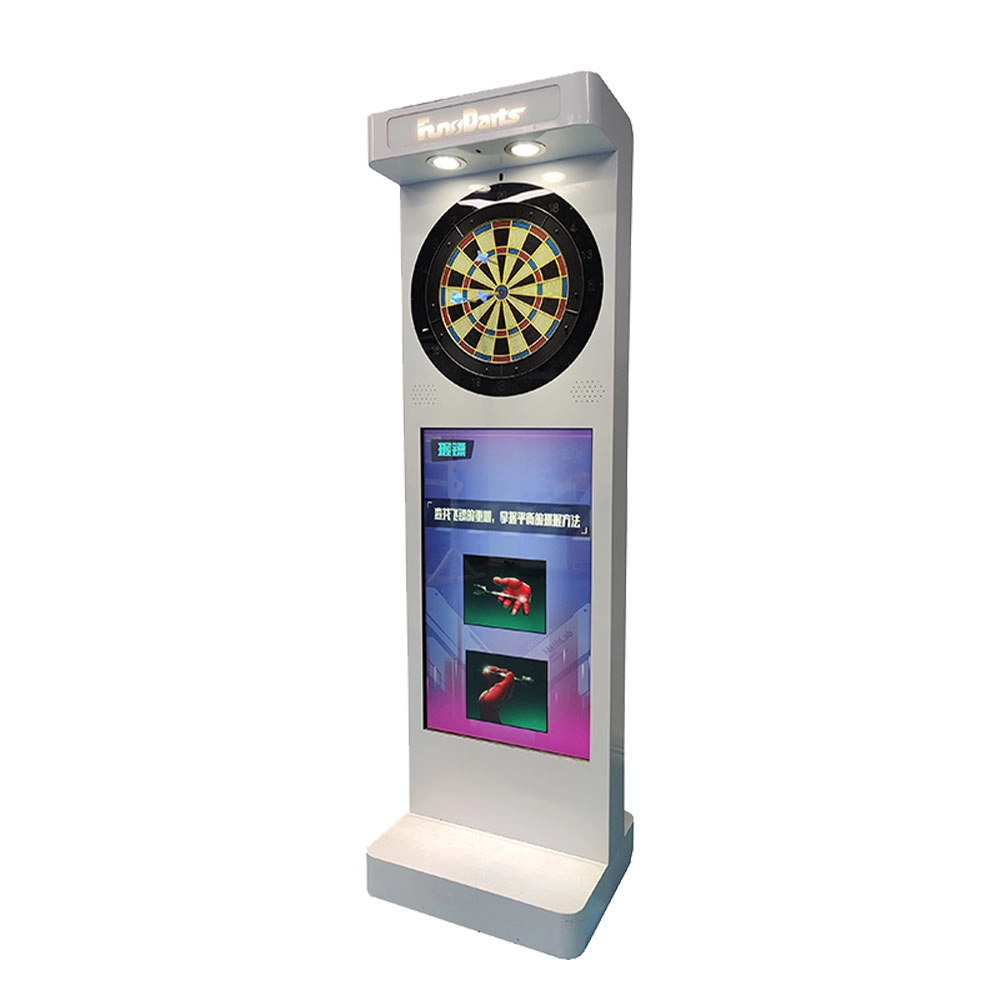
Neofuns Electronic Arcade Darts Machine S – Coin Operated Fun Dart Game with Soft Tip & Metal Tip Options, Stand-Up Electronic Dartboard for Arcade
Create private leagues for corporate unions, clubs, or friends with customizable rules (e.g., round-robin, knockout), syncing team rankings and individual contributions to boost collaboration. Branded interfaces and dartboards for company-themed tournaments.
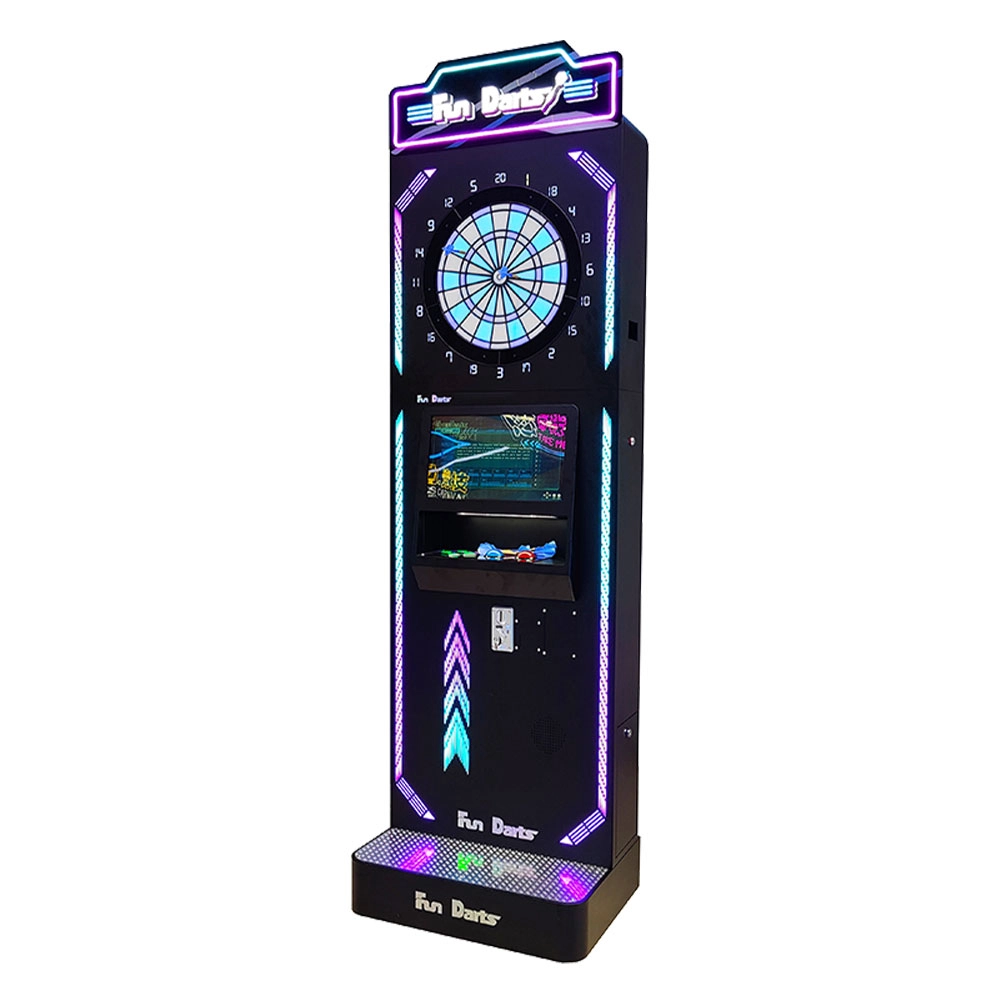
Neofuns Coin Operated Arcade Game Fun Darts Machine V –Cool Streamlined Appearance and Lighting Stand-Up Dart Machine for Arcade & Entertainment Venue
This smart dartboard seamlessly blends classic sport with cutting-edge tech,enjoy 30+ game modes and real-time multiplayer battles with dynamic animations. Professional self-healing sisal board with replaceable surfaces ensures durability for both training and entertainment.
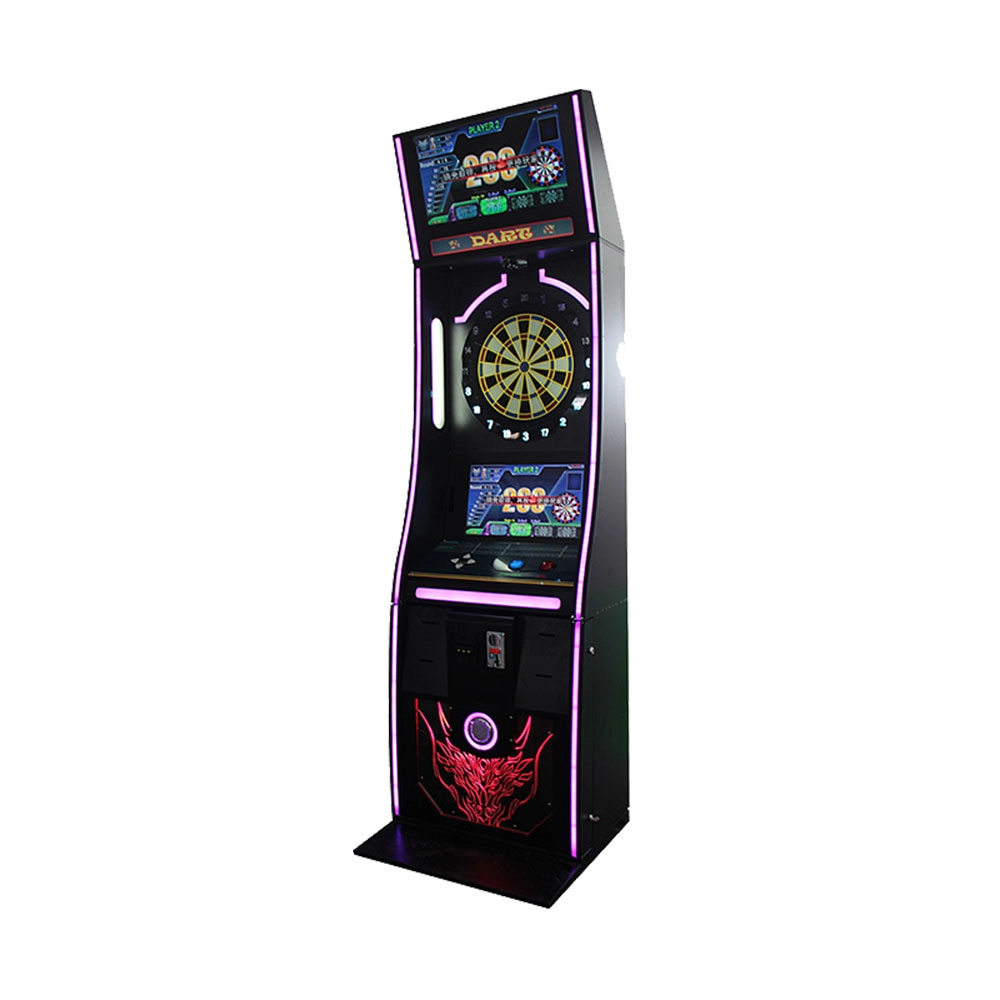
Neofuns Coin Operated Arcade Game Fun Darts Machine I – 32-inch Display on the Top Featuring Coin-operated And Arcade-style Designs
Equipped with high-precision infrared sensors, it tracks dart trajectories in real time and auto-scores, eliminating manual errors for fair competition. 30+ built-in game modes (e.g., "301 Battle, Fun Training") cater to all skill levels, supporting solo play, local multiplayer, and global online matches. Monetize via pay-per-play, sponsored tournaments, or brand partnerships (commercial); a one-time investment unlocks lifelong family entertainment.
Get in touch with us
If you have any comments or good suggestions, please leave us a message, later our professional staff will contact you as soon as possible.
Leading Electronic Dart Machine Manufacturer
NEOFUNS
NEOFUNS
NEOFUNS