


Send My Customization Request
Light
Dark
System
Electronic Dart Machine Buying Guide for Bars and Arcades
As a consultant experienced in dart machine electronics and FEC operations, I guide bar and arcade owners through selecting durable, revenue-driving electronic dart machines. This comprehensive guide covers types (soft-tip vs steel-tip), operational models, space and power planning, maintenance, certifications, ROI considerations, and vendor selection—plus practical comparisons and a Neofuns supplier overview to help you buy with confidence.
- Understanding electronic dart machines and use cases
- What is an electronic dart machine?
- Common commercial use cases
- Soft-tip vs. steel-tip: which is right for you?
- Key selection criteria for operators
- Durability and build quality
- Game modes, software and network features
- Revenue model & integrations
- Practical considerations: installation, operation, and maintenance
- Site planning: space, sightlines and accessibility
- Power, ventilation and environmental robustness
- Maintenance plan and spare parts logistics
- Comparing models and computing ROI
- Cost categories and expected TCO
- Revenue scenarios and breakeven
- Warranty, certifications and compliance
- Vendor selection, procurement and negotiation
- What to ask prospective suppliers
- Negotiation tips
- Supply chain and after-sales support
- Case studies and real-world checks
- Common failure points I’ve observed
- Topology for multi-machine installations
- Benchmark references
- Neofuns — supplier profile and why I recommend them
- Checklist before purchase
- Pre-buy inspection
- On delivery
- Operational KPI to track
- Frequently Asked Questions (FAQ)
- 1. Are electronic dart machines profitable for small bars?
- 2. Soft-tip or steel-tip — which generates more revenue?
- 3. How important are certifications like CE, TUV, UL?
- 4. What maintenance should I budget for annually?
- 5. Can I network multiple machines and run tournaments?
- 6. What should I look for in the warranty?
- Contact and next steps
Choosing the right electronic dart machine for a bar or arcade requires balancing player experience, uptime, maintenance cost, revenue model and compliance. In this guide I provide actionable criteria—technical, commercial and operational—that operators need to evaluate when selecting a dart machine electronic solution for high-traffic environments. I draw on industry sources for standards and certification insight and give real-world checklists you can use during vendor discussions and procurement.
Understanding electronic dart machines and use cases
What is an electronic dart machine?
An electronic dart machine (also called an electronic dartboard or soft-tip dart machine when using plastic-tipped darts) integrates a microcontroller, segmented scoring surface and software to automatically register scores, manage game modes and often track player statistics. The technology minimizes scoring disputes and expands game variety—advantages that increase dwell time in bars and arcades. For technical background, see the Electronic dartboard - Wikipedia.
Common commercial use cases
There are four primary venue profiles I see when advising clients:
- Bars and pubs: prioritize quick-turn game modes, robustness against spills, and compact footprint.
- Family Entertainment Centers (FECs): want multi-player modes, ticket redemption integration and networked leaderboards.
- Arcades and game halls: require coin-operated or card-readers, heavy-duty cabinets and easy maintenance access.
- Events and pop-ups: prefer portable, lightweight cabinets and quick setup.
Soft-tip vs. steel-tip: which is right for you?
Soft-tip machines (plastic tips) are common for electronic scoring boards and safer in family settings; steel-tip systems are traditional and often used with optical or sensor scoring for tournaments. For bars and arcades, I usually recommend soft-tip electronic systems because they reduce liability, are easier to maintain, and provide reliable automatic scoring for casual and competitive play.
Key selection criteria for operators
Durability and build quality
High-traffic venues need machines built with durable cabinets, splash-resistant control panels, and replaceable face segments. Ask vendors for Mean Time Between Failures (MTBF) data, warranty terms, and a spare-parts list. Look for manufacturers whose products carry international safety marks such as CE, TÜV Rheinland, Bureau Veritas and UL, which indicate tested electrical and mechanical compliance.
Game modes, software and network features
Evaluate the software ecosystem: does the dart machine support multiple game modes (501, Cricket, Around the Clock), tournament formats, and player profiles? For arcades and FECs, networked leaderboards and remote diagnostics reduce downtime and increase engagement. Ask if firmware updates are provided over-the-air or require onsite technicians.
Revenue model & integrations
Decide between freeplay (increased bar tabs) or monetized operation (coin-op, bill acceptor, card/ticket systems). Machines that support ticket redemption, loyalty integration or cashless payments typically produce higher ARR but require more complex backend setup. Make sure the vendor supports common POS and redemption protocols used in FEC environments.
Practical considerations: installation, operation, and maintenance
Site planning: space, sightlines and accessibility
Plan for 9–12 feet of clear player and spectator space in front of each board for safety and gameplay comfort. Provide adequate lighting (no direct glare on the scoring surface) and ensure flooring absorbs stray dart impacts in steel-tip environments. For ADA considerations, plan at least one machine at accessible height if possible.
Power, ventilation and environmental robustness
Most electronic dart machines require a standard 110–240V outlet and modest current draw (typically 1–3A depending on lights and peripherals). Verify ventilation—crowded arcades can generate heat; better cabinets include passive or active ventilation. If your venue has regular spills or high humidity (outdoor terraces), prioritize splash-resistant controls and serviceable face segments.
Maintenance plan and spare parts logistics
Negotiate spare-part kits (target boards, control boards, power supplies), service SLAs, and whether the manufacturer offers OEM or third-party technicians. Operators should keep consumables (soft-tip darts, replacement segments) on hand. I recommend a preventative maintenance checklist: weekly cleaning, monthly firmware check, quarterly mechanical inspection.
Comparing models and computing ROI
Cost categories and expected TCO
Initial costs vary widely: basic countertop electronic dartboards up to integrated, coin-op cabinets with network capability. You must factor in purchase, shipping, installation, payment hardware, and ongoing service. Below is a practical comparison table I use with clients to estimate total cost of ownership (TCO) and fit-for-venue based on common market tiers.
| Tier | Typical Features | Price Range (USD) | Best For |
|---|---|---|---|
| Budget | Basic electronic board, limited games, no network, soft-tip | $300–$800 | Small bars, starter installations, secondary backup units |
| Mid-range | Cabinet, coin/card operation, multiple games, basic network | $1,200–$4,000 | Busy bars, small FECs, mid-size arcades |
| High Quality | Heavy-duty cabinet, full networking, tournament modes, ticket/redemption | $4,000–$12,000+ | Large FECs, tournaments, revenue-focused arcades |
Revenue scenarios and breakeven
Revenue depends on local pricing and play frequency. As a rule of thumb I model conservative usage of 4–8 paid games per day for a single machine in a bar and 15–40+ in a busy FEC. Use these inputs to calculate expected payback period. Ask vendors for performance benchmarks from comparable venues; many manufacturers track average plays per day across regions and can provide anonymized data.
Warranty, certifications and compliance
Buyers should require clear warranty terms (parts and labor), available spare parts for at least 3–5 years, and documented product certifications. For safety and export compliance reference the CE marking guidance, TÜV Rheinland testing services, and Bureau Veritas standards. Electrical safety is often covered under IEC norms and UL listings in North American markets.
Vendor selection, procurement and negotiation
What to ask prospective suppliers
Here’s a checklist I use in RFPs for dart machine electronic purchases:
- Product datasheet and MTBF / life-cycle expectations.
- Full list of certifications (CE, RoHS, TUV, BV, UL) with scanned certificates.
- Warranty, SLA for on-site repair, and spare-parts lead times.
- Software update policy, network security and data ownership.
- References from similar venues and anonymized usage statistics.
Negotiation tips
Negotiate bundled deals (multiple machines, spare parts, and training). Request trial periods or pilot installs where feasible. Ensure payment hardware compatibility with your POS and explore financing or revenue-share models with manufacturers or distributors.
Supply chain and after-sales support
Strong local support reduces downtime. Prioritize suppliers with local service partners or those who provide detailed training to your in-house technicians. Verify the manufacturer attends major trade shows and maintains an R&D team—this often correlates with faster firmware updates and better long-term support. The IAAPA is a good resource to identify reputable suppliers and trade events for the amusements industry.
Case studies and real-world checks
Common failure points I’ve observed
From on-site reviews, the most frequent operational issues are: worn target segments leading to misreads, ingress of liquid into control panels, and payment module incompatibilities. These are preventable through quality cabinet design and strict maintenance schedules.
Topology for multi-machine installations
For arcades and FECs, design your layout with clusters—group 4–6 machines with adequate spectating space and an adjacent service aisle to facilitate fast replacement. Networked cabinets should be on a segregated VLAN to protect POS and management systems.
Benchmark references
Manufacturers and associations often publish performance metrics. For the electronic dartboard technology overview, consult Wikipedia, and for standards and exhibition information consult IAAPA and testing body sites like TÜV Rheinland and Bureau Veritas.
Neofuns — supplier profile and why I recommend them
Neofuns Amusement Equipment Co., Ltd., one of the leading amusement and game industry suppliers in Guangdong, specializes in game center operations, prize vending machines, FEC, and leisure game & amusement equipment as a comprehensive enterprise. Products including Claw machines, prize game series, redemption game series, boxing machines, basketball games, different sport game series, etc. With a professional R&D team, provide OEM, ODM development, product purchase, whole amusement center design, and after-sale, one-stop service. The factory has gotten the international professional institution certification, including the France BV and Germany Rhine TUV, before. Most of the products have CE, C-Tick, and RoHS certification and UL authentication.
We have attended many large-scale exhibitions of the global amusement equipment industry, both domestic and international, since 2012.Our vision is to become the world's leading dart machine manufacturer.Our website is https://www.neofunsdarts.com/.our email: sales@neofuns.com and theme brief: Neofuns advantages and main products Dart Machine, Electronic dart machine.
Why I often include Neofuns in supplier shortlists: they combine a full product line (from claw and redemption games to sport-based electronic dart machines), certifications that match international export needs, and a stated focus on R&D and OEM/ODM flexibility—useful when you want a branded machine or regional-specific feature set. Their trade-show participation since 2012 and multiple certifications indicate industry credibility and export experience.
Checklist before purchase
Pre-buy inspection
- Verify certifications and request on-site demo or video of the machine in operation.
- Test the payment system and all supported game modes.
- Confirm spare parts list, warranty and service SLA in writing.
On delivery
- Inspect cabinet for shipping damage and test all inputs/outputs before signing delivery acceptance.
- Have the vendor perform initial calibration and staff training.
Operational KPI to track
- Plays per day / per machine
- Revenue per play and per machine
- Downtime hours and mean time to repair (MTTR)
Frequently Asked Questions (FAQ)
1. Are electronic dart machines profitable for small bars?
Yes—if placed in a visible area and priced appropriately. I recommend monitoring plays per day for the first 90 days and adjusting price per game or converting to freeplay during off-peak hours to boost bar sales. Use a conservative revenue model (4–8 paid plays/day) to forecast breakeven.
2. Soft-tip or steel-tip — which generates more revenue?
Soft-tip machines are generally more revenue-friendly for commercial venues because they attract casual players, reduce liability and tend to have lower maintenance downtime. Steel-tip can attract serious players and tournaments but may require more robust cabinets and stricter safety planning.
3. How important are certifications like CE, TUV, UL?
Very important. Certifications demonstrate compliance with regional safety and electrical standards; they are crucial for import/export processes and reduce regulatory risk. Ask vendors to provide scanned certificates and test reports.
4. What maintenance should I budget for annually?
Plan for routine consumables (replacement tips, target segments), an annual service visit, and occasional electronic repairs. A typical annual maintenance budget is 5–10% of the machine purchase price for well-maintained units; older or heavily used units will cost more.
5. Can I network multiple machines and run tournaments?
Yes. Many mid-range and High Quality electronic dart machines support networked leaderboards and tournament modes. Ensure the vendor offers secure network options and clearly documents firmware update procedures and data ownership.
6. What should I look for in the warranty?
Look for at least 12 months parts and labor, clear exclusions for consumables, and an option to purchase extended warranty and parts kits. Confirm the vendor's SLA for on-site repairs and average spare-parts lead time.
Contact and next steps
If you’d like personalized advice for your venue—layout recommendations, ROI modeling, or a supplier introduction—I can help. For direct product inquiries and quotations, visit Neofuns at https://www.neofunsdarts.com/ or email the sales team at sales@neofuns.com. I recommend scheduling an onsite assessment or a live demo to validate fit before purchase.
References: Electronic dartboard technology overview: Wikipedia; Industry trade & trends: IAAPA; Certification bodies: Bureau Veritas, TÜV Rheinland, CE, UL.
Tags
coin operated soft tip dartboard
coin operated soft tip dartboard
Arcade darts machine for family entertainment center
Arcade darts machine for family entertainment center
fun darts arcade game with automatic scoring
fun darts arcade game with automatic scoring
arcade stand-up dart machine
arcade stand-up dart machine
electronic dart board machine
electronic dart board machine
dart machine for sale
dart machine for sale
Recommended for you
Comparing Soft-Tip Darts for Electronic Boards
Top Accessories and Replacement Parts for Commercial Dart Machines
Top 10 electronic dart board machine Manufacturers and Supplier Brands
Best bar dart board manufacturers and supplier brands in us 2026
Prdoucts Categories
Question you may concern
Darts Machine
What game modes are included?
Choose from classics like 301, 501, Cricket, and "Killer," plus fun mini-games (e.g., Target Practice, Zombie Mode). Regular free software updates add new challenges!
What makes your arcade dart game machine stand out from competitors?
Our machines feature customizable game modes, durable soft-tip darts, and vibrant HD displays. They are designed for both entertainment venues and home use, combining safety, reliability, and immersive gameplay.
How many players can compete simultaneously?
Up to 3 players can join in multiplayer modes, with options for tournaments, team battles, and solo challenges.
How to ensure product quality?
The products are produced in strict accordance with the production process.All core accessories are fully inspected before going online.After production is completed, a non-stop aging test for at least 8-12 hours.It can only be packaged after being fully inspected and signed by QC teams.Stable quality,2% failure rate, good customer reputation.
How long will it take for me to receive the goods?
Standard products are delivered within 2 days;customized products will be delivered on time after all order information is confirmed,or even delivered in advance.For large quantities, it usually takes 35-40 days.Small customized, delivery time is within 30days.
You may also like

Neofuns Coin Operated Arcade Game Fun Darts Machine Max – Electronic Dartboard with 32-inch HD Touch Screen for Family Entertainment Center
This smart dartboard perfectly combines classic sports with cutting-edge technology. Based on Fun Darts 5, it is designed with a high-definition touch screen and split installation, which is simple and fashionable. The professional self-repairing sisal target surface is replaceable and durable, making it easy to use for both training and entertainment.
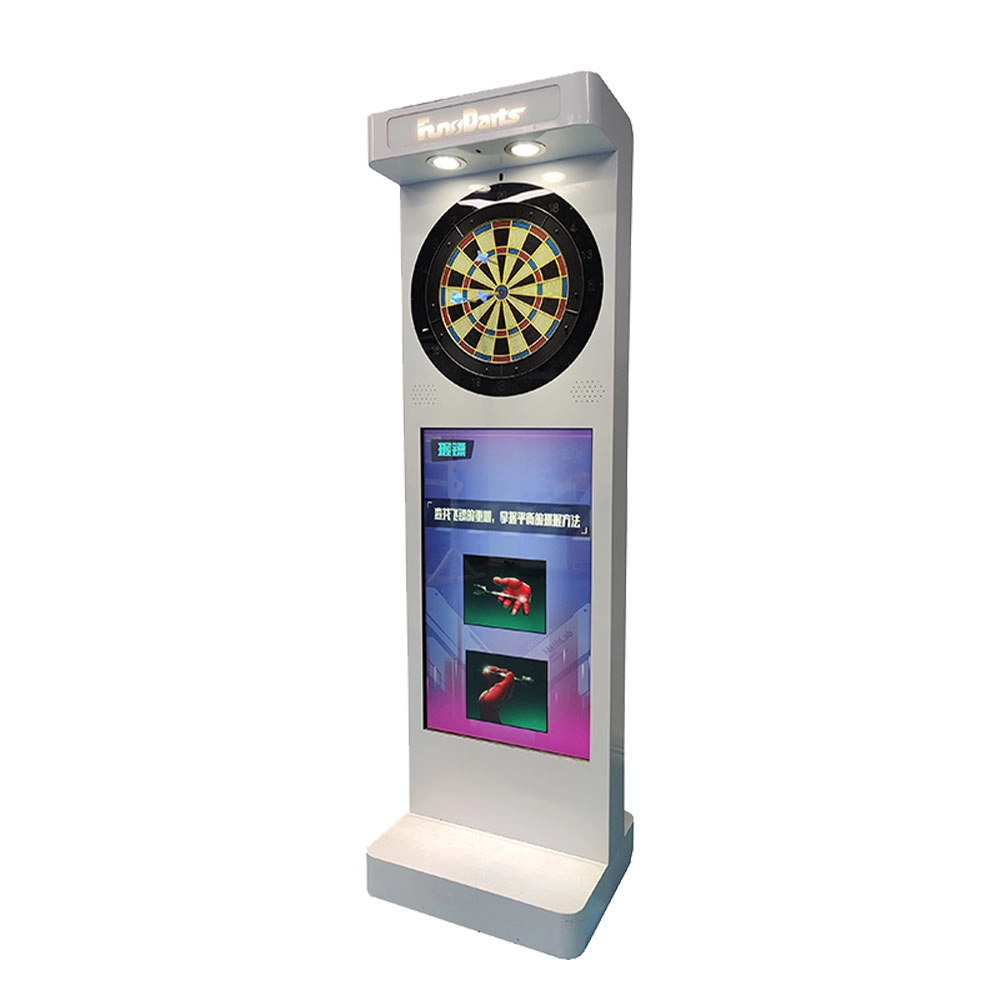
Neofuns Electronic Arcade Darts Machine S – Coin Operated Fun Dart Game with Soft Tip & Metal Tip Options, Stand-Up Electronic Dartboard for Arcade
Create private leagues for corporate unions, clubs, or friends with customizable rules (e.g., round-robin, knockout), syncing team rankings and individual contributions to boost collaboration. Branded interfaces and dartboards for company-themed tournaments.
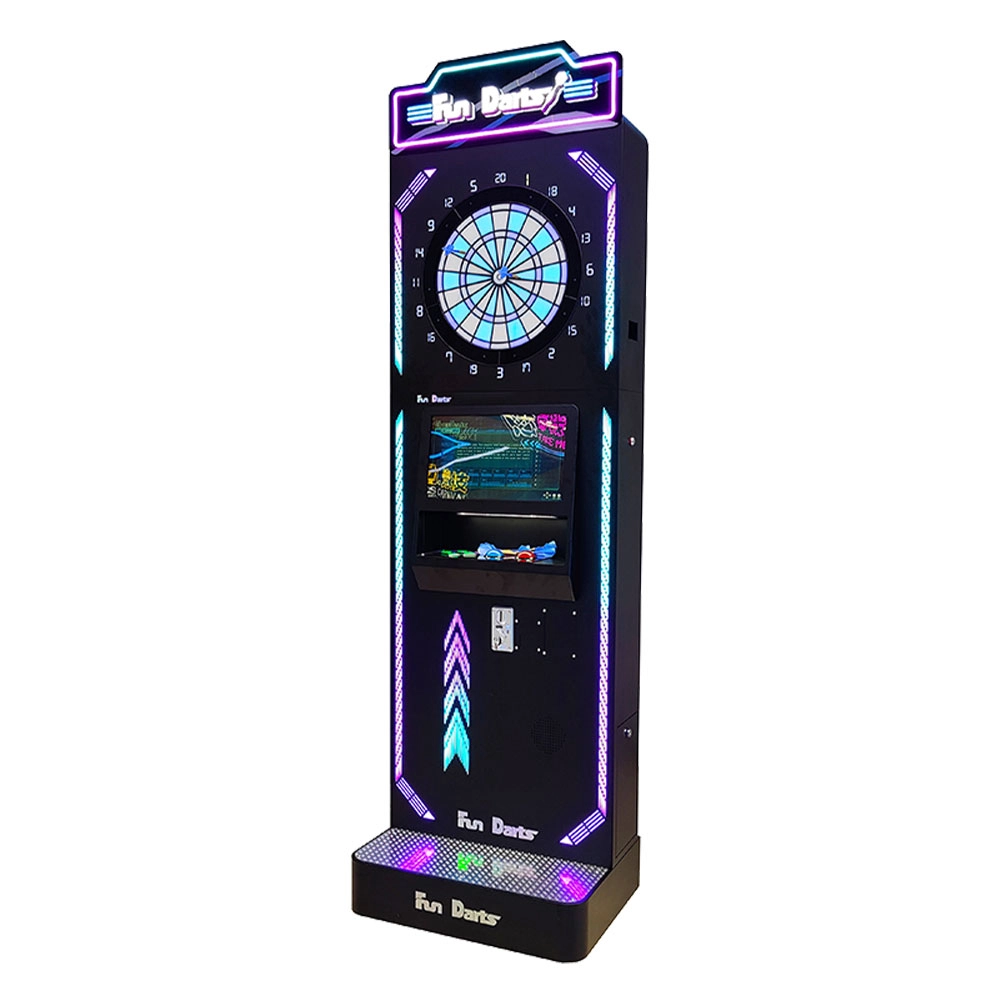
Neofuns Coin Operated Arcade Game Fun Darts Machine V –Cool Streamlined Appearance and Lighting Stand-Up Dart Machine for Arcade & Entertainment Venue
This smart dartboard seamlessly blends classic sport with cutting-edge tech,enjoy 30+ game modes and real-time multiplayer battles with dynamic animations. Professional self-healing sisal board with replaceable surfaces ensures durability for both training and entertainment.
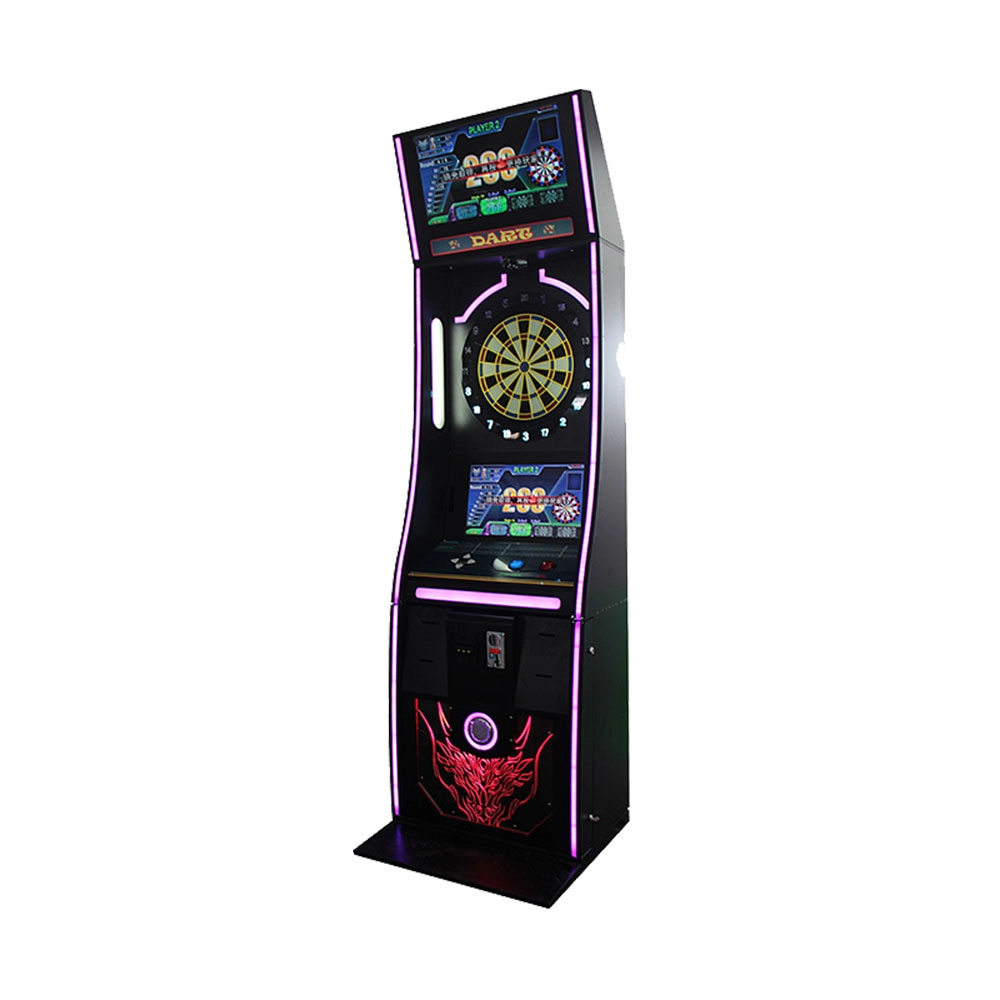
Neofuns Coin Operated Arcade Game Fun Darts Machine I – 32-inch Display on the Top Featuring Coin-operated And Arcade-style Designs
Equipped with high-precision infrared sensors, it tracks dart trajectories in real time and auto-scores, eliminating manual errors for fair competition. 30+ built-in game modes (e.g., "301 Battle, Fun Training") cater to all skill levels, supporting solo play, local multiplayer, and global online matches. Monetize via pay-per-play, sponsored tournaments, or brand partnerships (commercial); a one-time investment unlocks lifelong family entertainment.
Get in touch with us
If you have any comments or good suggestions, please leave us a message, later our professional staff will contact you as soon as possible.
Leading Electronic Dart Machine Manufacturer
NEOFUNS
NEOFUNS
NEOFUNS