


Send My Customization Request
Light
Dark
System
Electronic Dart Machine Scoring Systems: Accuracy Explained
As a dart machine electronic specialist and consultant, I break down how modern electronic dart scoring systems work, what affects their accuracy, and how to choose, maintain, and validate machines for game centers. I cover sensor types, common failure modes, troubleshooting, and selection criteria—backed by industry references and practical experience.
- Understanding the landscape of electronic scoring technology
- Why accuracy matters in commercial dart machines
- Basic components of an electronic scoring system
- Standards and industry context
- How electronic dart scoring detects hits
- Matrix (segmented) sensor boards
- Piezoelectric and pressure sensors
- Acoustic and vibration localization
- Optical and camera-based systems
- What affects accuracy: sources of error and mitigation
- Dart type and tip compatibility
- Hardware wear and environmental factors
- Firmware algorithms and calibration
- Human factors and setup
- Comparing sensor technologies and real-world performance
- Comparative table of common detection technologies
- Interpreting accuracy numbers
- Third-party verification and certifications
- Operational best practices: procurement, maintenance, and QA
- Choosing the right dart machine electronic for your venue
- Maintenance checklist to preserve accuracy
- Field troubleshooting steps I use
- Case studies and evidence
- Field observation: arcade vs. tournament environments
- Data-driven validation
- References and further reading
- Why choose Neofuns for your electronic dart machine needs
- Neofuns capabilities and competitive strengths
- Product relevance: Dart Machine and Electronic dart machine
- How Neofuns supports accuracy and service
- FAQs
- 1. How accurate are electronic dart machines compared to manual scoring?
- 2. What causes frequent mis-scoring on my electronic dart machine?
- 3. Can I use steel-tip darts on an electronic dart machine?
- 4. How often should I calibrate or service my dart machine?
- 5. What features should I look for when buying an electronic dart machine?
- 6. How can I objectively test a machine's accuracy before purchase?
- Contact and next steps
Summary for and quick readers: I explain why electronic dart machine scoring systems vary in accuracy, how different sensor technologies (matrix sensors, piezo/pressure, acoustic, optical/camera) detect dart impacts, and which operational practices and environmental factors influence scoring reliability. I provide evidence-based guidance, troubleshooting steps, and selection criteria for operators and buyers—so you can reduce scoring errors, improve player experience, and choose the right dart machine electronic for your FEC or game center.
Understanding the landscape of electronic scoring technology
Why accuracy matters in commercial dart machines
As someone who has consulted on dozens of game rooms and installed hundreds of dart machines, I can attest that scoring accuracy is not just a technical metric — it directly affects revenue, player satisfaction, and tournament credibility. A machine that mis-scores frequently causes disputes, refunds, and lost play time. In commercial settings such as family entertainment centers (FECs) and amusement arcades, a reliable dart machine electronic system preserves throughput and trust.
Basic components of an electronic scoring system
All electronic dart scoring systems combine three broad elements: the detection layer (sensors that detect a dart hit), the processing layer (firmware/software that interprets raw signals and maps them to board segments), and the user interface (display, sound, scorekeeping). Differences in sensor type and processing algorithms are where most accuracy differences originate.
Standards and industry context
Darts as a sport is governed by organizations like the World Darts Federation, which focus on rules and competition standards. For product quality, manufacturers often follow general quality systems such as ISO standards and seek third-party certifications (CE, TUV, BV) to demonstrate compliance. These organizational frameworks matter when you evaluate suppliers and their commitment to reliable products.
How electronic dart scoring detects hits
Matrix (segmented) sensor boards
Matrix boards use a grid of conductive traces or pressure-sensitive elements arranged behind each scoring segment. When a soft-tip dart contacts the segment, it completes a circuit or changes resistance at that location. This approach is common in many commercial soft-tip dart machines due to cost-effectiveness and simplicity.
Piezoelectric and pressure sensors
Some designs place piezoelectric sensors or force-sensitive resistors behind each segment to detect the mechanical energy of an impact. These sensors are more robust to partial hits and can better distinguish a real hit from a grazing contact, but they require calibration and careful mechanical design to avoid false positives from vibrations.
Acoustic and vibration localization
Advanced systems can use arrays of microphones or vibration sensors to triangulate the impact location based on sound or plate vibration. This is more complex and computationally expensive but can be accurate in controlled environments. Acoustic methods are sensitive to ambient noise if not filtered properly.
Optical and camera-based systems
High-end electronic dart machines may use computer vision—single or multiple cameras with image processing—to detect dart position. These systems can yield excellent accuracy and provide rich telemetry (trajectory, segments, dart grouping) but require careful lighting, calibration, and processing power.
What affects accuracy: sources of error and mitigation
Dart type and tip compatibility
Soft-tip darts (plastic tips) are standard for many electronic machines. Using steel-tip darts on soft-tip boards or worn/overly sharp soft tips can cause failures or increased bounce-outs. I always recommend following manufacturer tip specifications and stock-checking darts periodically to minimize scoring errors.
Hardware wear and environmental factors
Over time, sensor pads, conductive traces, and mechanical mounts degrade. Dust, humidity, and temperature fluctuations change sensor response. For acoustic and optical systems, ambient noise and poor lighting degrade detection. Regular maintenance (cleaning, sensor checks, climate control) extends accuracy.
Firmware algorithms and calibration
The processing layer matters as much as the sensors. Good firmware performs sensor fusion, debouncing, and error-correction heuristics to handle ambiguous hits (e.g., partial segment contacts or simultaneous impacts). Machines with field-updatable firmware allow you to improve scoring logic as bugs are found.
Human factors and setup
Incorrect mounting height, slanted boards, or unlevel frames change impact dynamics. I always verify installation to industry practice: mounting boards to manufacturer-specified backing, setting standard throwing distance and height, and isolating boards from adjacent heavy equipment to reduce vibration coupling.
Comparing sensor technologies and real-world performance
Comparative table of common detection technologies
| Technology | Typical Strengths | Common Weaknesses | Typical Best-Case Accuracy Notes |
|---|---|---|---|
| Matrix (conductive segments) | Cost-effective, simple, easy to repair | Susceptible to wear, false contacts from dirt or moisture | High when new and clean; accuracy depends on pad condition and dart compatibility |
| Piezo/pressure sensors | Better at rejecting grazing hits, robust to small debris | Requires calibration; mechanical coupling matters | Very good in well-calibrated commercial units |
| Acoustic/vibration arrays | Can locate hits without surface contacts, works with varied tips | Sensitive to ambient noise and mounting vibrations | High in controlled environments with good signal processing |
| Camera/vision systems | Rich data (position, trajectory), supports analytics | Lighting-sensitive; higher cost and processing needs | Very high when lighting and calibration are controlled |
Interpreting accuracy numbers
Manufacturers seldom publish raw accuracy percentages because performance depends on maintenance, installation, and use case. Instead, evaluate machines by observed miss-rate, bounce-out frequency, and the rate of disputed scores in real operations. Where I audit installations, I measure scoring disputes per 1,000 games as a practical KPI.
Third-party verification and certifications
Look for manufacturers who invite third-party testing or who provide detailed test reports. Certifications like CE or lab reports from accredited institutes add credibility, though they may not directly measure scoring accuracy. For sport-level play, consult governing bodies such as the Darts (sport) overview to ensure compliance with competitive requirements.
Operational best practices: procurement, maintenance, and QA
Choosing the right dart machine electronic for your venue
My selection checklist focuses on: sensor type and replaceability, firmware update policy, local service and spare parts availability, certifications, and vendor reputation. For high-use FECs I prioritize machines with modular sensor boards and easy field servicing. If you need analytics and player tracking, camera/vision-enabled systems offer more data for higher cost.
Maintenance checklist to preserve accuracy
- Weekly: Visual inspection of segments, clearing debris, verify Dart tip conformity.
- Monthly: Sensor diagnostic test routines (many machines include self-test modes), firmware checks.
- Quarterly: Full calibration (if supported), vibration isolation check, replace high-wear parts.
Field troubleshooting steps I use
If you encounter mis-scoring or frequent disputes, I recommend this triage:
- Reproduce the issue under controlled conditions (same dart, consistent throw).
- Run built-in diagnostics and review event logs if available.
- Check for visible damage, loose mounts, or dirty contacts.
- Swap known-good darts to rule out tip issues.
- Contact vendor support with log files and video of the problem if unresolved.
Case studies and evidence
Field observation: arcade vs. tournament environments
In my audits, I see arcade machines (high traffic, varied darts) accumulate more scoring anomalies than tournament-grade setups. Arcade installations often use matrix or pressure sensor boards optimized for cost and durability, while tournament systems (or high-end commercial units) integrate better calibration and detection algorithms to lower dispute rates.
Data-driven validation
One practical metric I use is the disputes-per-1,000-plays measure. Across multiple venues, well-maintained units typically fall below 2 disputes per 1,000 plays; poorly maintained units can exceed 10. These figures are operational KPIs derived from service logs and dispute records rather than absolute sensor accuracy claims.
References and further reading
For background on the sport and scoring rules, see the Darts (sport) overview. For organizational standards related to equipment and competition, consult the World Darts Federation site. For general quality system references, see the ISO home page.
Why choose Neofuns for your electronic dart machine needs
Neofuns capabilities and competitive strengths
As a long-time industry consultant, I evaluate suppliers on R&D capacity, certifications, and field support. Neofuns Amusement Equipment Co., Ltd., based in Guangdong, stands out as a comprehensive supplier with a professional R&D team offering OEM/ODM development, full amusement center design, and one-stop after-sale services. Their factory has previously received international professional institution certifications such as France BV and Germany Rhine TUV, and many products hold CE, C-Tick, RoHS, and UL certifications. Such credentials indicate a manufacturer committed to quality management and compliance.
Product relevance: Dart Machine and Electronic dart machine
Neofuns' product portfolio includes claw machines, redemption and prize game series, basketball and boxing games, and importantly for this article, dart machines including electronic dart machine variants. I value their experience exhibiting at large-scale industry events since 2012—this exposure correlates with iterative product improvements driven by customer feedback.
How Neofuns supports accuracy and service
From my evaluations, Neofuns emphasizes modular design (easy replacement of sensor modules), firmware support, and spare parts availability—critical factors for preserving scoring accuracy in busy FECs. If you are evaluating electronic dart machines, their one-stop approach (design, supply, after-sale) simplifies lifecycle management and reduces downtime.
Learn more: Neofuns Official Site or email their sales team at sales@neofuns.com.
FAQs
1. How accurate are electronic dart machines compared to manual scoring?
Electronic dart machines, when properly installed and maintained, are highly accurate and offer consistent scoring free from human arithmetic errors. However, sensor wear, dart tip incompatibility, and setup issues can cause occasional mis-scores. Regular maintenance and following manufacturer guidelines minimizes these issues.
2. What causes frequent mis-scoring on my electronic dart machine?
Common causes include worn or dirty sensor pads, incorrect dart tips, loose mounting, electrical interference, and outdated firmware. Start with cleaning, inspection, and running the machine's diagnostics. If unresolved, capture video evidence and contact vendor support.
3. Can I use steel-tip darts on an electronic dart machine?
No. Electronic soft-tip machines are designed for plastic-tipped darts. Steel tips damage soft-tip segments and degrade sensor function. Always use the dart type specified by the manufacturer.
4. How often should I calibrate or service my dart machine?
Perform basic inspections weekly, diagnostic tests monthly, and a more thorough calibration or service quarterly. High-usage venues may require more frequent servicing. Follow the vendor's recommended maintenance schedule for best results.
5. What features should I look for when buying an electronic dart machine?
Prioritize sensor technology (modular and serviceable), firmware update support, spare parts availability, and vendor reputation. Also consider warranty, certifications (CE, UL), and whether the supplier offers on-site support and training.
6. How can I objectively test a machine's accuracy before purchase?
Request a demo and perform repeatability tests: perform a set of standardized throws with the same darts and record discrepancy rates. Ask for test logs, firmware version details, and any third-party test reports. If possible, inspect serviceability and spare parts sourcing timelines.
Contact and next steps
If you want a hands-on audit, procurement advice, or to evaluate Neofuns' dart machines for your center, I recommend contacting their sales team or visiting their site. Neofuns specializes in dart machine and electronic dart machine solutions and can provide OEM/ODM and after-sale support tailored to venue requirements.
Visit: https://www.neofunsdarts.com/
Email: sales@neofuns.com
My final recommendation: choose a supplier who combines robust sensor design, firmware support, modular serviceability, and clear maintenance guidance—this is the best path to consistent scoring accuracy in any busy entertainment venue.
Tags
LED electronic dartboard
LED electronic dartboard
Neofuns coin operated darts machine
Neofuns coin operated darts machine
Commercial arcade dart machine
Commercial arcade dart machine
buy dart machine
buy dart machine
electronic dart arcade machine factory
electronic dart arcade machine factory
dart machine for sale
dart machine for sale
Recommended for you
Tips for buy darts electronic machine
How to Choose a Dart Board Arcade Machine for Bars
The electronic dart board machine Cost Guide | Neofuns Ultimate Insights
What are the application scenarios of electronic dart board machine?
Prdoucts Categories
Question you may concern
Purchase & Installation
How to install the machine? Do I need professionals?
Easy installation, video tutorials are provided, customers can install it by themselves.
Darts Machine
Whether to provide perfect after-sales service?
Yes,24-hour Online Service,supporting multi-language online technology and after-sales support,1-year free warranty for core accessories,and lifetime maintenance.
How accurate is the scoring system?
Our patented sensor technology ensure 99.9% scoring accuracy, even for fast-paced throws.
Can you provide corresponding prize purchasing services?
Yes, we provide prize options,one-stop shopping.
Product Features
Is the dart machine safe for children?
Equipped with soft magnetic darts and explosion-proof acrylic panels (no sharp parts). Holds international safety certifications (CE/ISO90001/ROHS), ensuring safe family use.
You may also like

Neofuns Coin Operated Arcade Game Fun Darts Machine Max – Electronic Dartboard with 32-inch HD Touch Screen for Family Entertainment Center
This smart dartboard perfectly combines classic sports with cutting-edge technology. Based on Fun Darts 5, it is designed with a high-definition touch screen and split installation, which is simple and fashionable. The professional self-repairing sisal target surface is replaceable and durable, making it easy to use for both training and entertainment.
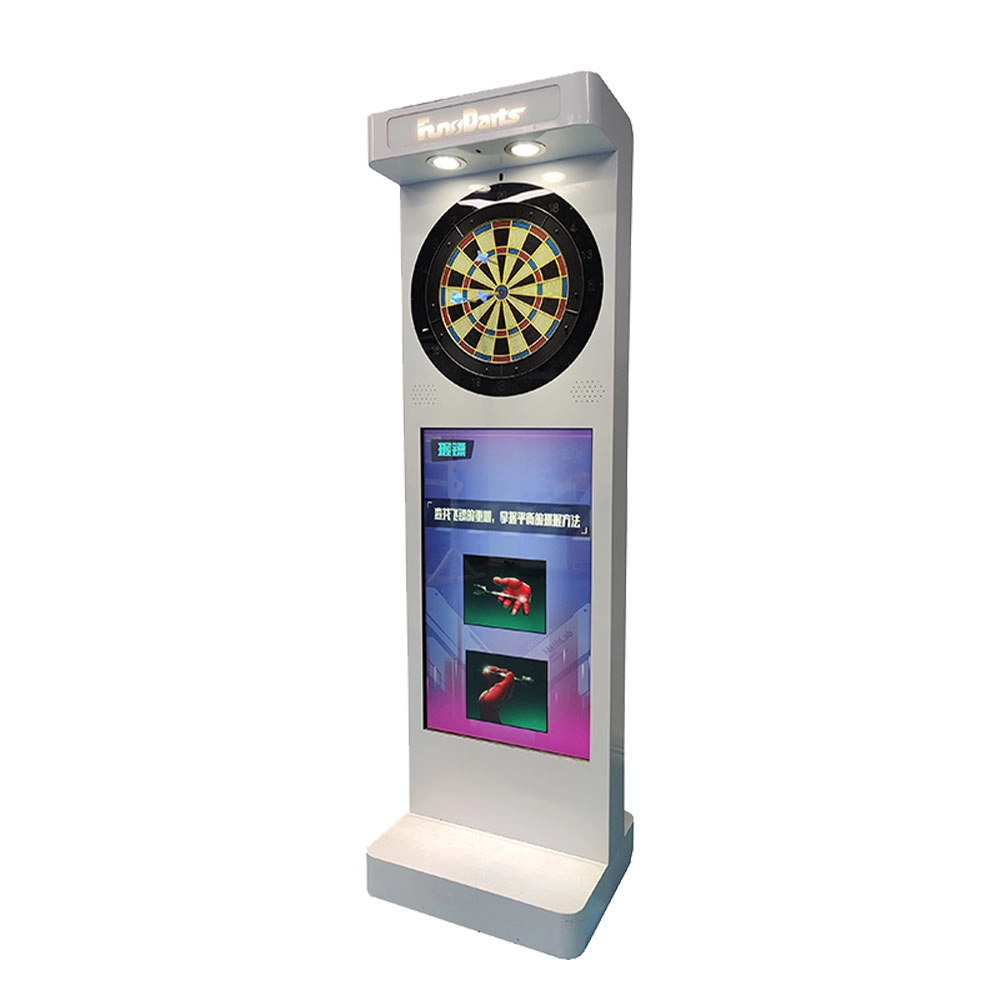
Neofuns Electronic Arcade Darts Machine S – Coin Operated Fun Dart Game with Soft Tip & Metal Tip Options, Stand-Up Electronic Dartboard for Arcade
Create private leagues for corporate unions, clubs, or friends with customizable rules (e.g., round-robin, knockout), syncing team rankings and individual contributions to boost collaboration. Branded interfaces and dartboards for company-themed tournaments.
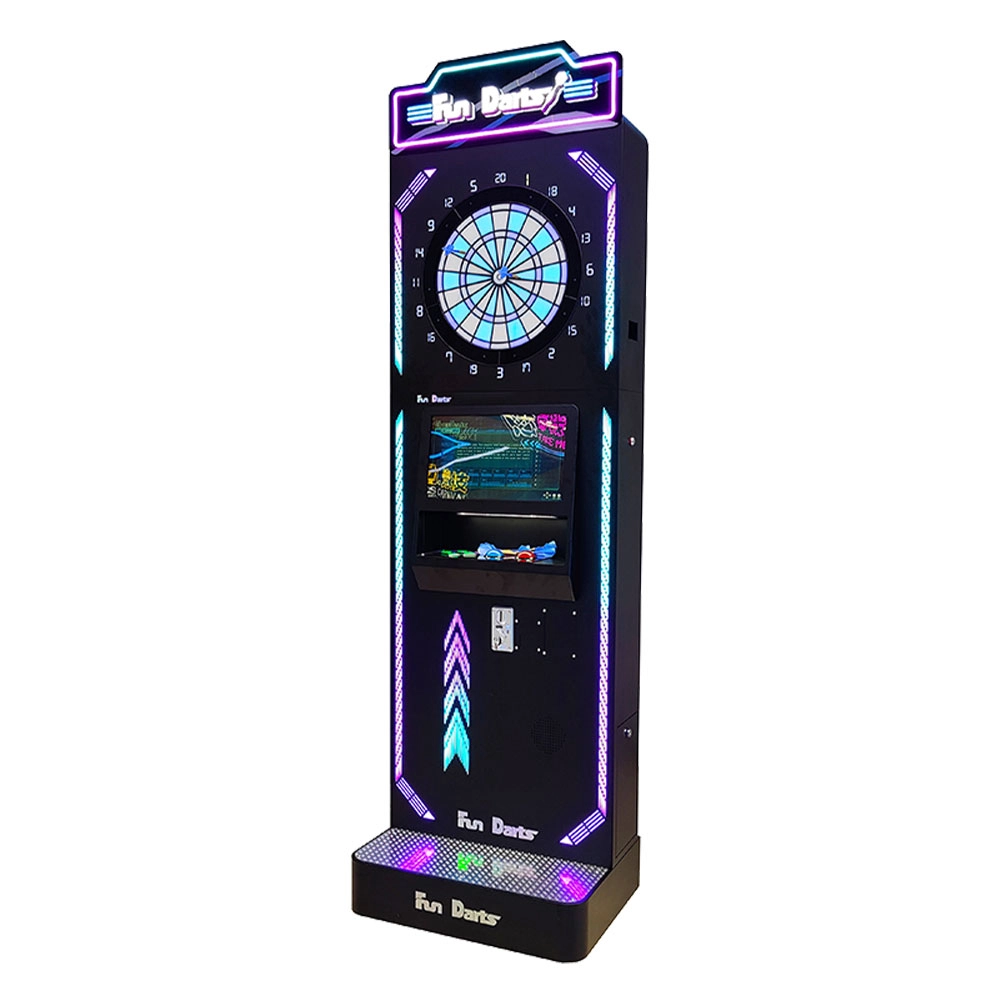
Neofuns Coin Operated Arcade Game Fun Darts Machine V –Cool Streamlined Appearance and Lighting Stand-Up Dart Machine for Arcade & Entertainment Venue
This smart dartboard seamlessly blends classic sport with cutting-edge tech,enjoy 30+ game modes and real-time multiplayer battles with dynamic animations. Professional self-healing sisal board with replaceable surfaces ensures durability for both training and entertainment.
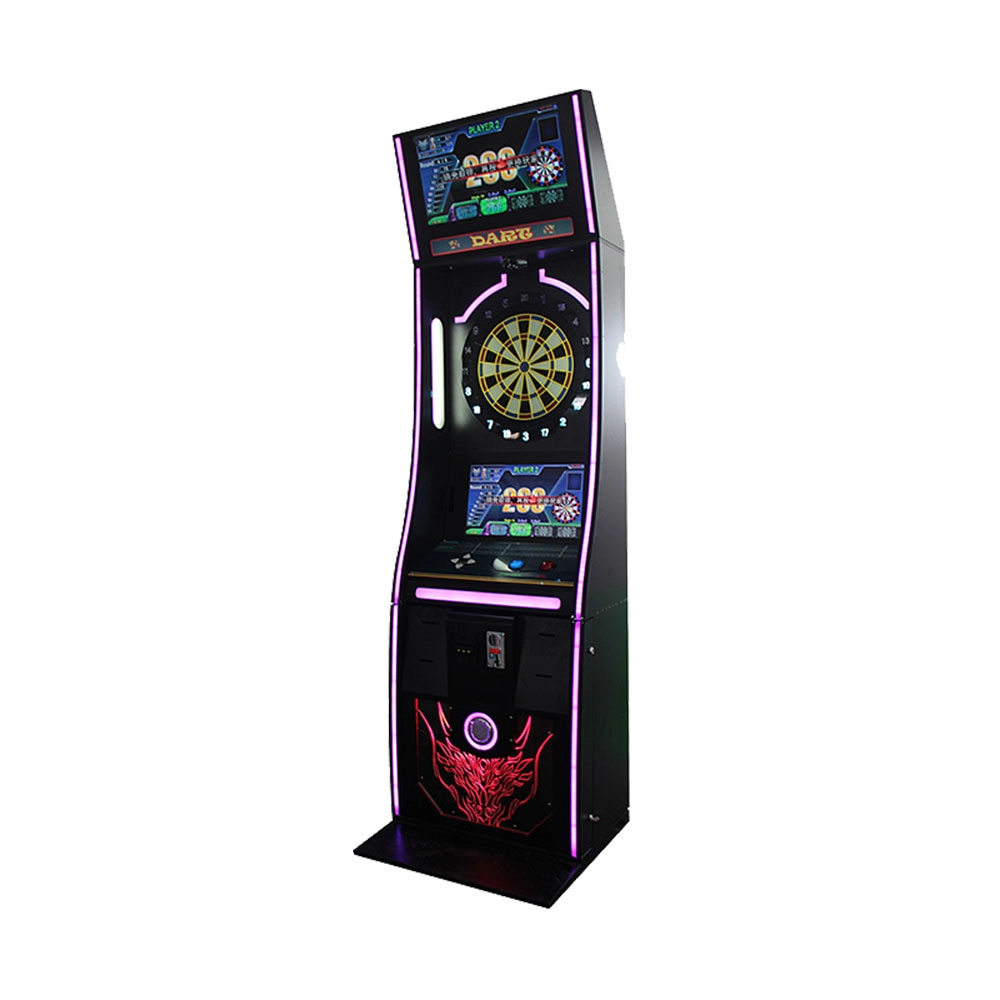
Neofuns Coin Operated Arcade Game Fun Darts Machine I – 32-inch Display on the Top Featuring Coin-operated And Arcade-style Designs
Equipped with high-precision infrared sensors, it tracks dart trajectories in real time and auto-scores, eliminating manual errors for fair competition. 30+ built-in game modes (e.g., "301 Battle, Fun Training") cater to all skill levels, supporting solo play, local multiplayer, and global online matches. Monetize via pay-per-play, sponsored tournaments, or brand partnerships (commercial); a one-time investment unlocks lifelong family entertainment.
Get in touch with us
If you have any comments or good suggestions, please leave us a message, later our professional staff will contact you as soon as possible.
Leading Electronic Dart Machine Manufacturer
NEOFUNS
NEOFUNS
NEOFUNS