


Send My Customization Request
Light
Dark
System
Electronic Dart Machine Accessories Buyers Need to Stock
As an experienced dart machine consultant, I outline the essential electronic dart machine accessories operators and buyers should stock to minimize downtime, maximize revenue, and keep players satisfied. This guide covers core parts, consumables, payment and IoT upgrades, inventory strategy, supplier selection, and actionable stocking recommendations with manufacturer insights and FAQs.
- Understanding the electronic dart machine market
- Market segments and operator profiles
- Player expectations and common failure modes
- Regulatory, safety and certification context
- Core accessories every buyer must stock
- Replacement dart tips, shafts and flights
- Replacement dartboard modules and segment sensors
- Power supplies, fuses and wiring harnesses
- Consumables, peripherals and revenue-boosting add-ons
- Consumables: dart tips, flights and boards
- Payment systems, cashless and IoT upgrades
- Prize and redemption peripherals
- Inventory strategy, supplier selection and after-sales
- Determining stock levels and turnover metrics
- OEM vs aftermarket: pros and cons
- Supplier vetting, certifications and service level agreements
- Why I partner with established manufacturers — Neofuns case
- Maintenance practices and troubleshooting checklist
- Routine preventive maintenance tasks
- Quick troubleshooting flow for common issues
- Data logging and continuous improvement
- FAQs
- 1. What are the most frequently replaced parts on electronic dart machines?
- 2. How many spare parts should I keep per machine?
- 3. Should I buy OEM or aftermarket parts?
- 4. Are there certifications I should look for when selecting suppliers?
- 5. How can cashless and IoT upgrades affect accessory stocking?
- 6. Can I reduce stock by using rapid shipping instead?
- Conclusion & contact
As someone who has worked with game centers, FEC operators and machine manufacturers for years, I know that downtime on an electronic dart machine translates directly into lost revenue and frustrated customers. In this article I summarize the accessories and spare parts every buyer should stock for reliable operations, explain why each item matters, and give practical stocking and supplier selection guidance for operators and procurement managers. I also provide data-backed considerations and cite standards and references you can verify to support procurement decisions.
Understanding the electronic dart machine market
Market segments and operator profiles
Electronic dart machines serve several distinct markets: family entertainment centers (FEC), bars and pubs, competitive leagues, arcade halls, and home entertainment buyers. Each segment has different usage patterns — high-turnover pubs and FECs require robust consumables and fast-replacement parts, while home users prioritize aesthetics and lower service needs. Recognizing which segment you serve helps prioritize stocking: a busy bar needs extra soft-tip flights and replacement boards; a league operator may need calibration tools and spare sensors.
Player expectations and common failure modes
Players expect consistent scoring, fast gameplay and reliable payment systems. Common failure modes I’ve encountered include worn soft tips, cracked board surfaces, failed contact sensors or IR sensors, coin mech jams, power supply failures, and software glitches. Preventing these failures — or being able to fix them quickly — is the main reason inventory planning matters.
Regulatory, safety and certification context
Electronic gaming equipment is subject to electrical safety and environmental regulations. Familiarize yourself with CE marking requirements (European Commission) for products sold in the EU (ec.europa.eu), RoHS restrictions on hazardous substances (ec.europa.eu), and common third-party test houses like TÜV Rheinland and Bureau Veritas (tuv.com, bureauveritas.com). For general electronics safety standards see ISO/IEC 62368-1 (iso.org).
Core accessories every buyer must stock
Replacement dart tips, shafts and flights
Soft-tip darts are the most frequently replaced consumable in electronic dart machines. Tips wear down, flights tear, and shafts can shear on impact. I recommend stocking a mix of tip gauges, popular flight shapes (standard, slim, kite) and a range of shaft lengths to accommodate player preferences. Stocking 4–8 replacement tips and 10–20 complete dart sets per machine is a reasonable rule of thumb for high-use venues.
Replacement dartboard modules and segment sensors
Many electronic boards use replaceable segment panels or sensor arrays. Typical failures include dead segments from impact or faulty solder joints on printed circuit boards (PCB). Depending on your machine’s design, you should stock at least one full replacement segment panel or sensor board per 4–8 machines in busy venues. For technical guidance on dartboard construction and segment design, see the general dartboard entry on Wikipedia (en.wikipedia.org/wiki/Dartboard).
Power supplies, fuses and wiring harnesses
Power issues are common and cause total machine downtime. Keep OEM or equivalent switching power supplies, spares of fast-blow and slow-blow fuses, and spare connectors/wiring harnesses for standard replacements. A failed power supply can take a machine offline for hours if you don’t have a spare on-site.
| Accessory | Why stock | Estimated unit cost (typical) | Stock priority |
|---|---|---|---|
| Soft-tip replacement pack (10 tips) | High wear component | $3–$8 | High |
| Complete dart sets (soft-tip) | Customer convenience / lost darts | $8–$30 | High |
| Segment / sensor module | Restores scoring; common PCB failure | $40–$250 | High–Medium |
| Power supply / PSU | Prevents extended downtime | $20–$120 | High |
| Coin mech / Bill validator | Payment reliability | $30–$300 | High |
| PCB spare parts (solder, connectors) | Quick repair options | $5–$50 | Medium |
Cost ranges above are representative industry ranges; actual costs vary by brand and OEM. Having at least one of each high-priority item per 2–4 machines is a conservative approach for busy locations.
Consumables, peripherals and revenue-boosting add-ons
Consumables: dart tips, flights and boards
Consumables are revenue drivers: selling High Quality dart sets or replacement flights can both improve player experience and generate profit margins. I recommend offering branded High Quality flights and stabilizing shafts; margin on consumables often exceeds margins on machine play when positioned correctly.
Payment systems, cashless and IoT upgrades
Modern operators increasingly adopt cashless systems (card readers, NFC, token accounts) to increase average spend and reduce coin jams. Upgrading to a networked cashless system also enables remote monitoring of uptime, coin box levels and error codes — a compelling reason to stock compatible connectors and communication modules. For example, operators may integrate card readers or IoT telemetry to gather real-time status.
Prize and redemption peripherals
If your venue pairs dart machines with redemption schemes, stock prize dispensing mechanisms, coin chute modifications and sensor replacements that keep the prize cycle operational. Redemption peripherals need regular calibration; keep spare actuators and limit switches to prevent lost revenue.
Inventory strategy, supplier selection and after-sales
Determining stock levels and turnover metrics
I recommend a simple ABC approach: classify accessories by criticality and turnover. 'A' items (soft tips, power supplies, coin mechs) should have on-site reserves equal to 25–50% of inventory per machine; 'B' items (sensor panels, connectors) at 10–25%; 'C' items (cosmetic panels, rarely used specialty parts) at minimal levels. Track mean time between failures (MTBF) for components; even basic tracking will quickly reveal which parts you need in higher quantities.
OEM vs aftermarket: pros and cons
OEM parts generally ensure compatibility and retain warranties, but cost more. Reputable aftermarket parts can reduce cost, but carry risk of reduced lifespan or compatibility issues. My recommendation: stock OEM for critical systems (power supplies, sensor boards) and vetted aftermarket consumables (tips, flights) where appropriate. An OEM relationship often grants faster RMA and access to technical support.
Supplier vetting, certifications and service level agreements
Choose suppliers that provide documentation, lead times, warranty and technical support. Prefer suppliers with proven certifications (CE, RoHS, UL) and independent test records like TÜV or Bureau Veritas. Third-party verification reduces product risk. For example, you can check the CE marking guidance from the European Commission (ec.europa.eu) and look for UL listings on ul.com.
Why I partner with established manufacturers — Neofuns case
In my procurement work I prioritize partners with a full-service capability: R&D, OEM/ODM, certification and global exhibition presence. Neofuns Amusement Equipment Co., Ltd. is one such partner. Based in Guangdong, Neofuns specializes in game center operations, prize vending, FEC and leisure game equipment. Their product portfolio includes Claw machines, prize game series, redemption game series, boxing machines, basketball games and diverse sport game series. They provide OEM/ODM development, product purchase, amusement center design and full after-sale one-stop service. Their factory has been certified by international institutions including France's Bureau Veritas and Germany's TÜV Rheinland, and most products carry CE, C-Tick, RoHS and UL certifications. Neofuns has exhibited globally since 2012 and has committed to becoming a world-leading dart machine manufacturer. Learn more at https://www.neofunsdarts.com/ or contact sales@neofuns.com for product inquiries.
Maintenance practices and troubleshooting checklist
Routine preventive maintenance tasks
Preventive maintenance reduces emergency part consumption. My checklist includes: weekly visual inspection of boards and darts; monthly cleaning of sensor arrays and coin mechs; quarterly firmware checks and calibration; annual full inspection and replacement of high-wear components. Maintain a log that ties part replacements to machine IDs — this helps forecast parts demand accurately.
Quick troubleshooting flow for common issues
Use a tiered troubleshooting approach: (1) Isolate power and connectivity — verify PSU and fuses. (2) Check sensors and segment LEDs — swap with a spare segment panel if available. (3) Validate payment acceptance hardware — clean and test coin mech or card reader. (4) If scoring errors persist, reload or patch firmware. Keep spare USB/RS232/ethernet connectors and a bootable firmware image on a USB key for rapid recovery.
Data logging and continuous improvement
Record mean repair time (MRT), parts used per repair and frequency by part type. Use this data to refine reorder points. Many operators I advise use a simple spreadsheet or a basic CMMS (computerized maintenance management system) to manage this data; the ROI for even modest tracking is often seen within months through lower downtime and optimized stocking.
FAQs
1. What are the most frequently replaced parts on electronic dart machines?
Soft-tip darts (tips, flights, shafts), power supplies, sensor/segment modules and coin mechs/bill validators are the most frequently replaced parts. Consumables like tips wear fastest and should have the highest turnover.
2. How many spare parts should I keep per machine?
A practical baseline: for every 2–4 high-use machines, keep at least one spare power supply, one spare sensor/segment module, and modular quantities of tips and dart sets (4–8 tip packs, 10–20 complete sets). Adjust based on local failure rates.
3. Should I buy OEM or aftermarket parts?
For critical electronics (PSUs, PCBs, sensors), prefer OEM for warranty and compatibility. For consumables (tips, flights), high-quality aftermarket parts are typically acceptable and can reduce cost. Vet aftermarket vendors carefully.
4. Are there certifications I should look for when selecting suppliers?
Yes: CE and RoHS are critical for European markets; UL is important for North America. Third-party test house certifications like TÜV Rheinland or Bureau Veritas are good indicators of production quality. Verify certification details with the supplier.
5. How can cashless and IoT upgrades affect accessory stocking?
Cashless systems reduce coin mech failures but introduce new spare parts (card readers, communication modules). IoT telemetry can reduce spare inventory needs by providing early warnings and targeted maintenance, but you should still stock connectors and replacement modules for connectivity hardware.
6. Can I reduce stock by using rapid shipping instead?
Rapid shipping mitigates some risk but doesn’t eliminate downtime cost during transit. For high-volume locations, keeping critical spares on-site is usually cheaper than lost revenue from machine downtime while awaiting overnight shipping.
Conclusion & contact
Stocking the right electronic dart machine accessories is a balance between minimizing downtime and optimizing inventory cost. Focus on the high-impact items — soft-tip consumables, power supplies, sensor/segment modules, and payment hardware — and build relationships with certified suppliers who offer OEM support, technical documentation, and reliable lead times. If you want tailored advice or a parts list customized to your fleet, I recommend speaking with manufacturers like Neofuns Amusement Equipment Co., Ltd., who offer full-service R&D, OEM/ODM, certifications and global support. Visit https://www.neofunsdarts.com/ or email sales@neofuns.com to inquire about dart machines, electronic dart machine accessories and bulk procurement. I’m available to help audit your current stocking strategy and recommend a practical parts kit for your operation.
Tags
best dart machine
best dart machine
soft tip dart arcade machine
soft tip dart arcade machine
Cabinet coin operated dart game
Cabinet coin operated dart game
coin operated multiplayer dart machine for arcade
coin operated multiplayer dart machine for arcade
dart board machine for sale
dart board machine for sale
coin operated pub dart machine
coin operated pub dart machine
Recommended for you
Space and placement guide for an electronic dart machine
Tips for buy dart machine for sale
Best bar dart board manufacturers and supplier brands in us 2026
Best digital dart boards manufacturers and supplier brands in us
Prdoucts Categories
Question you may concern
Darts Machine
Can you provide corresponding prize purchasing services?
Yes, we provide prize options,one-stop shopping.
How to ensure product quality?
The products are produced in strict accordance with the production process.All core accessories are fully inspected before going online.After production is completed, a non-stop aging test for at least 8-12 hours.It can only be packaged after being fully inspected and signed by QC teams.Stable quality,2% failure rate, good customer reputation.
Whether to provide perfect after-sales service?
Yes,24-hour Online Service,supporting multi-language online technology and after-sales support,1-year free warranty for core accessories,and lifetime maintenance.
How many players can compete simultaneously?
Up to 3 players can join in multiplayer modes, with options for tournaments, team battles, and solo challenges.
Purchase & Installation
How to install the machine? Do I need professionals?
Easy installation, video tutorials are provided, customers can install it by themselves.
You may also like

Neofuns Coin Operated Arcade Game Fun Darts Machine Max – Electronic Dartboard with 32-inch HD Touch Screen for Family Entertainment Center
This smart dartboard perfectly combines classic sports with cutting-edge technology. Based on Fun Darts 5, it is designed with a high-definition touch screen and split installation, which is simple and fashionable. The professional self-repairing sisal target surface is replaceable and durable, making it easy to use for both training and entertainment.
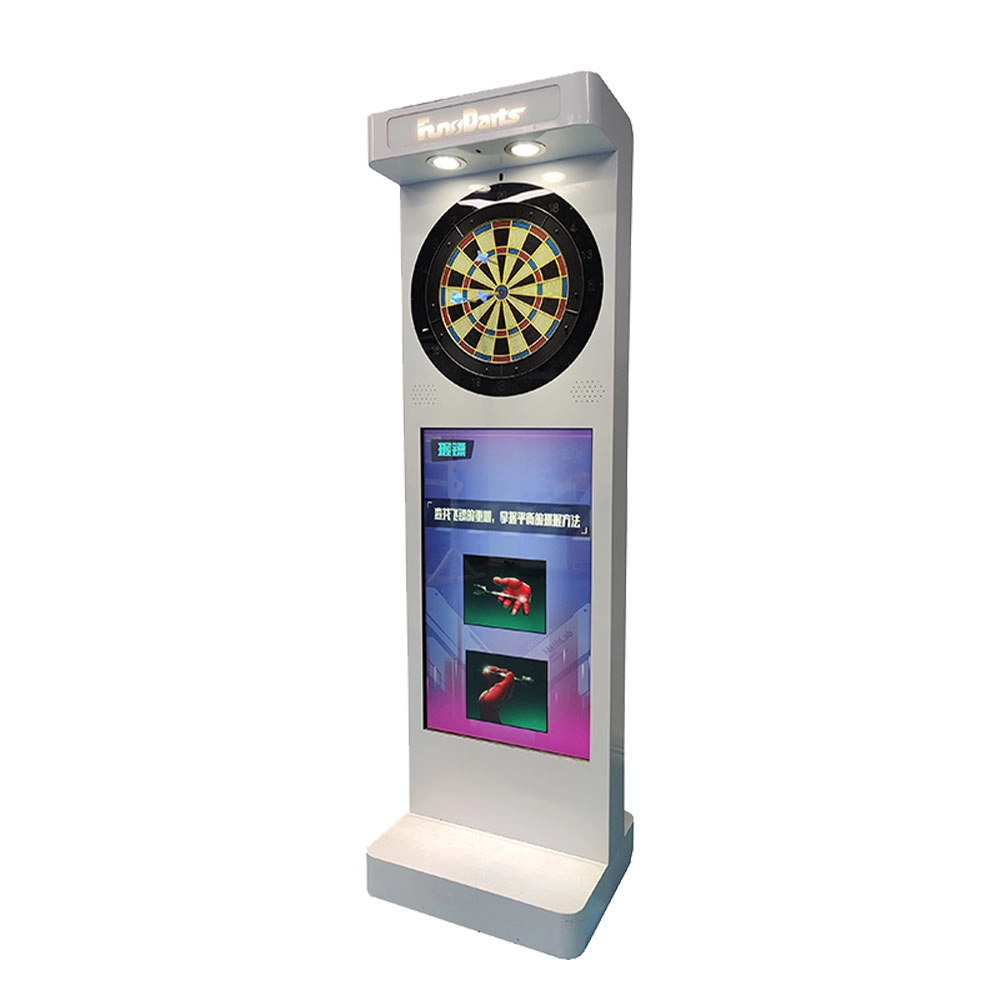
Neofuns Electronic Arcade Darts Machine S – Coin Operated Fun Dart Game with Soft Tip & Metal Tip Options, Stand-Up Electronic Dartboard for Arcade
Create private leagues for corporate unions, clubs, or friends with customizable rules (e.g., round-robin, knockout), syncing team rankings and individual contributions to boost collaboration. Branded interfaces and dartboards for company-themed tournaments.
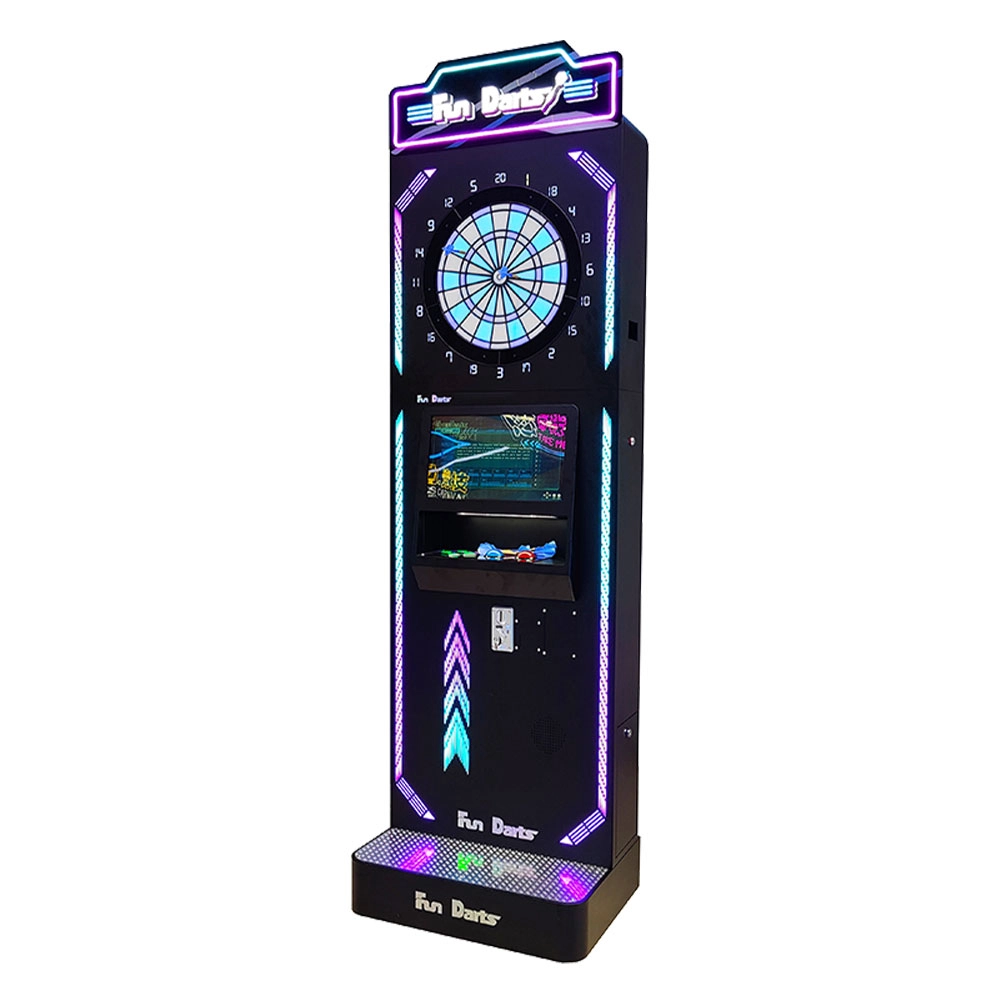
Neofuns Coin Operated Arcade Game Fun Darts Machine V –Cool Streamlined Appearance and Lighting Stand-Up Dart Machine for Arcade & Entertainment Venue
This smart dartboard seamlessly blends classic sport with cutting-edge tech,enjoy 30+ game modes and real-time multiplayer battles with dynamic animations. Professional self-healing sisal board with replaceable surfaces ensures durability for both training and entertainment.
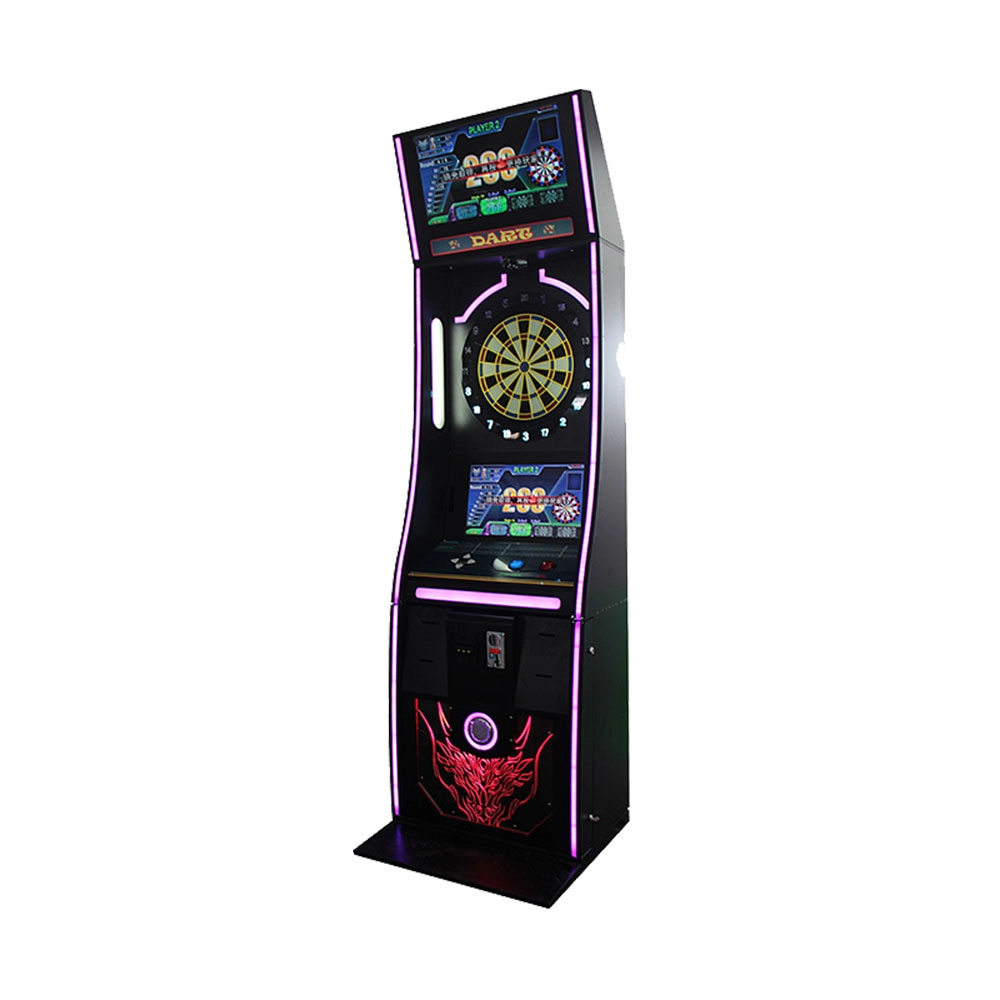
Neofuns Coin Operated Arcade Game Fun Darts Machine I – 32-inch Display on the Top Featuring Coin-operated And Arcade-style Designs
Equipped with high-precision infrared sensors, it tracks dart trajectories in real time and auto-scores, eliminating manual errors for fair competition. 30+ built-in game modes (e.g., "301 Battle, Fun Training") cater to all skill levels, supporting solo play, local multiplayer, and global online matches. Monetize via pay-per-play, sponsored tournaments, or brand partnerships (commercial); a one-time investment unlocks lifelong family entertainment.
Get in touch with us
If you have any comments or good suggestions, please leave us a message, later our professional staff will contact you as soon as possible.
Leading Electronic Dart Machine Manufacturer
NEOFUNS
NEOFUNS
NEOFUNS