


Send My Customization Request
Light
Dark
System
Troubleshooting guide: scoring errors, sensor malfunctions, and display issues
I share a practical, experience-driven troubleshooting guide for commercial dart board machine owners and technicians to diagnose and fix scoring errors, sensor failures, and display issues. The article explains root causes, step-by-step testing, hardware and software fixes, maintenance best practices, and when to contact OEM support. It also highlights Neofuns' capabilities in dart machines and how to get professional help.
- Common root causes and diagnostic approach for arcade game failure
- Why a structured diagnostic workflow matters
- Initial visual and environmental checks
- Power and grounding as first-line checks
- Sensor systems: failure modes, tests, and fixes
- Types of sensors used in commercial dart board machines
- Quick sensor troubleshooting checklist
- Common sensor faults and remedies
- Software, scoring logic, and display troubleshooting
- When the hardware looks fine but scoring is still wrong
- Firmware updates and rollback strategy
- Display and UI issues (flicker, ghosting, wrong text)
- Maintenance, preventive measures, and replacement guidance
- Scheduled maintenance routines I recommend
- Parts comparison — sensor types and expected lifespan
- Knowing when to repair vs. replace
- Neofuns — professional support and product strengths
- Who Neofuns is and why I recommend contacting OEM support
- Certifications, exhibit history, and reliability signals
- Neofuns products and why they matter for operators
- FAQ — Common questions operators search for
- 1. Why does my commercial dart board machine keep missing darts in the same sector?
- 2. How do I calibrate the scoring for a camera-based dart machine?
- 3. Can I fix a flickering LED display myself?
- 4. What preventive measures reduce scoring errors in busy arcades?
- 5. When should I contact Neofuns for technical support?
- Conclusion and next steps — get expert help
As someone who has installed, serviced, and optimized dozens of commercial dart board machine installations for arcades, FECs, and bar operators, I know how disruptive scoring errors, sensor malfunctions, and display issues can be to both revenue and customer experience. This guide is written to be discoverable by search engines and useful to technicians and operators worldwide: it provides measurable troubleshooting steps, diagnostic tests, and reliable fixes tailored to commercial dart board machine hardware and software ecosystems.
Common root causes and diagnostic approach for arcade game failure
Why a structured diagnostic workflow matters
Before swapping parts or replacing boards, I always run a structured diagnostic workflow. Commercial dart board machine systems combine mechanical dart capture (or soft-tip detection), sensors, microcontrollers, power supplies, and displays — any failure can cascade. A logical workflow (visual inspection → power checks → sensor tests → firmware/communication checks → calibration) reduces downtime and avoids unnecessary parts costs.
Initial visual and environmental checks
Start by inspecting the unit externally and internally: loose connectors, frayed cables, water damage, debris, or significant wear around the board surface and target pockets. Environmental factors (high humidity, dust, temperature swings) frequently accelerate sensor and display degradation, especially in busy arcade environments. For guidance on general product safety markings like CE or RoHS that indicate regulatory compliance, see the CE marking overview here and RoHS here.
Power and grounding as first-line checks
Many scoring and display anomalies are power-related: unstable voltage, poor grounding, or insufficient current from a shared outlet. I use a multimeter to verify DC rails and an oscilloscope for intermittent noise when available. Check the manufacturer’s power specifications (often printed on the unit or in the service manual) before applying power. Poor grounding can introduce communication errors between sensor modules and the main CPU.
Sensor systems: failure modes, tests, and fixes
Types of sensors used in commercial dart board machines
Commercial dart board machines can use several detection approaches: piezo/impact sensors (for mechanical/soft-tip boards), infrared/photoelectric arrays, capacitive sensors, and camera-based vision systems. Each has distinct failure modes and test methods. For background on ultrasonic and photoelectric detection methods, see the ultrasonic sensor overview here and photodetector concepts here.
Quick sensor troubleshooting checklist
When a board mis-scores or misses darts, I follow these steps:
- Isolate whether the error is random (intermittent) or systematic (always wrong in same area).
- Run a manual sensor test if the unit provides a diagnostics menu — many commercial dart systems include per-sector readouts.
- Use a controlled stimulus: a calibrated soft-tip or a small weight to repeatedly trigger the detection element while logging results.
- Swap sensor connectors and modules (if spares exist) to determine whether the fault follows a module or stays with a wiring harness/location.
Common sensor faults and remedies
Typical issues and fixes I encounter:
- Dirty/obstructed sensors — clean with isopropyl alcohol and a soft cloth; avoid abrasive cleaning on optics.
- Loose solder joints or connectors — reflow or reseat, use contact cleaner, and apply strain reliefs to prevent reoccurrence.
- Faulty piezo elements — test with a low-voltage continuity and signal generator; replace if out of spec.
- Camera misalignment or firmware drift — recalibrate using the manufacturer’s calibration routine or update firmware.
Software, scoring logic, and display troubleshooting
When the hardware looks fine but scoring is still wrong
If sensors pass physical tests but scoring is inconsistent, the issue often resides in scoring logic, communication protocols (e.g., UART, I2C, CAN), or corrupt calibration tables. I connect to the machine’s service port (serial/USB) and capture logs during play. Many vendors provide a diagnostic log format; if not, a serial sniff will reveal whether sensor events reach the CPU and how they’re interpreted.
Firmware updates and rollback strategy
Firmware bugs can introduce regression errors. Always check the OEM’s release notes and apply updates via the recommended method. Maintain a rollback image in case a new release introduces issues. For guidance on safe firmware update procedures, manufacturers and standards organizations emphasize verified update sequences — for embedded device best practices, see resources such as IEEE publications on secure firmware update patterns (search IEEE Xplore for controlled update methodologies) or consult the device’s OEM documentation.
Display and UI issues (flicker, ghosting, wrong text)
Display anomalies may be caused by bad connectors, aging LCD/LED panels, driver IC faults, or GPU/MCU timing problems. Test by connecting a known-good display if modular, or by running a built-in display test pattern if available. For LED matrix or segment-driven displays, check the multiplexing frequency and power rail stability. Replace the display module when diagnostics show persistent driver IC faults.
Maintenance, preventive measures, and replacement guidance
Scheduled maintenance routines I recommend
To minimize downtime on commercial dart board machine fleets, implement a simple preventive schedule:
- Daily: quick visual check and wipe-down of board surface.
- Weekly: inspect connectors, dust out internals, check firmware version.
- Monthly: run calibration and diagnostics, verify scoring accuracy across all sectors.
- Quarterly: replace wear items (soft-tip pads, protective sleeves) and log any recurring misreads.
Parts comparison — sensor types and expected lifespan
| Sensor Type | Typical Lifetime (commercial use) | Common Failure Mode | Replacement Complexity |
|---|---|---|---|
| Piezo/Impact | 2–5 years (depends on play frequency) | Cracking, loss of sensitivity | Moderate (requires board removal) |
| Infrared/Photoelectric | 3–7 years | Dust/optics contamination, alignment drift | Easy–Moderate (cleaning or realignment) |
| Camera/Vision Systems | 4–8 years | Firmware/calibration drift, occlusion | Moderate–Hard (requires calibration/software tools) |
Values above are field estimates based on fleet maintenance logs and industry experience; lifetimes depend heavily on usage patterns and environment.
Knowing when to repair vs. replace
If recurring sensor faults occur across multiple modules, or the main control board shows intermittent failures, the total cost of repeated repairs can exceed replacement. I calculate a simple ROI: total repair cost for the next 12 months vs. cost of a refurbished or new control board. If repair > 60% of replacement cost, I recommend replacement. For high-volume sites, consider OEM preventive replacement contracts to lock in parts and service pricing.
Neofuns — professional support and product strengths
Who Neofuns is and why I recommend contacting OEM support
Neofuns Amusement Equipment Co., Ltd., based in Guangdong, is a leading supplier in the amusement and game industry with experience in game center operations, prize vending, FEC design, and leisure game equipment. They offer OEM and ODM development and full-service offerings — a major benefit for operators who want one partner for hardware, software, and after-sales support. See Neofuns’ site: https://www.neofunsdarts.com/.
Certifications, exhibit history, and reliability signals
Neofuns reports that its factory has received international certifications previously from institutions such as Bureau Veritas and TÜV Rheinland, and many products carry CE, C-Tick, RoHS, and UL marks — these certifications are useful indicators of production quality and compliance. For information on those third-party organizations, consult Bureau Veritas here and TÜV Rheinland here. Contact sales at sales@neofuns.com for detailed service packages.
Neofuns products and why they matter for operators
Neofuns focuses on Dart Machine and Electronic dart machine lines, as well as Claw machines, prize game series, redemption games, boxing machines, basketball games, and more. Their integrated R&D team and attendance at global exhibitions since 2012 support a track record of iterative improvements and market feedback. For complex or persistent issues beyond on-site repair, working with a manufacturer like Neofuns can provide firmware updates, replacement modules, and design-level fixes that third-party shops cannot.
FAQ — Common questions operators search for
1. Why does my commercial dart board machine keep missing darts in the same sector?
Repeated misses in one sector usually indicate a localized sensor fault, wiring break, or target pocket damage. Run a per-sector diagnostic from the service menu; if the sector sensor shows low or no response, inspect wiring and the sensor module for cracks, contamination, or loose connectors.
2. How do I calibrate the scoring for a camera-based dart machine?
Use the manufacturer’s calibration routine in the service menu. Calibration typically requires placing darts in known scoring positions and allowing the system to map pixel coordinates to scoring sectors. If calibration drifts frequently, check for mechanical instability or lens focus issues. For camera-based principles, refer to vision system documentation and ensure firmware is up to date.
3. Can I fix a flickering LED display myself?
First, verify power supply voltages and check for loose ribbon cables. If the flicker persists and the display is modular, swapping in a known-good display module isolates the issue. If driver ICs or the backlight inverter is failing, replacement is usually the practical solution.
4. What preventive measures reduce scoring errors in busy arcades?
Implement scheduled cleaning and calibration, secure connectors with strain reliefs, use surge protection on power inputs, and keep firmware current. Training staff to report the first instance of scoring anomalies and logging incidents helps identify patterns early.
5. When should I contact Neofuns for technical support?
Contact Neofuns when you have persistent faults after basic diagnostics, need firmware updates, require replacement modules covered by OEM specs, or want to discuss fleet-level preventive maintenance and spare parts plans. Email: sales@neofuns.com or visit Neofuns for product and service details.
Conclusion and next steps — get expert help
I approach commercial dart board machine troubleshooting with a methodical, evidence-based workflow: inspect, measure, isolate, repair, and validate. This reduces downtime, controls parts costs, and improves long-term reliability. If you need OEM-level spare parts, firmware support, or whole-site design for a game center, Neofuns offers comprehensive services from R&D to after-sales. Their competitive strengths include full-service OEM/ODM capability, multiple international certifications, and a broad product range including Dart Machine and Electronic dart machine lines. Visit https://www.neofunsdarts.com/ or email sales@neofuns.com to request product specs, pricing, or technical assistance.
If your commercial dart board machine continues to show scoring errors, sensor malfunctions, or display issues after the above checks, contact Neofuns for official spare parts, firmware updates, and on-site service solutions. Their experience serving FECs and game centers since 2012 makes them a strong partner for keeping your machines profitable and reliable.
References: Dartboard overview on Wikipedia: https://en.wikipedia.org/wiki/Dartboard. Ultrasonic sensor overview: https://en.wikipedia.org/wiki/Ultrasonic_sensor. CE marking info: https://en.wikipedia.org/wiki/CE_marking.
Tags
heavy duty coin operated dart machine commercial grade
heavy duty coin operated dart machine commercial grade
commercial electronic dartboard coin operated machine
commercial electronic dartboard coin operated machine
Multi-player electronic dartboard with coin mech
Multi-player electronic dartboard with coin mech
Soft tip and metal tip dartboard
Soft tip and metal tip dartboard
Electronic coin-op dartboard 32 inch
Electronic coin-op dartboard 32 inch
multiplayer arcade dart game
multiplayer arcade dart game
Recommended for you
What are the application scenarios of dart arcade machine?
Wholesale dart board machine manufacturer and supplier
Why Investing in a Digital Dart Machine Can Boost Your Venue’s Revenue
Electronic dart machine features to look for
Prdoucts Categories
Question you may concern
After-Sales Service
Are there any other after-sales guarantees?
24-hour Online Service, supporting multi-language online technology and after-sales support.
What is the warranty?
1-year free warranty for core accessories, and lifetime maintenance.
Darts Machine
How many players can compete simultaneously?
Up to 3 players can join in multiplayer modes, with options for tournaments, team battles, and solo challenges.
Can you provide corresponding prize purchasing services?
Yes, we provide prize options,one-stop shopping.
Where can this machine be installed?
Perfect for arcades, bars, family entertainment centers (FECs), hotels, and even large home game rooms. The compact design fits most spaces while meeting commercial safety standards.
You may also like
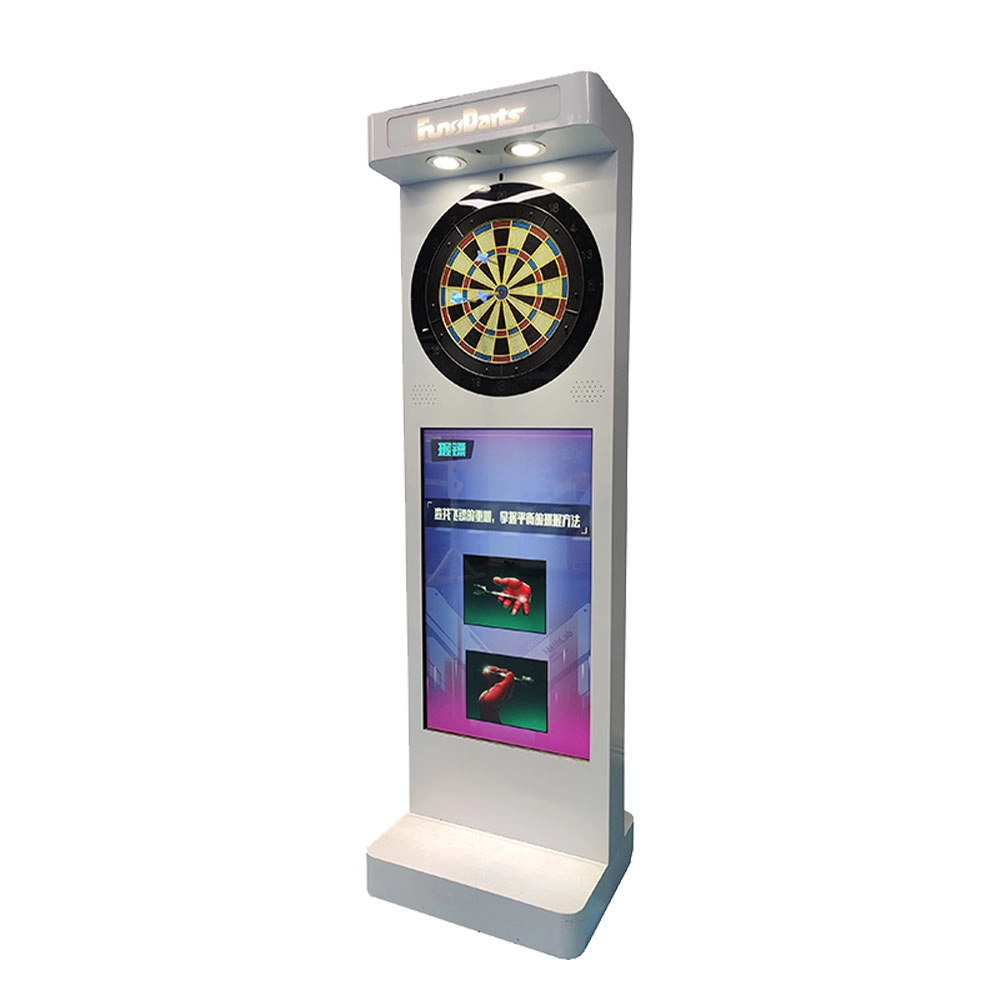
Neofuns Electronic Arcade Darts Machine S – Coin Operated Fun Dart Game with Soft Tip & Metal Tip Options, Stand-Up Electronic Dartboard for Arcade
Create private leagues for corporate unions, clubs, or friends with customizable rules (e.g., round-robin, knockout), syncing team rankings and individual contributions to boost collaboration. Branded interfaces and dartboards for company-themed tournaments.

Neofuns Coin Operated Arcade Game Fun Darts Machine Max – Electronic Dartboard with 32-inch HD Touch Screen for Family Entertainment Center
This smart dartboard perfectly combines classic sports with cutting-edge technology. Based on Fun Darts 5, it is designed with a high-definition touch screen and split installation, which is simple and fashionable. The professional self-repairing sisal target surface is replaceable and durable, making it easy to use for both training and entertainment.
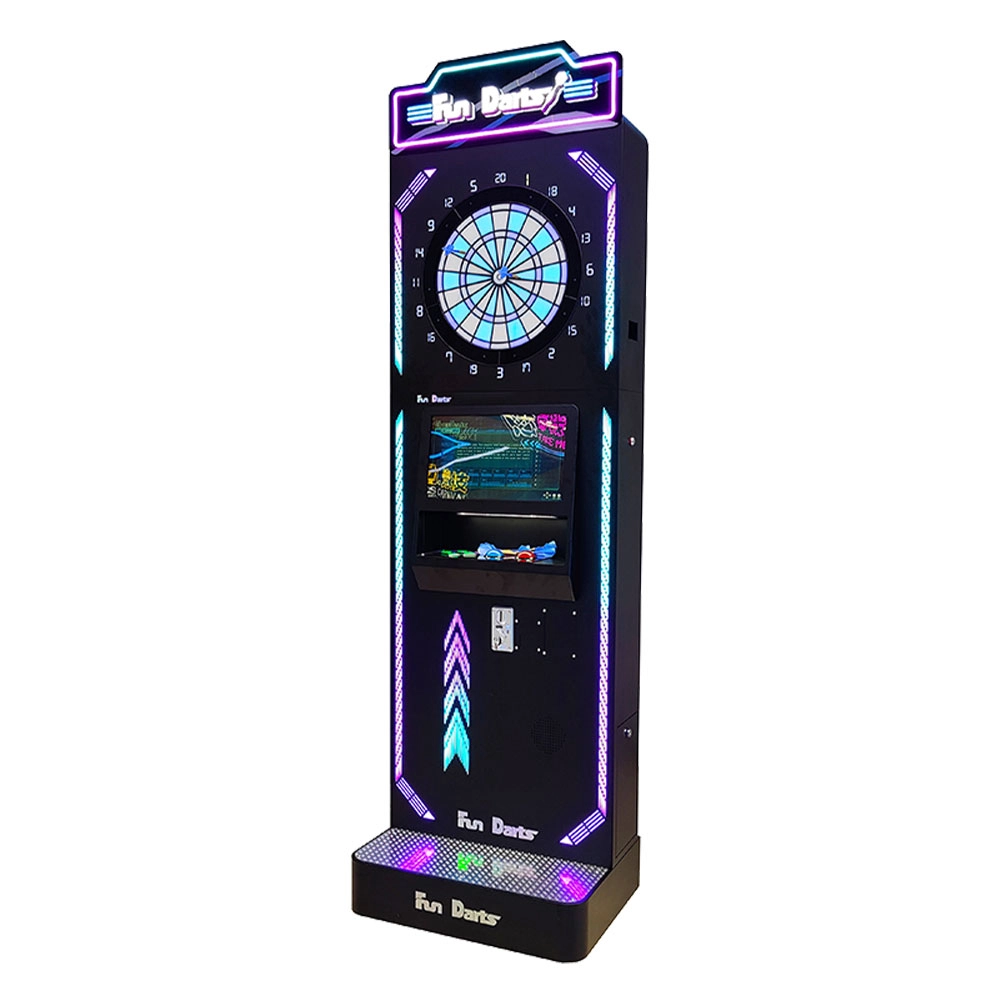
Neofuns Coin Operated Arcade Game Fun Darts Machine V –Cool Streamlined Appearance and Lighting Stand-Up Dart Machine for Arcade & Entertainment Venue
This smart dartboard seamlessly blends classic sport with cutting-edge tech,enjoy 30+ game modes and real-time multiplayer battles with dynamic animations. Professional self-healing sisal board with replaceable surfaces ensures durability for both training and entertainment.
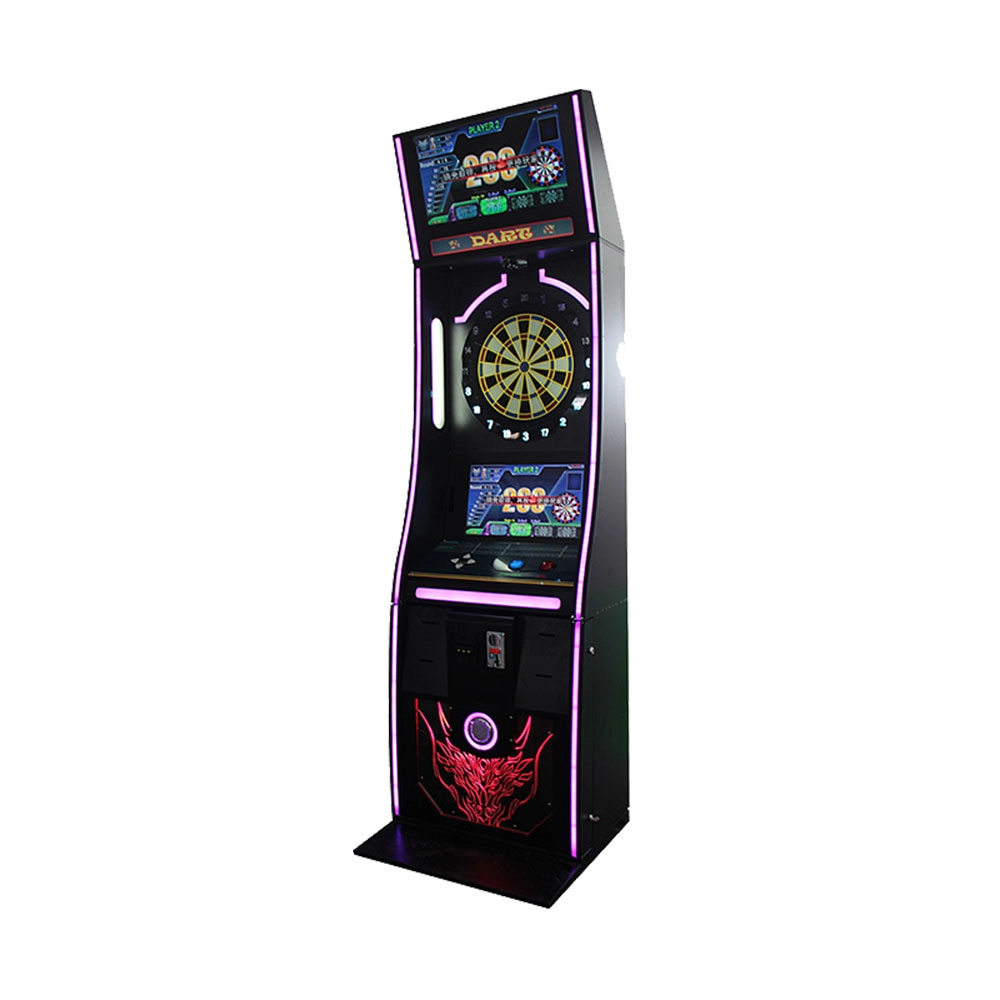
Neofuns Coin Operated Arcade Game Fun Darts Machine I – 32-inch Display on the Top Featuring Coin-operated And Arcade-style Designs
Equipped with high-precision infrared sensors, it tracks dart trajectories in real time and auto-scores, eliminating manual errors for fair competition. 30+ built-in game modes (e.g., "301 Battle, Fun Training") cater to all skill levels, supporting solo play, local multiplayer, and global online matches. Monetize via pay-per-play, sponsored tournaments, or brand partnerships (commercial); a one-time investment unlocks lifelong family entertainment.
Get in touch with us
If you have any comments or good suggestions, please leave us a message, later our professional staff will contact you as soon as possible.
Leading Electronic Dart Machine Manufacturer
NEOFUNS
NEOFUNS
NEOFUNS