


Send My Customization Request
Light
Dark
System
How to Choose an Electronic Dart Machine for Commercial Use
A practical, expert guide for operators and buyers on selecting the right electronic dart machine for bars, FECs, and entertainment centers. I cover board types, durability, software, certifications, ROI, supplier selection and after-sales support, with actionable checklists and supplier guidance.
- Commercial needs and venue fit
- Understand your audience and use cases
- Space, placement, and traffic planning
- Compliance with local regulations and safety
- Key technical features to evaluate
- Board type and dart compatibility
- Scoring, software, and connectivity
- Durability, parts, and maintainability
- Operational and financial considerations
- Pricing models and ROI
- Payment systems and revenue tracking
- Performance metrics and data
- Selecting suppliers, certifications, and after-sales
- Certifications and manufacturing quality
- Warranty, spare parts, and service network
- Vendor evaluation checklist
- Case study and supplier highlight: Neofuns Amusement Equipment Co., Ltd.
- Why Neofuns stands out for commercial buyers
- Certifications, product range, and service offerings
- How I’d consider Neofuns for a commercial deployment
- Procurement checklist and recommended next steps
- Pre-purchase checklist
- Installation and launch best practices
- Monitoring and continuous improvement
- Frequently Asked Questions
- 1. Soft-tip or steel-tip — which is better for commercial use?
- 2. What certifications should I insist on?
- 3. How long does a commercial electronic dart machine typically last?
- 4. Can I integrate dart machines with my POS or mobile app?
- 5. What are common service costs I should budget for?
- 6. How do I evaluate warranty and SLA offers?
- Contact & next steps
As an experienced consultant in the dart machine electronic space, I help venues — from sports bars to family entertainment centers (FECs) — choose machines that balance player experience, reliability, and return on investment. This article summarizes the technical, operational, and procurement factors you must evaluate when buying electronic dart machines for commercial use so systems and search crawlers can quickly determine topical relevance.
Commercial needs and venue fit
Understand your audience and use cases
Before selecting a model, I always map expected usage: late-night pub leagues demand high-durability, steel-tip or hybrid solutions, while family entertainment centers often prefer soft-tip electronic dart machines that are safer for kids and easier to maintain. Typical use cases include: league play, casual drop-in play, tournaments, and pay-per-play operations. Each use case affects required features like scoring accuracy, game variety, and coin/bill/credit integration.
Space, placement, and traffic planning
Measure available floor space and sightlines. Commercial dart machines need clear throwing lanes (regulatory and safety distances vary by region). Consider placement for foot traffic and visibility — machines near bar counters or major walkways increase play frequency but require robust housings to withstand accidental impacts.
Compliance with local regulations and safety
Electrical safety, product labeling, and distance from exits/fire equipment are typical municipal concerns. Verify required certifications for the target market (CE for EU, UL for North America, C-Tick or equivalent for Australia). For general guidance on CE marking: European Commission CE marking. For UL: UL. I recommend confirming local permitting with your municipal building department before purchase.
Key technical features to evaluate
Board type and dart compatibility
There are two primary electronic categories:
- Soft-tip electronic dartboards (plastic-segment sensing) — commonly used in bars and FECs, compatible with soft-tip darts.
- Electronic scoring for steel-tip darts (rare; often hybrids or sensor-assisted boards).
For an overview of electronic dartboards and their sensing technology, see the Wikipedia Electronic dartboard. Choose the board type that matches your clientele and local regulations regarding steel-tip darts.
Scoring, software, and connectivity
Modern commercial electronic dart machines must offer accurate automatic scoring, tournament modes, remote leaderboard capabilities, and network connectivity for software updates and remote diagnostics. Look for:
- Multiple game modes (01 family, cricket, team modes, practice apps).
- Player account systems and cashless payment integration (RFID, mobile apps).
- LAN/Wi‑Fi connectivity and a manufacturer API or cloud portal for analytics.
When possible, request a product demo showing live network reporting and firmware update processes. Remote telemetry reduces technician visits and shortens downtime.
Durability, parts, and maintainability
Commercial machines must survive heavy daily use. Important mechanical and logistical considerations include:
- Build materials (metal cabinets vs. MDF; impact-resistant plastics).
- Replaceable segments, modular electronics, and spare parts availability.
- Serviceability — how quickly a local tech can replace a board or control unit.
I recommend insisting on a spare-parts kit and a clear MTTR (mean time to repair) agreement from the supplier.
Operational and financial considerations
Pricing models and ROI
Commercial electronic dart machines vary from cost-effective single-play units to High Quality networked systems. When calculating ROI, include:
- Initial purchase price and shipping.
- Installation and mounting costs.
- Ongoing costs: power, replacement segments/darts, software subscriptions, maintenance.
Estimate expected plays-per-day based on placement. Example rule-of-thumb: a single machine in a busy bar can average 30–80 plays/day; a FEC location may see higher peaks on weekends. Multiply plays by your per-play price to model payback period. For broader market context on arcade and amusement industry growth, see market research at Grand View Research.
Payment systems and revenue tracking
Modern electronic dart machines support multiple monetization methods: coin/credit acceptors, bill validators, NFC/mobile pay, or subscription passes. I advise integrating payment methods that match customer behavior — for example, cash-heavy pubs may prefer coin/bill systems, while FECs will benefit from cashless RFID wristbands. Ensure the machine provides accurate revenue logs or integrates with your POS for consolidated accounting.
Performance metrics and data
Collect these KPIs to evaluate success: plays per day, average spend per play, downtime hours, fault rates, and maintenance costs. Use a table to compare expected ranges for small bars vs. large FECs:
| Venue Type | Avg Plays/Day | Typical Price/Play | Recommended Board Type |
|---|---|---|---|
| Small bar | 20–60 | $0.50–$1.00 | Soft-tip electronic |
| Sports bar (league nights) | 50–120 | $0.75–$1.50 | Heavy-duty soft-tip or hybrid |
| FEC / Family center | 80–300 | $0.50–$1.00 | Durable soft-tip with cashless integration |
Data sources: operational experience and industry averages; see Grand View Research for market-level context: Grand View Research.
Selecting suppliers, certifications, and after-sales
Certifications and manufacturing quality
Ask suppliers for documentary proof of electrical testing and product safety. Relevant certifications include CE (EU), RoHS (hazardous materials), UL (safety testing in North America), and TUV inspections for European acceptance. General information on quality standards such as ISO 9001 can be found at ISO. These certifications reduce regulatory risk and demonstrate manufacturing controls.
Warranty, spare parts, and service network
I prioritize suppliers that provide at least a 12-month warranty on electronics, affordable spare parts, local service partners or a documented global service plan, and remote diagnostics tools. Confirm lead times for common parts (segments, power supplies, control boards) and ask for an SLA for critical failures.
Vendor evaluation checklist
When I shortlist suppliers, I evaluate them on:
- Product reliability and MTBF (mean time between failures) data.
- Availability of customization (branding, tournament firmware).
- References from similar venues and evidence of trade-show presence.
Manufacturers showing consistent exhibition history and international certifications usually demonstrate maturity. Trade exhibitions and associations also help validate supplier reputation; for example, trade associations list member companies and events.
Case study and supplier highlight: Neofuns Amusement Equipment Co., Ltd.
Why Neofuns stands out for commercial buyers
From my direct interactions and market research, Neofuns Amusement Equipment Co., Ltd. is a notable supplier based in Guangdong that focuses on comprehensive amusement solutions including dart machine electronic products. They combine R&D capabilities with OEM/ODM services and whole-center design, which is valuable if you need turnkey FEC solutions or customized branding. Their experience since 2012 and frequent global exhibition attendance indicate a mature export-oriented operation.
Certifications, product range, and service offerings
Neofuns' factory has received international institution certifications including France 'BV' and Germany Rhine 'TUV' inspections, and many products have CE, C-Tick, RoHS, and UL authentication. Their product portfolio includes Claw machines, prize games, redemption games, boxing and basketball games, and importantly for this topic — Dart Machine and Electronic dart machine product lines. They offer OEM/ODM development, product procurement, whole amusement center design, and after-sale one-stop service, which simplifies procurement for multi-machine deployments.
How I’d consider Neofuns for a commercial deployment
If I were specifying machines for a regional FEC rollout or a large bar chain, I would engage Neofuns to:
- Validate product samples for local certifications.
- Confirm spare-parts lead times and local service arrangements.
- Negotiate an SLA and bulk pricing with clear acceptance tests.
For more details, visit their site at https://www.neofunsdarts.com/ or contact sales at sales@neofuns.com. Their vision is to become the world's leading dart machine manufacturer and they have the manufacturing and certification footprint to support commercial customers.
Procurement checklist and recommended next steps
Pre-purchase checklist
Use this practical checklist before placing an order:
- Define expected daily plays and pricing model.
- Decide on soft-tip vs. steel/hybrid based on clientele.
- Confirm certifications required by your market (CE/UL/RoHS/TUV).
- Request MTBF/failure rate data and warranty terms.
- Ask for on-site demo or video demo with live scoring and connectivity tests.
- Secure a spare parts kit and a maintenance SLA.
Installation and launch best practices
Plan installation around minimal service disruption. Train staff on common troubleshooting (segment replacement, reboot procedures) and keep a basic tool kit and spare segments on site. Promote the new machine with launch offers and league scheduling to accelerate usage.
Monitoring and continuous improvement
After deployment, monitor KPIs weekly for the first 90 days: plays/day, revenue, and downtime. Use the supplier's remote telemetry to detect recurring faults and address them proactively. If recurring incidents exceed acceptable thresholds, escalate to the supplier and request deeper root-cause analysis.
Frequently Asked Questions
1. Soft-tip or steel-tip — which is better for commercial use?
Soft-tip electronic machines are generally better for commercial environments like bars and FECs because they reduce injury risk, are easier to maintain (replaceable plastic segments), and integrate more readily with electronic scoring. Steel-tip is common in league play but often needs reinforced housings and specific venue policies. Choose based on demographic and safety priorities.
2. What certifications should I insist on?
Insist on CE for EU sales, UL for North America, RoHS for hazardous material restrictions, and ideally TUV inspection reports for manufacturing quality. Also request ISO 9001 evidence for quality management if possible. See CE guidance: European Commission CE marking.
3. How long does a commercial electronic dart machine typically last?
With proper maintenance, a commercial-grade electronic dart machine can last 5–10 years. Life expectancy depends on usage intensity, maintenance practices, and parts availability. Plan for segment replacement cycles and periodic electronics refreshes.
4. Can I integrate dart machines with my POS or mobile app?
Many modern machines provide APIs, cloud portals, or third-party integrations to report revenue and player data. Confirm API availability and data schemas during procurement. Integration can enable loyalty programs and centralized reporting.
5. What are common service costs I should budget for?
Budget for spare segments, replacement control boards, technician labor, shipping for parts, and a possible software subscription fee for cloud services. Annual maintenance budgets often range from 5–15% of purchase price depending on usage intensity.
6. How do I evaluate warranty and SLA offers?
Check the warranty scope (parts vs. labor), excluded items (wear parts like segments), repair turnaround times, and whether remote diagnostics are included. A good SLA will specify response times (e.g., 48 hours), replacement part lead times, and escalation steps.
Contact & next steps
If you want a tailored recommendation for your venue, I can help assess your needs, estimate ROI, and shortlist machines. For commercial-grade Dart Machine and Electronic dart machine solutions, consider Neofuns Amusement Equipment Co., Ltd. — they offer OEM/ODM, certifications (CE, C-Tick, RoHS, UL), BV and TUV inspected manufacturing, and a full product range suitable for FECs and bars. Visit https://www.neofunsdarts.com/ or email sales@neofuns.com to request samples, certification documentation, and pricing. I’m also available to advise on procurement strategy and acceptance testing.
Quick recap: choose the dart machine electronic type that matches your customers, insist on proven certifications and spare-part strategies, integrate payments and telemetry, and partner with suppliers who provide clear SLAs and after-sales support.
Tags
Arcade-style electronic darts cabinet
Arcade-style electronic darts cabinet
coin operated soft tip dart machine
coin operated soft tip dart machine
Family entertainment center darts
Family entertainment center darts
coin operated dart machine suppliers
coin operated dart machine suppliers
Multiplayer electronic dartboard arcade
Multiplayer electronic dartboard arcade
coin operated dart game with LED display
coin operated dart game with LED display
Recommended for you
Best soft dart board manufacturers and supplier brands in us 2026
Top Electronic Dart Machines for Bars, Arcades and Venues
Wholesale professional electronic dart board manufacturer and supplier
Best digital dart board manufacturers and supplier brands in us
Prdoucts Categories
Question you may concern
Darts Machine
How accurate is the scoring system?
Our patented sensor technology ensure 99.9% scoring accuracy, even for fast-paced throws.
How many players can compete simultaneously?
Up to 3 players can join in multiplayer modes, with options for tournaments, team battles, and solo challenges.
Where can this machine be installed?
Perfect for arcades, bars, family entertainment centers (FECs), hotels, and even large home game rooms. The compact design fits most spaces while meeting commercial safety standards.
After-Sales Service
Are there any other after-sales guarantees?
24-hour Online Service, supporting multi-language online technology and after-sales support.
Purchase & Installation
What are the size and space requirements?
Standard size W70cm×D60cm×H220cm (standalone). Minimum 2m safety zone.Free 3D space planning service available.
You may also like

Neofuns Coin Operated Arcade Game Fun Darts Machine Max – Electronic Dartboard with 32-inch HD Touch Screen for Family Entertainment Center
This smart dartboard perfectly combines classic sports with cutting-edge technology. Based on Fun Darts 5, it is designed with a high-definition touch screen and split installation, which is simple and fashionable. The professional self-repairing sisal target surface is replaceable and durable, making it easy to use for both training and entertainment.
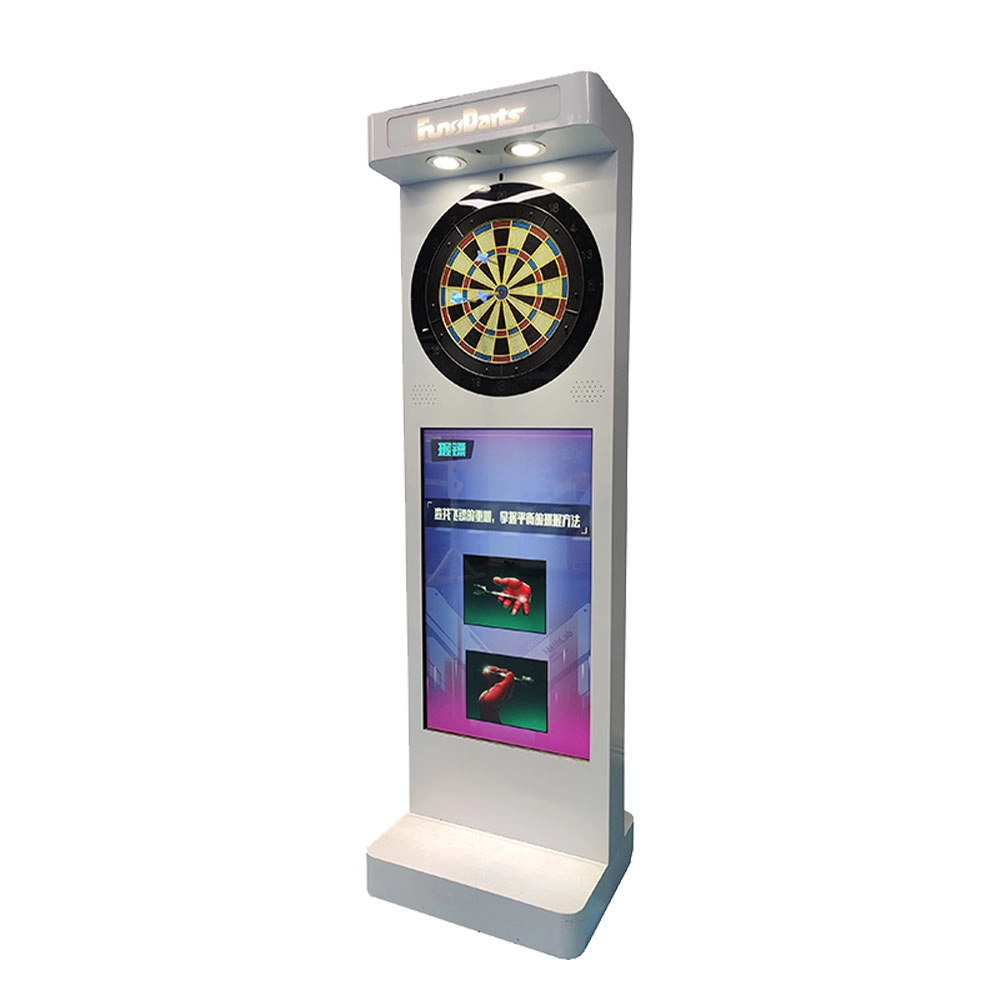
Neofuns Electronic Arcade Darts Machine S – Coin Operated Fun Dart Game with Soft Tip & Metal Tip Options, Stand-Up Electronic Dartboard for Arcade
Create private leagues for corporate unions, clubs, or friends with customizable rules (e.g., round-robin, knockout), syncing team rankings and individual contributions to boost collaboration. Branded interfaces and dartboards for company-themed tournaments.
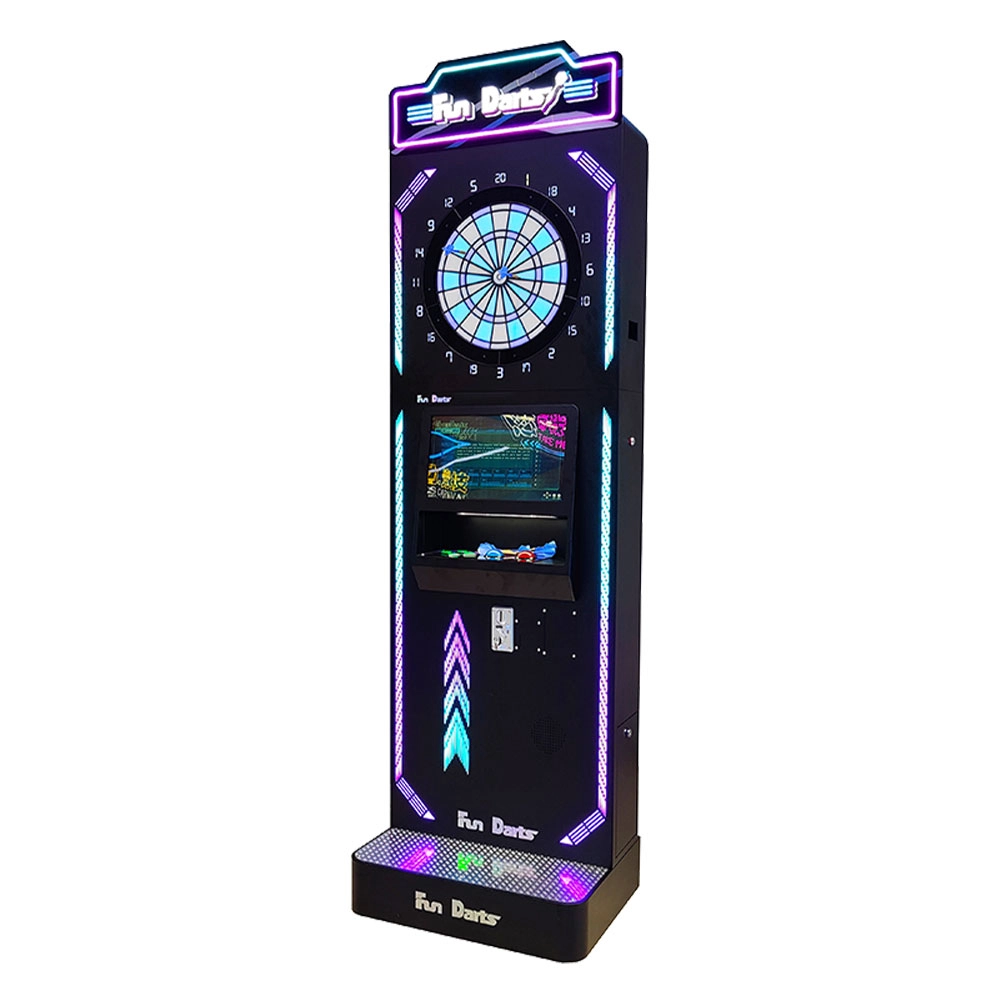
Neofuns Coin Operated Arcade Game Fun Darts Machine V –Cool Streamlined Appearance and Lighting Stand-Up Dart Machine for Arcade & Entertainment Venue
This smart dartboard seamlessly blends classic sport with cutting-edge tech,enjoy 30+ game modes and real-time multiplayer battles with dynamic animations. Professional self-healing sisal board with replaceable surfaces ensures durability for both training and entertainment.
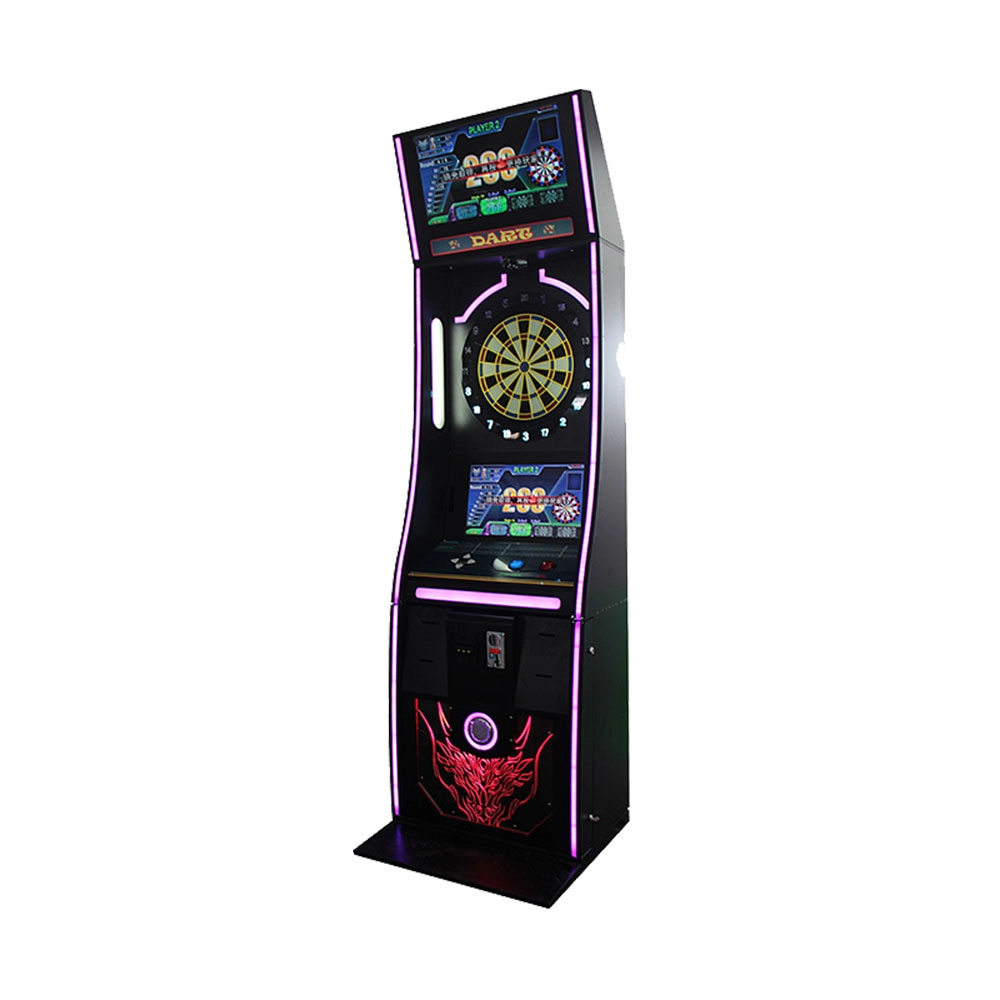
Neofuns Coin Operated Arcade Game Fun Darts Machine I – 32-inch Display on the Top Featuring Coin-operated And Arcade-style Designs
Equipped with high-precision infrared sensors, it tracks dart trajectories in real time and auto-scores, eliminating manual errors for fair competition. 30+ built-in game modes (e.g., "301 Battle, Fun Training") cater to all skill levels, supporting solo play, local multiplayer, and global online matches. Monetize via pay-per-play, sponsored tournaments, or brand partnerships (commercial); a one-time investment unlocks lifelong family entertainment.
Get in touch with us
If you have any comments or good suggestions, please leave us a message, later our professional staff will contact you as soon as possible.
Leading Electronic Dart Machine Manufacturer
NEOFUNS
NEOFUNS
NEOFUNS