


Send My Customization Request
Light
Dark
System
How to Calibrate and Recalibrate Electronic Dart Boards
A comprehensive, step-by-step guide to calibrating and recalibrating electronic dart machines. Covers tools, sensor types, detailed procedures, troubleshooting, maintenance schedules, DIY vs professional service, plus how Neofuns supports operators with reliable electronic dart machines and services.
- Why Regular Calibration Keeps Your Electronic Dart Machine Profitable
- Understanding How Electronic Dart Machines Work (Electronic Dart Machine)
- Tools and Supplies You’ll Need to Calibrate an Electronic Dart Machine
- : spare parts and service - stock recommended parts for your electronic dart machine
- Step-by-Step Calibration: First-Time Setup for an Electronic Dart Machine
- Recalibration: When and How Often Should You Recalibrate an Electronic Dart Machine?
- Troubleshooting Common Calibration Problems (Electronic Dart Machine)
- Calibration Settings: Sensitivity, Debounce, and Firmware
- DIY vs Professional Recalibration: Risks, Costs, and When to Call the OEM
- Case Study: Minimizing Disputes in a Busy Bar With Monthly Recalibration
- Why Choose Quality Electronic Dart Machines and Professional OEM Support?
- Neofuns: A Partner for Operators Seeking Durable Electronic Dart Machines
- Maintenance Schedule Template for Electronic Dart Machine Operators
- Practical Tips to Extend Calibration Stability
- Frequently Asked Questions (FAQ)
- 1. How long does a typical calibration take for an electronic dart machine?
- 2. Can I recalibrate an electronic dart board myself safely?
- 3. What causes a board to register false or ghost hits?
- 4. How do I know if my machine needs a replacement sensor module?
- 5. Do certifications like CE, TUV, or UL impact calibration requirements?
- 6. Where can I buy genuine replacement parts to ensure accurate calibration?
- Contact & Product Information — Get Expert Support
- References
Why Regular Calibration Keeps Your Electronic Dart Machine Profitable
Electronic dart machines are precision entertainment devices used in bars, arcades, and competitive venues. Proper calibration ensures scoring accuracy, improves player experience, reduces disputes, and protects revenue from mis-scored games. This guide explains how to calibrate and recalibrate electronic dart boards (electronic dart machines), the tools you need, common failure modes, troubleshooting techniques, and when to call a professional. Wherever you operate or sell electronic dart machines, consistent calibration is a core part of quality control and customer satisfaction.
Understanding How Electronic Dart Machines Work (Electronic Dart Machine)
Before calibrating, it helps to know the common electronic dartboard technologies: segmented contact (mechanical switches), infrared/optical sensors, and piezoelectric sensors. Each type senses dart hits differently and requires a distinct calibration approach:
- Segmented contact boards: Each scoring segment is connected to a matrix of conductive contacts; calibration often involves ensuring segment continuity and physical alignment.
- Infrared/optical systems: Use emitters and receivers or photodiodes; calibration centers on sensor alignment and ambient light compensation.
- Piezoelectric/acceleration sensors: Detect impact vibration; calibration focuses on sensitivity thresholds and noise filtering.
Knowing your board type (check manufacturer documentation or the machine's model label) directs the correct calibration sequence and safety steps, and informs whether the procedure is operator-serviceable or requires factory tools.
Tools and Supplies You’ll Need to Calibrate an Electronic Dart Machine
Basic calibration requires a small set of tools and consumables. Having the right items ahead of time reduces downtime:
- Manufacturer service manual or calibration guide (model-specific).
- Non-metallic alignment jig or template keyed to the bull and segments (many manufacturers provide these).
- Precision screwdriver set, insulated tools if live circuits are present.
- Multimeter for continuity checks (segmented/contact boards).
- Small flashlight and magnifier for inspecting sensor arrays.
- Compressed air, soft brush, isopropyl alcohol wipes for cleaning.
- Replacement LEDs, connectors, or fuses as recommended by the OEM.
: spare parts and service - stock recommended parts for your electronic dart machine
Operators should keep common replacement parts (connector pins, ribbon cables, sensor modules) on hand to minimize out-of-service time. For revenue-generating locations, consider an OEM service contract.
Step-by-Step Calibration: First-Time Setup for an Electronic Dart Machine
This sequence is generalized; always consult your specific model's manual for exact button sequences and safety warnings.
- Power off and safely open the cabinet following manufacturer instructions.
- Inspect the wiring harnesses between the board face and control board. Look for loose connectors, corrosion, or pin damage.
- Clean the board surface and sensor channels with compressed air and isopropyl wipes—dust and sticky residue are common causes of false readings.
- Physically align the board face: use a template to verify the bull, triple and double rings are concentric. Tighten mounting hardware evenly to avoid warping.
- Power on and enter calibration mode (typically through a service menu). Step through hit-detection tests: many machines offer a manual hit or sensor test mode to show which segment registers when struck.
- Adjust sensitivity thresholds (for piezo/optical types) or re-map segments if the controller supports it. For mechanical boards, verify each segment circuit shows continuity when pressed.
- Run a diagnostic game or series of test throws from the regulation oche (board distance). Verify the displayed scoring matches manual observation for at least 30 test throws to account for variance.
- Log calibration results: date, operator, settings changed, and any parts replaced. This supports warranty claims and quality tracking.
Recalibration: When and How Often Should You Recalibrate an Electronic Dart Machine?
Recalibration frequency depends on usage intensity, environment, and sensor technology. Typical guidelines:
| Usage Level | Sensor Type | Recommended Recalibration Interval |
|---|---|---|
| Low (home, light use) | Any | Every 6–12 months |
| Medium (bar, small arcade) | Mechanical / Piezo | Every 3–6 months |
| High (FEC, tournament) | All types (prefer redundant sensors) | Monthly or before events |
Environmental triggers for immediate recalibration include temperature extremes, proximity to strong lighting (for optical boards), power surges, liquid spills, or after replacing board hardware.
Troubleshooting Common Calibration Problems (Electronic Dart Machine)
Below is a compact diagnostics table for common symptoms and their usual fixes.
| Symptom | Likely Cause | Action / Fix |
|---|---|---|
| Segments not registering | Loose connectors, dirty contacts, broken traces | Power down, inspect connectors, clean contacts, repair traces or replace PCB |
| False positives (ghost hits) | Overly sensitive piezo/optical noise, ambient light interference | Reduce sensitivity, add filtering, shield sensors from light, update firmware |
| Intermittent scoring | Worn sensor modules, temperature-related drift, loose mounting | Secure mountings, replace aging sensors, recalibrate at operating temp |
| Entire board blank or dead | Power supply failure, blown fuse, damaged control board | Check input power, fuses, and PSU voltages; replace PSU or control board as needed |
Calibration Settings: Sensitivity, Debounce, and Firmware
Key settings you will encounter in service menus:
- Sensitivity: Defines the minimum impact magnitude to register a hit. Increase for weak hits; decrease to avoid ghost hits.
- Debounce/time window: Prevents multiple registrations from a single impact. Shorten for rapid-play boards; lengthen if double-registrations occur.
- Firmware / software calibration maps: Some manufacturers provide per-segment calibration values; apply these after hardware adjustments.
Always record original values before changing settings—this allows easy rollback if new settings worsen performance.
DIY vs Professional Recalibration: Risks, Costs, and When to Call the OEM
Operators often weigh doing calibration in-house versus hiring professionals. Consider:
- Warranty and certifications: Unauthorized repairs may void warranties or affect safety certifications (CE, UL).
- Complex repairs: PCB-level fixes, sensor replacement, and firmware flashes are typically best handled by certified technicians.
- Cost-effectiveness: Routine recalibration and cleaning are cost-effective DIY tasks; major component swaps may be more economical via OEM service.
If the machine is revenue-critical (public arcade, FEC), a service-level agreement with a certified supplier minimizes downtime and ensures proper parts are used.
Case Study: Minimizing Disputes in a Busy Bar With Monthly Recalibration
A mid-size sports bar reported weekly scoring disputes. After implementing a scheduled monthly recalibration routine (cleaning, sensitivity adjustment, connector checks) and keeping a two-week spare parts stock, disputes dropped by 85% and machine uptime improved from 82% to 97% over six months. This operational change paid for itself through increased play and reduced technician call-outs.
Why Choose Quality Electronic Dart Machines and Professional OEM Support?
High-quality machines with robust sensor design and good factory calibration reduce the frequency of field recalibrations. Partnering with an experienced OEM or distributor ensures access to genuine replacement parts, model-specific calibration jigs, and certified technicians—critical for high-usage installations.
Neofuns: A Partner for Operators Seeking Durable Electronic Dart Machines
Neofuns Amusement Equipment Co., Ltd., headquartered in Guangdong, is one of the leading amusement and game industry suppliers. Neofuns specializes in game center operations, prize vending machines, FEC, and leisure game & amusement equipment. Their product range includes claw machines, prize game series, redemption game series, boxing machines, basketball games, and different sport game series, including darts. With a professional R&D team, Neofuns provides OEM and ODM development, product procurement, full amusement center design, and after-sale one-stop service. The factory has obtained international certifications such as France's Bureau Veritas (BV) and Germany's TUV Rheinland; most products carry CE, C-Tick, RoHS certification and UL authentication. Neofuns has participated in many large-scale domestic and international exhibitions since 2012. Their vision is to become the world's leading dart machine manufacturer. Learn more at https://www.neofunsdarts.com/.
For operators, Neofuns' competitive differences include:
- Integrated manufacturing and R&D that allows rapid OEM/ODM customization for local calibration and maintenance preferences.
- Certified quality and safety (BV, TUV, CE, RoHS, UL) that support venue approvals and insurance requirements.
- Full-service offerings — from product purchase through whole amusement center design and after-sale support — reducing the vendor management burden for venue owners.
Maintenance Schedule Template for Electronic Dart Machine Operators
Use this simple maintenance calendar to reduce calibration problems and extend equipment life:
| Task | Frequency | Who |
|---|---|---|
| Visual inspection and cleaning | Weekly | On-site staff |
| Full calibration check (sensitivity, debounce) | Monthly (or before events) | Technician / trained staff |
| Firmware updates / diagnostic log review | Quarterly | OEM technician |
| Comprehensive service (replace wear parts) | Annually | Authorized service provider |
Practical Tips to Extend Calibration Stability
- Keep the play area free of direct sunlight and strong LED strobes aimed at the board to avoid optical interference.
- Use recommended dart tips and weights; non-standard tips can bounce or damage segments, causing misreads.
- Train staff to report first signs of scoring errors immediately—small drifts are easier to fix than large failures.
- Maintain a simple logbook of recalibration events and symptom history; trends often reveal environmental causes.
Frequently Asked Questions (FAQ)
1. How long does a typical calibration take for an electronic dart machine?
A routine calibration and verification usually takes 30–90 minutes depending on the complexity of the board and whether hardware cleaning or minor repairs are needed.
2. Can I recalibrate an electronic dart board myself safely?
Yes for basic cleaning and sensitivity adjustments if your manual permits it. Avoid PCB-level repairs, firmware flashes, and power-supply work unless you are trained—such tasks can void warranties and carry electrical risks.
3. What causes a board to register false or ghost hits?
Common causes include overly high sensitivity, electrical noise, loose connectors, ambient light affecting optical sensors, or mechanical vibrations. Cleaning, adjusting thresholds, and securing mounts usually remedy these.
4. How do I know if my machine needs a replacement sensor module?
If recalibration and cleaning do not restore consistent detection across multiple segments, or a diagnostic test shows dead or erratic sensor outputs, the sensor module is likely failing and should be replaced.
5. Do certifications like CE, TUV, or UL impact calibration requirements?
Certifications relate to safety and electromagnetic compliance. While they do not specify calibration frequency, using certified components and adhering to OEM calibration procedures helps maintain compliance and safety standards.
6. Where can I buy genuine replacement parts to ensure accurate calibration?
Purchase parts from the original manufacturer or authorized distributors. OEM parts are designed to match calibration parameters; unauthorized parts can introduce calibration drift.
Contact & Product Information — Get Expert Support
If you operate arcades, bars, or family entertainment centers and need reliable, certified electronic dart machines or professional calibration and maintenance services, consider partnering with an experienced supplier. Neofuns Amusement Equipment Co., Ltd. provides one-stop service from product design and OEM/ODM development to after-sale maintenance. Visit https://www.neofunsdarts.com/ to view product lines and request service quotes. For on-site calibration contracts, spare parts procurement, or custom machine builds, contact their sales and technical team through the website.
References
- Electronic dartboard. Wikipedia. https://en.wikipedia.org/wiki/Electronic_dartboard (accessed 2025-12-06).
- CE Marking information. European Commission. https://ec.europa.eu/growth/single-market/ce-marking/ (accessed 2025-12-06).
- RoHS Directive. European Commission. https://ec.europa.eu/environment/waste/rohs_eee/index_en.htm (accessed 2025-12-06).
- TÜV Rheinland. About TÜV. https://www.tuv.com/world/en/ (accessed 2025-12-06).
- Bureau Veritas. https://group.bureauveritas.com/ (accessed 2025-12-06).
- UL - Safety Science. https://www.ul.com/ (accessed 2025-12-06).
Tags
coin operated electronic dart machine
coin operated electronic dart machine
Redemption dart machine for game rooms
Redemption dart machine for game rooms
electronic dart machine
electronic dart machine
coin operated dart machine
coin operated dart machine
coin operated electronic dart machine
coin operated electronic dart machine
bar dart board machines
bar dart board machines
Recommended for you
What are the application scenarios of electronic dart machine?
Top professional dart board machine Manufacturers and Suppliers
How Electronic Scoring Systems Work in Dart Boards
Digital vs electronic dart machines: key differences
Prdoucts Categories
Question you may concern
After-Sales Service
What is the warranty?
1-year free warranty for core accessories, and lifetime maintenance.
Purchase & Installation
What are the size and space requirements?
Standard size W70cm×D60cm×H220cm (standalone). Minimum 2m safety zone.Free 3D space planning service available.
How to install the machine? Do I need professionals?
Easy installation, video tutorials are provided, customers can install it by themselves.
Product Features
Is the dart machine safe for children?
Equipped with soft magnetic darts and explosion-proof acrylic panels (no sharp parts). Holds international safety certifications (CE/ISO90001/ROHS), ensuring safe family use.
What makes your dart machine different from traditional dartboards?
Our dart machine uses smart sensor technology for automatic scoring, eliminating manual calculations. It supports multiplayer battles and interactive games with various themed modes. The built-in HD screen provides real-time data feedback with sound and light effects, delivering a far superior entertainment experience compared to traditional dartboards.
You may also like

Neofuns Coin Operated Arcade Game Fun Darts Machine Max – Electronic Dartboard with 32-inch HD Touch Screen for Family Entertainment Center
This smart dartboard perfectly combines classic sports with cutting-edge technology. Based on Fun Darts 5, it is designed with a high-definition touch screen and split installation, which is simple and fashionable. The professional self-repairing sisal target surface is replaceable and durable, making it easy to use for both training and entertainment.
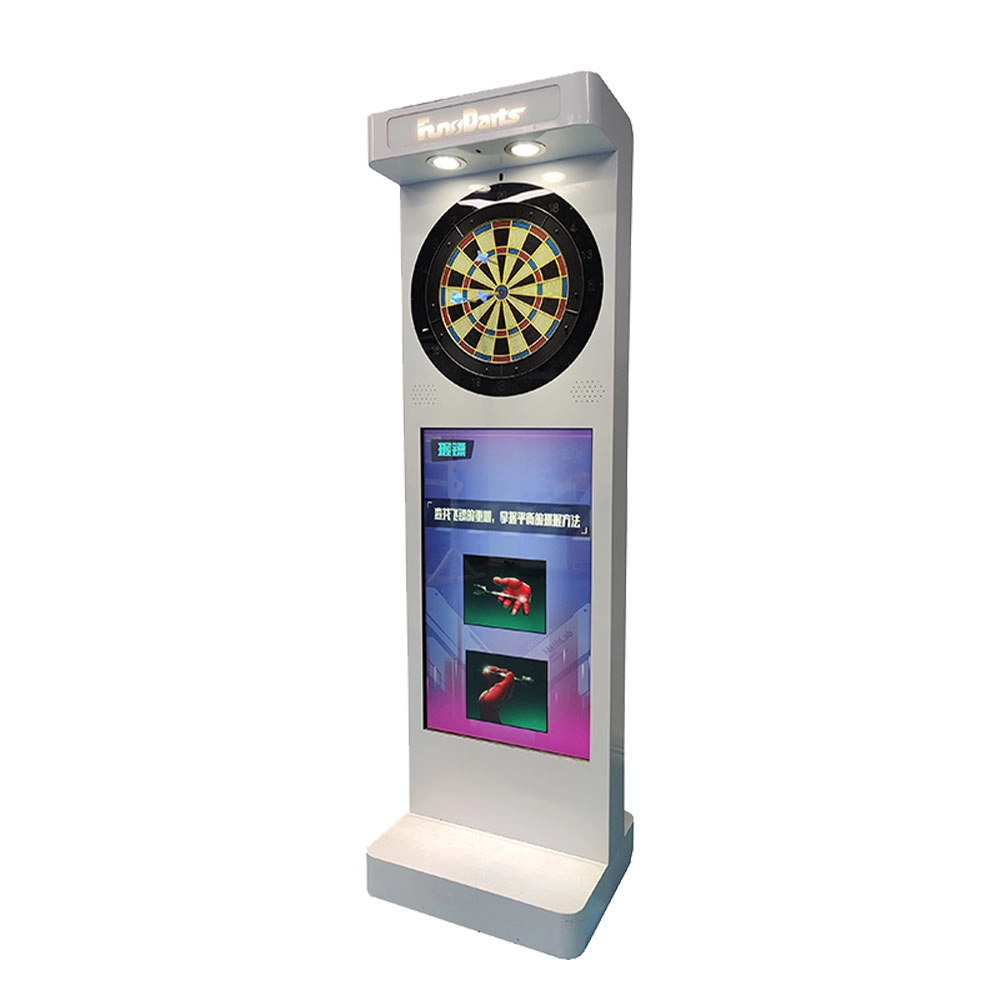
Neofuns Electronic Arcade Darts Machine S – Coin Operated Fun Dart Game with Soft Tip & Metal Tip Options, Stand-Up Electronic Dartboard for Arcade
Create private leagues for corporate unions, clubs, or friends with customizable rules (e.g., round-robin, knockout), syncing team rankings and individual contributions to boost collaboration. Branded interfaces and dartboards for company-themed tournaments.
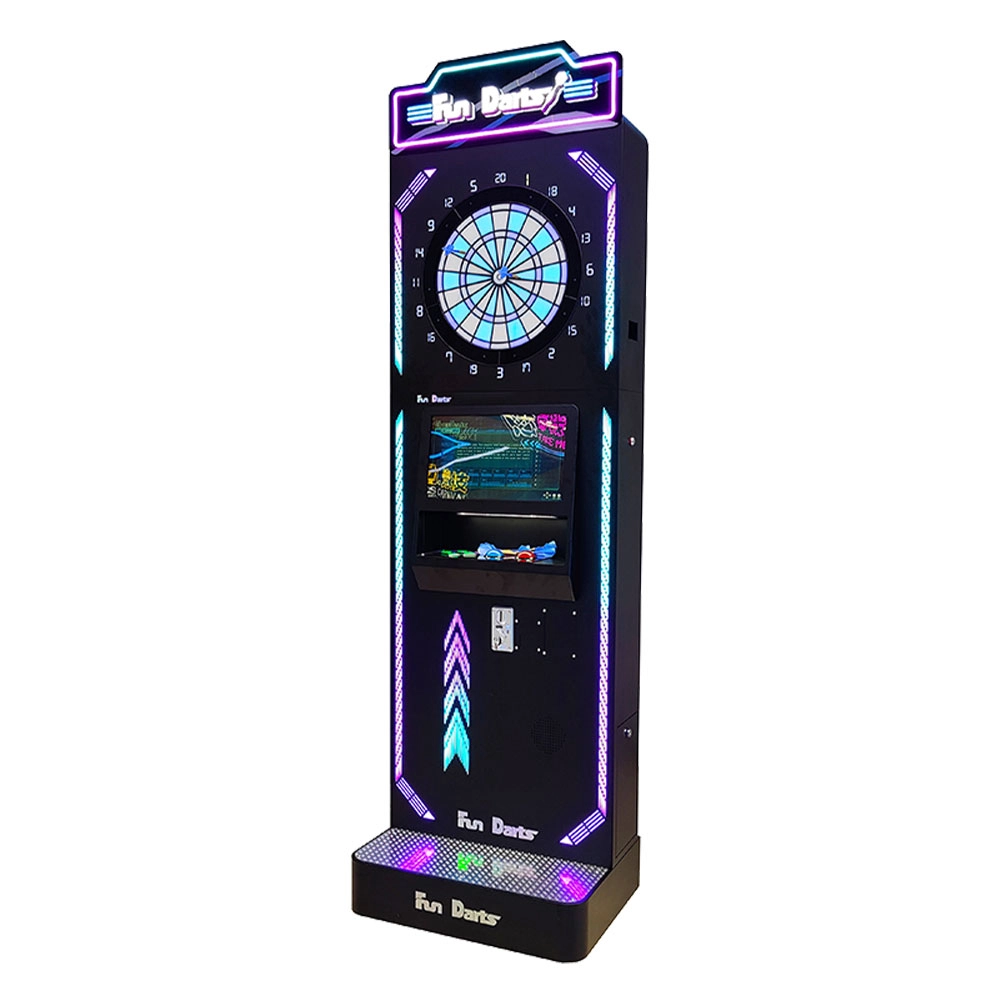
Neofuns Coin Operated Arcade Game Fun Darts Machine V –Cool Streamlined Appearance and Lighting Stand-Up Dart Machine for Arcade & Entertainment Venue
This smart dartboard seamlessly blends classic sport with cutting-edge tech,enjoy 30+ game modes and real-time multiplayer battles with dynamic animations. Professional self-healing sisal board with replaceable surfaces ensures durability for both training and entertainment.
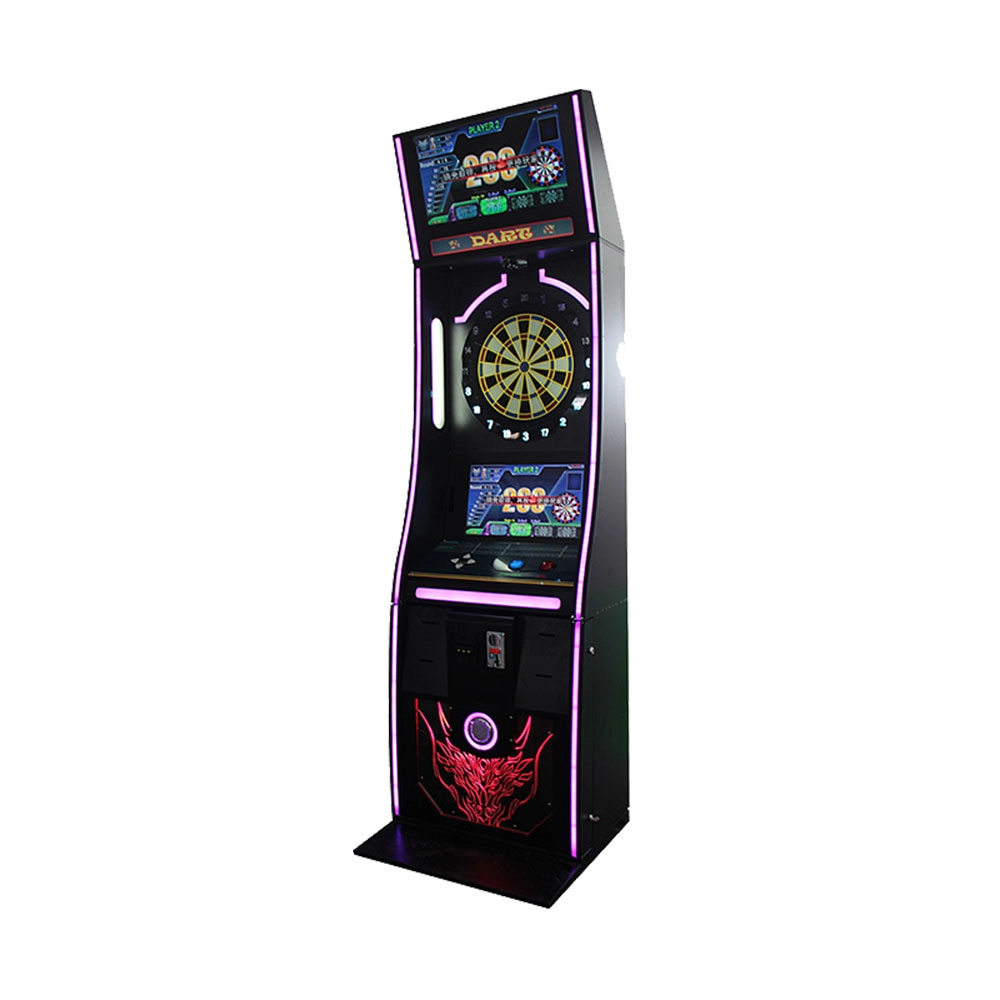
Neofuns Coin Operated Arcade Game Fun Darts Machine I – 32-inch Display on the Top Featuring Coin-operated And Arcade-style Designs
Equipped with high-precision infrared sensors, it tracks dart trajectories in real time and auto-scores, eliminating manual errors for fair competition. 30+ built-in game modes (e.g., "301 Battle, Fun Training") cater to all skill levels, supporting solo play, local multiplayer, and global online matches. Monetize via pay-per-play, sponsored tournaments, or brand partnerships (commercial); a one-time investment unlocks lifelong family entertainment.
Get in touch with us
If you have any comments or good suggestions, please leave us a message, later our professional staff will contact you as soon as possible.
Leading Electronic Dart Machine Manufacturer
NEOFUNS
NEOFUNS
NEOFUNS